As offshore hydraulic systems demand exceptional corrosion resistance, pressure integrity, and compliance with evolving 2026 regulatory benchmarks, the question arises: Can standard 2 inch stainless steel pipe meet these critical requirements? For engineers, procurement teams, and project managers evaluating materials—especially those looking to buy stainless steel pipe from trusted global suppliers—understanding the distinction between general-purpose stainless pipe and certified seamless stainless steel tube is essential. Hongteng Fengda, a leading structural steel manufacturer & exporter from China, delivers ASTM/EN-compliant stainless piping solutions—including precision-engineered seamless stainless steel tube—designed specifically for harsh marine environments. Let’s examine performance, standards, and sourcing considerations.
Why Standard 2-Inch Stainless Pipe Falls Short in Offshore Hydraulic Systems
Standard 2-inch stainless steel pipe—typically produced to ASTM A312 or EN 10216-5—meets basic mechanical and dimensional tolerances for general industrial use. However, offshore hydraulic applications impose far stricter demands: continuous exposure to salt-laden atmospheres, cyclic high-pressure pulses (up to 700 bar), and mandatory traceability per API RP 14E and ISO 15156-3. Conventional welded or ERW pipes often lack full-body hydrostatic testing, grain structure uniformity, and surface finish consistency required for dynamic sealing integrity.
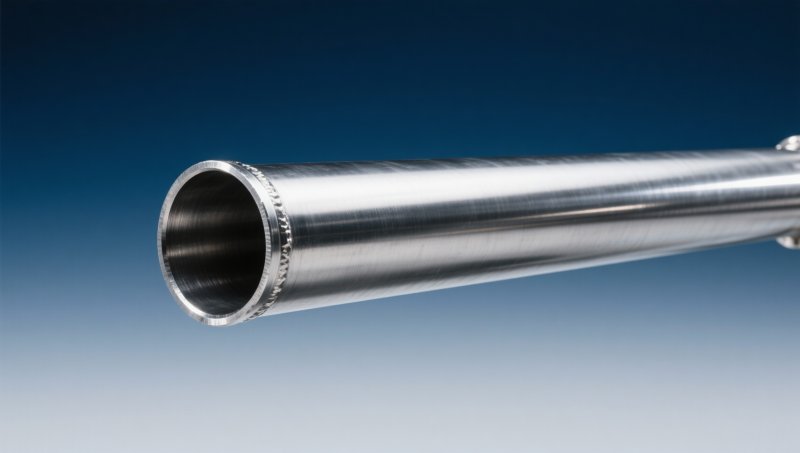
A key differentiator lies in manufacturing method. Seamless stainless steel tubes—like those supplied by Hongteng Fengda—are cold-drawn or hot-finished under controlled thermal cycles, achieving tighter wall thickness tolerance (±5% vs. ±12.5% for standard pipe) and superior internal surface roughness (Ra ≤ 0.8 µm). This directly impacts flow efficiency, cavitation resistance, and seal life in subsea control pods and hydraulic power units.
Moreover, standard pipe certifications rarely include full lot traceability, PMI (Positive Material Identification) verification per ASTM E1476, or third-party NDE (Non-Destructive Examination) reports. In contrast, offshore-grade seamless tubing requires 100% ultrasonic testing (UT) and eddy current inspection (ET), documented per ASME BPVC Section V.
Critical Compliance Requirements for 2026 Offshore Hydraulic Installations
Regulatory expectations have evolved significantly since 2023. By 2026, major operators—including Equinor, Shell, and Petrobras—mandate adherence to updated versions of DNV-RP-F105 (dynamic risers), ISO 13623 (petroleum and natural gas industries), and revised NORSOK M-650 standards. These now require:
- Minimum Pitting Resistance Equivalent Number (PREN) ≥ 40 for duplex grades (e.g., UNS S32205/S32750)
- Charpy impact testing at –46°C per ASTM A923 Method C (for ferritic-austenitic steels)
- Batch-specific mill test reports (MTRs) with heat number, chemical composition, tensile yield strength (≥ 550 MPa), and hardness (≤ 32 HRC)
- Traceable documentation covering raw material origin, forging history, and final heat treatment cycle parameters
Hongteng Fengda’s offshore-certified stainless tubing complies with ASTM A789/A790 (duplex), ASTM A269 (austenitic), and EN 10216-5, with full MTRs issued per order. All products undergo dual certification audits by SGS and Bureau Veritas, ensuring alignment with both ISO 9001:2015 and API Q1 quality management frameworks.
Key Certification Alignment Table
The following table compares typical compliance coverage across product categories:
This level of rigor ensures long-term reliability in subsea manifolds, hydraulic actuation lines, and blowout preventer (BOP) control systems—where unplanned downtime can cost $500,000+ per day.
When to Consider Structural Alternatives: C Channel Beam Integration
While hydraulic piping focuses on fluid integrity, offshore platform infrastructure relies heavily on structural support components. For example, hydraulic power units, accumulator banks, and valve skids are often mounted on custom frames fabricated from C Channel Beam. These beams provide stable load distribution while allowing modular assembly and easy access for maintenance.
Hongteng Fengda supplies galvanized C Channel Beam in Q235, Q345, and ASTM A36 grades, with thicknesses from 1 mm to 12 mm and lengths up to 12 m. Each batch carries CE, SGS, BV, and ISO certifications, supporting rapid integration into ISO 14001-compliant fabrication workflows. Surface treatments—including hot-dip galvanizing (Zn coating ≥ 610 g/m²)—ensure 25+ years of corrosion protection in splash zones.
Unlike generic structural profiles, Hongteng Fengda’s C-channel products undergo strict flatness control (±1% tolerance), edge conditioning (mill or slit edge), and optional processing services—such as punching, bending, and welding—enabling direct fit-up in hydraulic module construction. Delivery lead time remains consistent at 15–20 days, even for mixed-specification orders.
Procurement Decision Framework: What Buyers Should Verify
Before placing an order for offshore hydraulic piping—or related structural components—procurement and technical teams must validate five non-negotiable criteria:
- Material Traceability: Heat number linkage from ingot to final tube, with full MTRs covering chemistry, mechanicals, and NDE results
- Process Documentation: Certified records of annealing temperature, cooling rate, and straightening parameters
- Testing Scope: 100% UT/ET, hydrostatic test report, and intergranular corrosion test (ASTM A262 Practice E)
- Surface Quality: Visual inspection per ASTM A941 and roughness measurement report
- Logistics Readiness: FOB/CIF terms with confirmed vessel loading windows and packaging compliant with IMO IMDG Code Class 9
Hongteng Fengda offers pre-shipment audit support, including joint witness testing and real-time production tracking via shared ERP dashboards. For urgent projects, expedited production slots are available within 7–10 working days for standard sizes.
Why Partner with Hongteng Fengda for Offshore Steel Solutions
Global offshore operators face mounting pressure to reduce sourcing risk without compromising compliance. Hongteng Fengda bridges this gap through three core advantages:
- End-to-end traceability: From raw material procurement (sourced only from Tier-1 mills with GB/T 20066-certified ladle analysis) to finished tube delivery, every step is digitally logged and auditable
- Multi-standard flexibility: Seamless capability to supply dual-certified products—for example, ASTM A789 + EN 10216-5 + NORSOK M-650—reducing requalification effort
- Integrated structural support: Ability to co-supply hydraulic tubing and structural elements like C Channel Beam, simplifying logistics and QA coordination across OEM and EPC contracts
Whether you need sample validation, technical data sheet review, custom length cutting, or full project-level material take-off (MTO) support—our engineering team responds within 24 business hours. Contact us today to discuss your 2026 offshore hydraulic specification, request certified test reports, or schedule a virtual factory audit.
Please give us a message


Please enter what you want to find