Choosing the right ASTM A106 Gr B pipe size and wall thickness is critical for pressure performance, safety, and cost control. This guide answers common buyer and engineer questions on ASTM A106 Gr B pipe, including ASTM A106 Gr.B specification, ASTM A106 Gr B mechanical properties, ASTM A106 Gr B chemical composition, and ASTM A106 Gr.B equivalent, helping you compare options and source with confidence.
For project engineers, operators, procurement teams, and commercial decision-makers, the real challenge is rarely the standard name alone. The harder part is matching pipe dimensions to pressure class, service temperature, fabrication method, inspection scope, and delivery budget. A pipe that is oversized increases material cost, while an underspecified wall can create welding, compliance, and safety risks.
In industrial supply chains, ASTM A106 Grade B is widely used for seamless carbon steel pipe in high-temperature and pressure service. It often appears in power plants, oil and gas systems, refineries, process lines, boiler applications, and mechanical installations. Buyers therefore need more than a simple size chart. They need a practical framework for specification review, thickness selection, equivalent grade comparison, and supplier evaluation.
Understanding ASTM A106 Gr B Specification and Typical Size Range
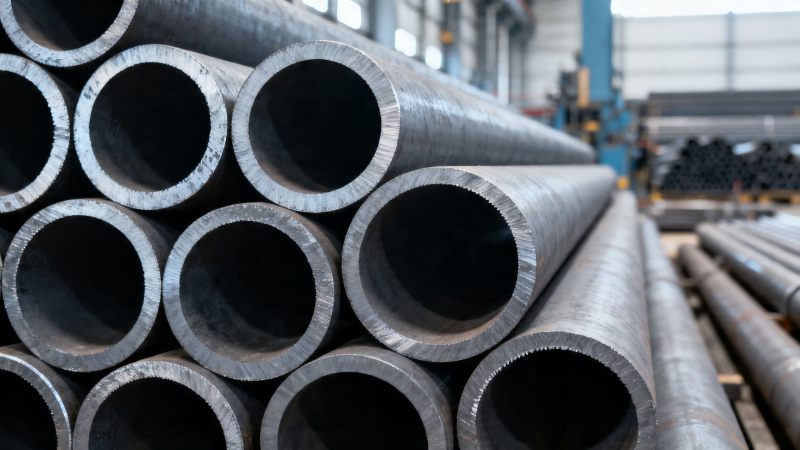
ASTM A106 Gr B is a seamless carbon steel pipe grade intended for high-temperature service. In practice, it is selected when the application demands reliable pressure containment, good weldability, and stable mechanical performance under elevated operating conditions. Because it is seamless, it is often preferred in lines where pressure fluctuation, thermal cycling, or stricter inspection requirements make welded alternatives less desirable.
When buyers ask about ASTM A106 Gr.B specification, they usually want answers to 4 points: available nominal pipe sizes, wall thickness range, pressure suitability, and test requirements. Common production covers NPS 1/8 to NPS 48, although actual supply scope depends on mill capability and market demand. For many industrial projects, the most frequently sourced range is NPS 1/2 to NPS 12 with schedules such as SCH 40, SCH 80, and SCH 160.
It is important to separate nominal size from actual outside diameter and wall thickness. Two pipes may share the same NPS but differ significantly in thickness, weight per meter, allowable stress, and fabrication cost. For example, an NPS 4 pipe can be ordered in SCH 40 or SCH 80, and the wall difference directly affects pressure capacity, bending weight, and welding time.
The table below gives a simplified view of how ASTM A106 Gr B pipe sizes and thickness categories are typically considered during project selection. Exact dimensions should always be checked against the latest ASME B36.10M or approved engineering documents.
The main takeaway is that ASTM A106 Gr B pipe selection is not just about outside diameter. Thickness class is equally important because it influences design pressure, corrosion allowance, support load, and total tonnage. In many bids, changing from one schedule to another can alter total steel consumption by 10% to 25%, especially on long-run industrial piping packages.
Key specification checkpoints before ordering
- Confirm whether the project requires seamless ASTM A106 Gr B rather than ASTM A53 or API line pipe.
- Check dimensional standard, usually ASME B36.10M, to avoid confusion between nominal size and actual wall.
- Review end type, length range, hydrostatic test, NDT requirements, and marking details before RFQ release.
- Verify whether plain end, beveled end, or threaded end is required for site installation.
Mechanical Properties, Chemical Composition, and What They Mean in Service
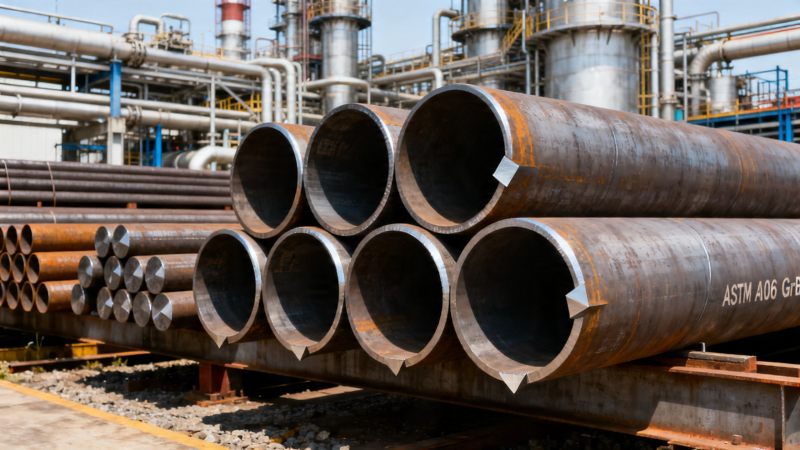
The reason ASTM A106 Grade B remains a common industrial choice is its balanced combination of strength, workability, and availability. For most purchasing teams, ASTM A106 Gr B mechanical properties are more useful when translated into fabrication and service outcomes. The grade typically offers a minimum tensile strength of 60 ksi, about 415 MPa, and a minimum yield strength of 35 ksi, about 240 MPa. These values support a wide range of pressure piping applications without pushing material cost to alloy-steel levels.
ASTM A106 Gr B chemical composition is also important because it affects weldability, hardness tendency, and process stability. Typical limits include carbon up to 0.30%, manganese in a practical range close to 0.29% to 1.06%, phosphorus up to 0.035%, sulfur up to 0.035%, silicon at least 0.10%, and combined control for chromium, copper, molybdenum, nickel, vanadium, and other residual elements. Buyers should treat these as compliance boundaries, not performance guarantees beyond the standard scope.
From a field perspective, these values matter in 3 ways. First, carbon level influences weld procedure sensitivity. Second, tensile and yield values affect design confidence under pressure. Third, chemistry consistency affects forming, cutting, and fit-up efficiency during fabrication. If the project includes frequent butt welding, preheat planning, or PWHT review, mill test certificate accuracy becomes especially important.
The following table summarizes commonly referenced property points and how they relate to practical selection.
For quality teams and safety managers, the critical point is traceability. A compliant heat number, test report, dimensional inspection record, and surface condition review are not paperwork formalities. They form the basis for welding approval, material release, and later audit review. In projects with high-temperature steam or hydrocarbon service, missing documentation can cause delays far beyond the price difference between mills.
Common mistakes when reading mechanical and chemical data
- Assuming all Grade B pipes on the market are interchangeable without checking seamless process, heat treatment, and testing scope.
- Using chemical limits as a substitute for welding procedure qualification rather than as a baseline review point.
- Comparing only price per ton without considering reject risk, rework hours, and schedule exposure.
How to Choose the Right Wall Thickness for Pressure, Corrosion, and Budget
Wall thickness is where engineering intent and procurement reality meet. If the selected schedule is too light, the line may fail pressure design checks after corrosion allowance, mill tolerance, or cyclic loading is considered. If the selected schedule is too heavy, you may increase pipe weight, fitting cost, welding passes, transportation load, and installation labor without meaningful project benefit.
A practical selection process usually starts with 5 variables: design pressure, design temperature, corrosion allowance, outside diameter, and applicable design code. In many projects, corrosion allowance ranges from 1.5 mm to 3.0 mm for general service, but the actual value depends on fluid type, treatment condition, and plant life target. A 20-year service life assumption should never be made without process review.
Buyers should also remember that heavier wall does not only affect pipe. It can drive flange class review, support load adjustment, lifting plan updates, and longer field welding time. For medium-size lines, the jump from SCH 40 to SCH 80 may increase both material tonnage and installation hours noticeably. In budget-sensitive packages, this can affect the total installed cost more than the unit pipe price itself.
The decision matrix below can help engineers and sourcing teams align thickness choice with actual project conditions.
The key conclusion is simple: ASTM A106 Gr B pipe sizes and thickness should be selected through system design, not habit. A schedule that worked on one plant may be excessive or inadequate on another. Procurement teams should ask for a thickness basis sheet or line class confirmation before order placement, especially when multiple contractors are involved.
4 practical checks before final thickness approval
- Confirm whether corrosion allowance is already included in the engineering thickness.
- Check mill minus tolerance and whether it affects minimum required wall.
- Review impact on fittings, elbows, reducers, and flange matching.
- Estimate added welding passes and field labor if schedule is increased.
ASTM A106 Gr.B Equivalent, Comparison with Other Grades, and Sourcing Considerations
One of the most searched topics is ASTM A106 Gr.B equivalent. In real purchasing work, "equivalent" does not mean automatically interchangeable in every code, temperature range, or approval process. ASTM A53 Grade B, API 5L Grade B, and some regional carbon steel pipe grades may be compared for certain services, but they differ in manufacturing route, intended application, testing expectations, and acceptance by project specifications.
For example, ASTM A53 Grade B may be considered in lower-demand general piping, especially where welded or seamless options are both acceptable. API 5L Grade B is often associated with line pipe service. ASTM A106 Gr B is commonly preferred for higher-temperature service and process piping where seamless construction is specified. The right choice depends on code basis, medium, and owner standards, not on grade label similarity alone.
During broader industrial procurement, buyers often source both piping products and structural steel from the same qualified exporter to simplify documentation, packing, and shipping coordination. For projects that also require frame support, equipment platforms, or workshop fabrication, it can be practical to combine pipe procurement with structural sections such as H Shape Beam. This product is commonly used in steel structures, bridging, shipbuilding, mechanical manufacture, and automobile chassis support systems.
A structural package may include grades such as Q235, Q345B, SS400, S275JR, S355JR, A572, or A992, with flange thickness from 8 mm to 64 mm, web thickness from 5 mm to 36.5 mm, flange width from 50 mm to 400 mm, web width from 100 mm to 900 mm, and lengths from 1 m to 12 m or as required. For buyers managing complete industrial projects, this integrated sourcing model can reduce supplier coordination steps from 4 or 5 vendors to 1 or 2 core partners.
Comparison points that matter more than “equivalent” wording
- Seamless versus welded manufacturing route and whether the project permits both.
- Temperature service expectation and code acceptance in the piping class.
- Inspection, traceability, and documentation level required by owner or EPC.
- Availability by size range, especially if heavy wall or non-standard lengths are needed.
Supplier evaluation checklist
A dependable steel supplier should be able to support both standard and customized orders with clear production controls. Hongteng Fengda, as a structural steel manufacturer and exporter from China, focuses on stable production capacity, major international standards, and practical support for global construction and industrial buyers. For customers combining piping-related steel needs with structural sections, this matters because shipment reliability and specification accuracy often affect project milestones more than nominal material price differences.
A good sourcing review normally includes 6 checkpoints: standard compliance, dimensional capability, inspection records, packaging method, delivery lead time, and response speed for technical clarification. For overseas buyers, the ability to handle ASTM, EN, JIS, and GB references in parallel can reduce mismatch risk during cross-border procurement.
Buyer FAQ: Common Questions on ASTM A106 Gr B Pipe Selection and Delivery
Many RFQs fail not because the material is difficult to produce, but because the specification is incomplete. The FAQ below addresses common issues raised by engineers, QC personnel, distributors, project managers, and purchasing departments when evaluating ASTM A106 Gr B pipe for industrial use.
How do I choose between SCH 40 and SCH 80?
Start with design pressure, temperature, corrosion allowance, and code calculation. SCH 80 is not automatically better; it is simply thicker. If the service is moderate and corrosion is controlled, SCH 40 may meet the requirement at a lower installed cost. If the line faces higher pressure or erosion, SCH 80 may provide needed margin. The correct answer comes from design review, not preference.
What documents should be requested from the supplier?
At minimum, request a mill test certificate, dimensional inspection data, heat number traceability, and confirmation of the applicable standard. Depending on project level, you may also require hydrostatic test results, NDT records, packing list details, and third-party inspection coordination. For export orders, marking, bundle identification, and coating or end protection details should also be agreed before production.
What is a typical delivery timeline for standard sizes?
For standard ASTM A106 Gr B pipe sizes in commonly stocked schedules, supply timing may range from 2 to 6 weeks depending on quantity, finish, and inspection scope. Heavy wall, special lengths, or mixed-size project packages often require longer planning. International buyers should also account for port schedule, customs documentation, and inland transport coordination when building the project timeline.
What are the most common procurement risks?
The most common risks are thickness mismatch, incomplete testing scope, unclear equivalent grade substitution, and poor document control. Another frequent issue is ordering by nominal size only without confirming schedule, end finish, and length tolerance. These gaps can create site rework, delayed inspection release, or additional freight cost if replacement material is needed.
Recommended RFQ content
- State standard, grade, size, schedule, length, and end type clearly.
- List required documents and whether third-party inspection is needed.
- Confirm packing, marking, coating, and shipment terms in writing.
- Ask for lead time by production stage, not just a single estimated date.
ASTM A106 Gr B pipe remains a practical solution for high-temperature and pressure piping when size, wall thickness, and documentation are aligned with the actual service condition. The best results come from reviewing specification details early, comparing equivalent options carefully, and choosing suppliers that can support both technical clarity and delivery consistency.
If you are planning a project that involves seamless pipe, structural sections, or customized steel supply, Hongteng Fengda can support global buyers with stable manufacturing, international standard awareness, and coordinated sourcing service. Contact us now to discuss your required sizes, thickness range, documentation needs, or to get a tailored steel solution for your next project.
Please give us a message


Please enter what you want to find