Knowing when to work with a Steel Channel supplier can help buyers reduce delays, control costs, and secure the right materials for demanding projects. Whether you are sourcing structural steel beams for construction, comparing angle steel price, or evaluating a carbon steel manufacturer, choosing the right partner early improves quality assurance, customization, and delivery reliability across industrial and construction applications.
When is the right time to involve a steel channel supplier?
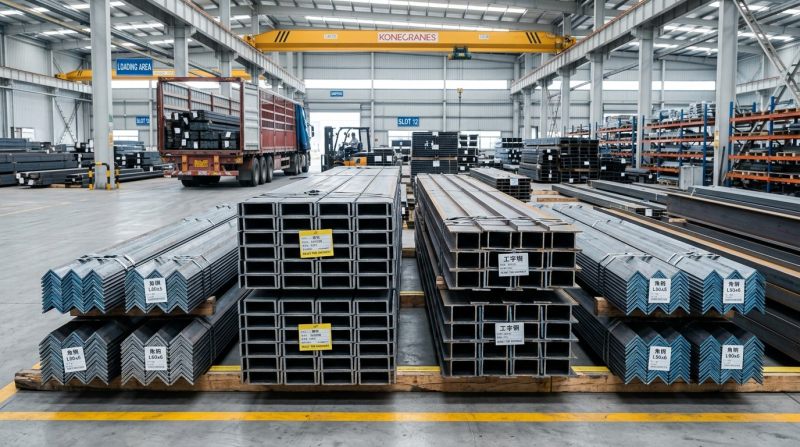
Many buyers contact a steel channel supplier too late, often after drawings are frozen, budgets are approved, or delivery pressure has already started. In the steel industry, that delay usually creates avoidable risks in section selection, coating decisions, compliance review, and logistics planning. For project managers and procurement teams, early supplier involvement is often the difference between a controlled purchasing cycle and a rushed corrective order.
A practical rule is to start discussions during the first 2–4 weeks of project planning, especially when the job includes channel steel, angle steel, steel beams, or cold formed profiles. This is the stage when technical evaluators can still confirm load requirements, material grades, tolerances, and standard compatibility such as ASTM, EN, JIS, or GB. Once fabrication schedules are fixed, every change becomes more expensive and slower to execute.
For distributors, OEM buyers, and industrial users, supplier timing also affects inventory strategy. If the order includes mixed structural items, custom punching, welded assemblies, or export packaging, lead times may move from standard stock dispatch to 3–6 weeks or longer depending on processing scope. Working with a qualified structural steel manufacturer early helps avoid fragmented sourcing and inconsistent quality between batches.
Hongteng Fengda supports global buyers by combining manufacturing capability, export experience, and strict quality control. For construction, industrial, and manufacturing projects, this matters because sourcing is not only about price per ton. It is also about whether the supplier can maintain dimensional consistency, stable production capacity, and dependable lead times across multiple shipment cycles.
Three common triggers that mean you should start supplier discussions now
- Your project requires more than 1 structural profile type, such as channels, beams, and angle steel, and you want one coordinated supply plan rather than several separate vendors.
- You need compliance with international standards and must confirm grade, size range, inspection method, and documentation before financial approval or contract release.
- You expect custom processing, export packing, OEM marking, or staggered delivery in 2–3 batches, which requires production scheduling rather than spot buying.
These triggers are especially relevant for technical buyers, QA personnel, and decision makers who need to balance cost, risk, and project timing. In other words, the right time to work with a steel channel supplier is before the procurement window becomes urgent.
Which project scenarios benefit most from early supplier coordination?
Not every order has the same level of complexity. A small repeat order for standard channel steel may only need quick specification confirmation. But larger construction packages, equipment support frames, infrastructure repairs, warehouse retrofits, and export distribution programs usually benefit from supplier input much earlier. The more variables in the project, the more valuable early coordination becomes.
For example, a construction contractor may need steel channels that match beam layouts, bolt hole positions, and installation sequencing. An industrial manufacturer may require compatibility between channel sections and fabricated supports. A distributor may need a mix of standard sizes plus market-specific documentation. In each case, the supplier helps clarify what should be standardized, what should be customized, and what affects delivery most.
In corrosion-sensitive environments, buyers may also compare structural carbon steel with stainless alternatives for secondary components, equipment covers, or support assemblies. In such cases, it is useful to review not only channel steel options but also related materials such as 316L Stainless Steel Plate when the application involves chemical exposure, food processing, transportation equipment, or welded parts above about 6mm.
The table below shows when a buyer should involve a supplier based on project type, decision complexity, and sourcing risk.
This comparison shows that timing depends less on order size alone and more on the number of technical and logistical decisions attached to the purchase. Buyers who treat steel channel sourcing as a planning function rather than a last-minute transaction usually reduce rework and improve budget control.
Applications where timing has the biggest commercial impact
Construction and infrastructure
In building frames, brackets, supports, and reinforcement systems, delays of even 7–10 days can affect downstream installation teams. Early contact helps confirm whether standard channel steel is enough or whether adjusted lengths, coatings, or bundled delivery are necessary.
Manufacturing and fabrication
Factories often require consistent dimensions across repeated orders. Early supplier review can improve fit-up during cutting, welding, and assembly, especially when procurement wants predictable replenishment every month or every quarter.
Corrosion-prone or hygienic environments
Where exposure conditions are more severe, buyers may compare carbon steel structures with stainless components. For chemical, food, transport, or medical-related fabrication, stainless options with tensile strength of at least 520MPa and yield strength of at least 275MPa may be relevant for selected parts, depending on the design purpose and fabrication method.
What should buyers evaluate before choosing a steel channel supplier?
A strong supplier evaluation goes beyond catalog availability. Procurement teams should assess 5 key areas: product range, standard compliance, customization capacity, delivery reliability, and communication efficiency. This framework helps purchasing managers, financial approvers, and business evaluators compare offers on more than unit cost.
For structural steel, product range matters because projects often need coordinated sourcing of channel steel, angle steel, steel beams, and cold formed profiles. A manufacturer that can support standard specifications and OEM solutions reduces supplier fragmentation. This can simplify inspection, lower coordination time, and reduce mismatch risk between related items.
Compliance matters because global projects may request ASTM, EN, JIS, or GB alignment depending on market and engineering preference. Quality control teams should verify not only the declared standard, but also whether the supplier can provide routine documentation such as material certificates, dimensional checks, and shipment identification. For repeat export supply, traceability across 2–3 batches is often more important than a one-time low quote.
The next table provides a practical evaluation model for buyers comparing structural steel suppliers during the pre-order phase.
This table is useful because many sourcing problems begin before production. If a supplier cannot answer specification questions clearly at the quotation stage, that weakness often becomes more expensive during manufacturing and shipment.
A 4-step procurement checklist for technical and commercial teams
- Confirm engineering inputs: size, grade, section type, tolerances, finish, and applicable standard.
- Review supply scope: standard items only, or mixed supply including beams, angle steel, and custom parts.
- Check delivery structure: one shipment, phased delivery, or rolling monthly supply over a 3–6 month period.
- Validate documents: test certificates, packing details, labeling, and destination-specific export requirements.
Hongteng Fengda is well positioned for this type of evaluation because its offering covers standard and customized structural steel products, backed by modern manufacturing facilities and quality control practices that support international project requirements.
How do cost, alternatives, and technical fit affect the decision?
Cost control in steel purchasing is rarely about choosing the lowest unit price. Buyers should compare total sourcing cost across at least 4 dimensions: product price, processing cost, logistics cost, and delay risk. A cheaper quote may become more expensive if dimensions vary, documents are incomplete, or shipment timing misses the installation window.
Alternatives should also be reviewed realistically. In many structural applications, standard channel steel remains the practical choice due to load-bearing role, fabrication familiarity, and cost efficiency. However, when corrosion resistance or hygienic performance is critical, selected parts may be shifted to stainless material. For example, plate-based fabricated components in chemical, food, transportation, or marine-adjacent environments may be better served by stainless solutions with finishes such as BA, 2B, NO.1, NO.4, HL, or 8K, depending on processing and appearance needs.
A stainless option does not replace channel steel in every case, but it can solve specific durability problems. Low-carbon 316L stainless steel is commonly considered where resistance to sensitization matters after welding, and where corrosion resistance is improved by nickel and molybdenum content. Typical available dimensions can range from 0.3mm to 200mm in thickness, with common lengths such as 2000mm, 3000mm, 6000mm, and 12000mm, depending on the product form and supply arrangement.
For financial approvers and decision makers, the key question is not whether one material is universally better. The real question is where each material creates the best balance between service life, fabrication practicality, and budget. That is why an experienced steel supplier should support comparison rather than push a one-size-fits-all answer.
Common cost mistakes that increase project spending
- Approving a quote before checking whether lengths, tolerances, and processing scope match the drawing package.
- Comparing only ex-works pricing while ignoring packing, port delivery, inspection, and document requirements.
- Using a corrosion-resistant material for the entire system when only 10%–20% of the assembly is actually exposed to severe conditions.
A balanced sourcing strategy often uses carbon structural steel where mechanical structure dominates and stainless material where exposure conditions justify it. This approach can protect budget discipline while improving long-term usability.
What standards, risks, and common questions should buyers clarify?
Before placing an order, buyers should confirm three categories of risk: technical mismatch, compliance gap, and delivery uncertainty. Technical mismatch includes wrong section size, unsuitable grade, or missing fabrication details. Compliance gaps often involve unclear standard references or incomplete inspection documentation. Delivery uncertainty includes unrealistic lead time assumptions, split-shipment confusion, or weak export packing.
For global procurement, it is normal to see projects using ASTM, EN, JIS, or GB references. The important step is to align the required standard at quotation stage, not after production starts. Quality teams should also define 4 basic review points: material certificate format, dimensional inspection method, packing identification, and shipment document consistency.
If a related stainless component is being considered, buyers may ask about additional verification such as ISO, SGS, or BV documentation where applicable to the supply arrangement. They may also review mechanical data such as elongation around 55%–60%, hardness not exceeding 183HB or 100HRB, density of 7.98g/cm³, and elastic modulus of 193GPa when material selection requires more detailed evaluation.
Below are frequently asked questions that often come up during steel channel supplier selection and project planning.
How early should I request a quotation from a steel channel supplier?
For standard items, 1–2 weeks before purchase may be workable, but for projects involving fabrication, custom lengths, mixed structural products, or export requirements, 3–6 weeks is more realistic. Earlier RFQs also give time to compare standard options, logistics plans, and document requirements without delaying project approval.
What is more important: price or lead time?
Both matter, but they should be assessed together. A lower price loses value if the material arrives late or requires rework. For construction and industrial schedules, missing a delivery window by 7–15 days may create downstream labor and installation costs that exceed the original price difference.
When should I consider stainless instead of carbon structural steel?
Consider stainless when corrosion exposure, hygiene requirements, or welded low-carbon performance are critical to the application. This does not always mean replacing the whole structure. In many projects, only selected parts need a stainless solution, while the main frame remains carbon structural steel for cost efficiency.
What documents should procurement and QA ask for?
At minimum, request material grade confirmation, dimensional inspection records, packing details, and shipment identification. If the project has market-specific requirements, also clarify certificate format, standard reference, and whether third-party inspection or export document support is needed before shipment.
Why work with Hongteng Fengda for structural steel sourcing?
For buyers who need more than a simple quotation, Hongteng Fengda offers the practical advantages of a professional structural steel manufacturer and exporter based in China. The company supports global construction, industrial, and manufacturing projects with angle steel, channel steel, steel beams, cold formed steel profiles, and customized structural steel components. This broad scope helps reduce sourcing fragmentation and improve coordination across related items.
Its value is especially clear for purchasers, project managers, and technical evaluators who must balance compliance, cost, and delivery. With modern manufacturing facilities and strict quality control, Hongteng Fengda supports supply aligned with major international standards including ASTM, EN, JIS, and GB. For overseas buyers, dependable lead times and stable production capacity are often as important as product specifications.
If your team is still deciding when to work with a steel channel supplier, the best time is before your specification and schedule become rigid. Early consultation helps clarify section type, quantity planning, customization scope, certification needs, and shipment sequencing. It also gives finance and business teams a clearer basis for approval because the sourcing plan becomes more predictable.
You can contact Hongteng Fengda to discuss channel steel selection, structural steel product matching, drawing-based customization, standard compliance, sample support, lead time planning, and quotation details. If your project also includes corrosion-sensitive fabricated parts, you may additionally compare options such as 316L Stainless Steel Plate for the relevant application areas. A focused discussion around specifications, delivery cycle, and documentation can help your project move faster with fewer sourcing risks.
Please give us a message


Please enter what you want to find