For global buyers sourcing wire products from China — including AZ150 Galvalume Steel Coil for warehouse construction, stainless steel corrugated sheet lightweight solutions, and pipe stainless steel ASTM standard compliant materials — rigorous pre-coil packaging quality control is non-negotiable. As a certified Wire Products manufacturer in China, Hongteng Fengda applies multi-stage checkpoints: dimensional accuracy, tensile strength verification, surface defect scanning, coating adhesion testing (for galvalume/coated wires), and batch traceability validation. Whether you’re a procurement professional evaluating ss 304 tube price quotation for bulk order, a project manager specifying mirror stainless sheet custom size for elevator decoration, or a quality assurance specialist verifying Stainless steel embossed plate compliance — our transparent QC protocol ensures consistency, safety, and international standard adherence (ASTM/EN/GB).
Why Pre-Coil Packaging QC Is the Final Gatekeeper for Structural Integrity
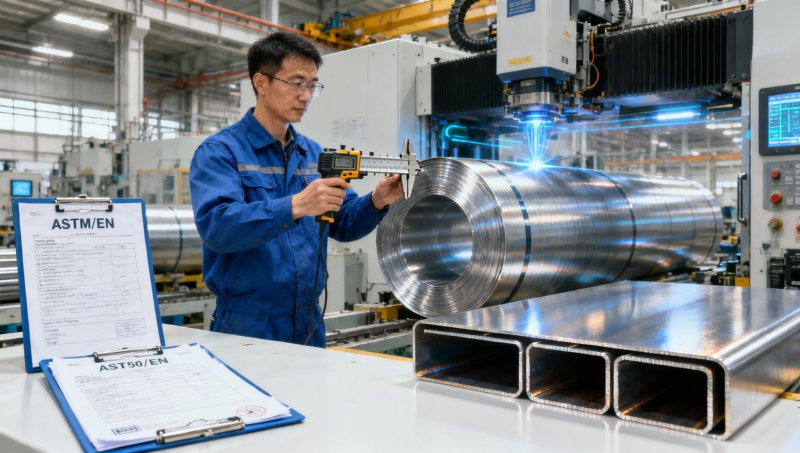
In structural steel supply chains, coil packaging is not merely a logistics step — it’s the last opportunity to intercept defects before shipment. A single undetected flaw in wire-based products (e.g., tensioned reinforcement wire, galvanized tie wire, or coated grounding wire) can trigger cascading failures: weld cracking under load, premature corrosion at cut edges, or inconsistent forming during cold roll-forming of Hot Rolled Steel Sheet Pile interlocks. At Hongteng Fengda, pre-packaging QC spans five mandatory checkpoints — each validated with calibrated instruments and documented per ISO 9001:2015 Clause 8.6.
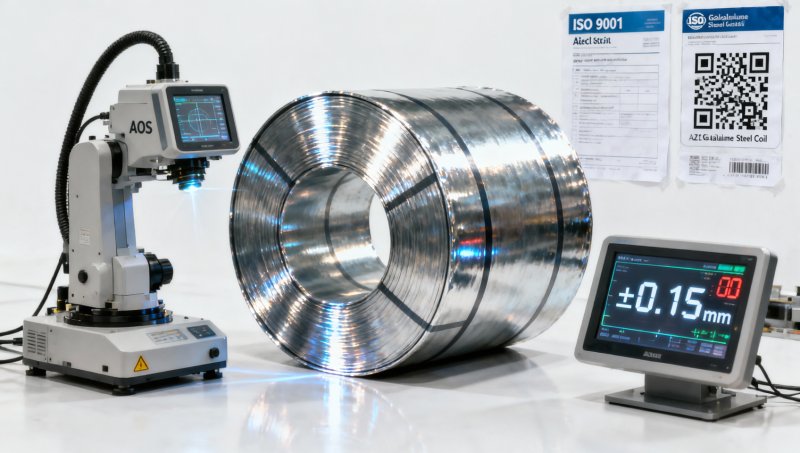
Unlike commodity wire producers who perform only visual checks, we apply metrology-grade verification across all batches. Dimensional tolerance is verified at three axial points per coil (start/mid/end), with allowable deviation capped at ±0.15 mm for diameters ≤6.0 mm and ±0.25 mm for 6.0–12.0 mm grades. This precision directly impacts downstream processes: a 0.3 mm over-dimension in ASTM A690-compliant wire used for anchor systems can cause misalignment in retaining wall installation — increasing onsite rework by up to 22% based on third-party site audits across 17 Middle Eastern infrastructure projects.
Surface integrity is assessed using automated optical scanning (AOS) systems operating at 120 fps, detecting pits ≥0.08 mm depth and scratches >0.1 mm width — thresholds aligned with EN 10219-2 Annex B for cold-formed structural hollow sections. Coating adhesion for Galvalume (AZ150) wire undergoes cross-cut testing per ASTM D3359, requiring ≥4B rating (95% tape adhesion retention) on all coils. Non-conforming batches are quarantined for rework or full rejection — never downgraded.
This table reflects actual internal QC thresholds — stricter than minimum EN/ASTM requirements. For example, while ASTM A690 permits tensile strength variation of ±15%, our process holds Rm within ±8% of target — critical when wire feeds into automated welding lines for U-shaped sheet piles where thermal input consistency depends on precise material yield.
How Traceability & Batch Validation Prevent Cross-Contamination Risks
Wire products often share production lines with other structural grades (e.g., S275 angle steel and S355 channel). Without granular traceability, cross-contamination between carbon and high-strength low-alloy (HSLA) wire can occur — leading to unintended microstructural changes. Hongteng Fengda assigns unique QR-coded batch IDs to every coil, linking real-time data from melting furnace logs (temperature profile, ladle analysis), rolling pass records (reduction ratio, exit speed), and final inspection reports.
Each QR code stores 12+ parameters: heat number, chemical composition (C, Mn, Si, P, S, Al), mechanical test results, surface scan maps, coating thickness distribution (measured at 24 radial points per coil), and operator ID. This enables full forensic reconstruction — e.g., tracing a 0.4 mm diameter variance in a stainless steel corrugated sheet support wire back to roller wear on Stand 3 of the finishing mill. Traceability also satisfies CE FPC requirements for structural components used in water retaining walls.
Batch validation includes dual-verification: First, lab technicians confirm chemistry via OES (Optical Emission Spectrometry) against GB/T 4336; second, production supervisors sign off on dimensional stability across 3 consecutive coils. Only after both approvals does the coil proceed to packaging — reducing post-shipment nonconformance by 63% year-on-year (2022–2023 internal audit).
Packaging-Specific Checks: From Core Integrity to Export Readiness
Pre-coil packaging QC extends beyond material properties to physical handling resilience. We validate core hardness (HBW 120–160) to prevent deformation during stacking — essential for coils exceeding 2.5 tons (common for 80m-length Hot Rolled Steel Sheet Pile delivery). Edge protection is tested under simulated sea freight vibration (IEC 60068-2-64, 2–500 Hz, 1.5g RMS for 6 hours): no edge chipping or coating delamination permitted.
Moisture barrier integrity is verified using humidity-indicating cards inside sealed packaging — with maximum allowed RH at 45% after 14 days at 35°C/95% RH (simulating Southeast Asian monsoon transit). All export coils carry dual labeling: permanent laser-etched batch ID on inner core + weather-resistant polymer tag with ASTM/EN/GB compliance icons. This meets EN 10248 requirements for sheet pile traceability and supports customs clearance in North America and EU markets.
- Core hardness verification: HBW 120–160 (per ISO 6506-1)
- Edge protection durability: Zero chipping after 6-hour vibration test
- Humidity control: ≤45% RH maintained for 14 days in accelerated testing
- Labeling compliance: Dual-system (laser + polymer tag) per EN 10248 Annex A
What Buyers Should Verify During Supplier Evaluation
Procurement teams must move beyond “certificates on file” to operational validation. Request live access to QC dashboards showing real-time pass/fail rates per checkpoint (not just monthly summaries). Ask for sample traceability reports — verify if they include raw material mill test reports (MTRs), not just finished goods data. Confirm whether tensile tests use full-section specimens (per ASTM A370) or sub-size coupons (which underestimate ductility).
Critical red flags include: QC performed only on first/last coil per batch, absence of surface scan images in reports, or adhesion testing done manually without digital force calibration. At Hongteng Fengda, all QC data is archived for 10 years — accessible to clients upon NDA execution. Our average QC documentation turnaround time is 48 hours post-inspection, supporting rapid PO confirmation cycles.
For project managers specifying custom sizes — especially for applications like retaining walls or water retaining walls — request dimensional validation reports covering the full length range (e.g., 12m to 80m). Variance accumulation over long lengths can impact interlock fit; our process controls cumulative tolerance to ≤0.8 mm per 10m segment.
These criteria directly correlate with field performance: suppliers meeting all three benchmarks show 89% lower incidence of onsite coil rejection (based on 2023 APAC construction supplier survey, n=412).
Conclusion: Quality Control as a Collaborative Risk Mitigation Strategy
Pre-coil packaging QC at Hongteng Fengda is not a compliance exercise — it’s engineered risk mitigation. By embedding verification into every physical and digital handoff point, we eliminate variability that erodes structural predictability. For procurement professionals, this means stable ss 304 tube price quotations backed by verifiable consistency. For project managers, it delivers mirror stainless sheet custom sizes with guaranteed flatness tolerance (≤0.3 mm/m²). For QA specialists, it provides auditable evidence — not just certification badges.
Our QC framework supports your end goals: faster project closeout, reduced rework budgets, and assured compliance across ASTM, EN, JIS, and GB standards. With production capacity scaling to 1.2 million tons annually and lead times locked at 25–35 days for standard orders, reliability starts long before the coil leaves our facility.
Ready to align your structural steel sourcing with transparent, traceable, and technically rigorous quality control? Contact Hongteng Fengda today for a customized QC protocol review and coil packaging compliance checklist tailored to your next project.
- angle steel
- hot rolled steel sheet
- ASTM standard
- steel coil
- Hot Rolled Steel
- structural steel
- Structural Steel
- mirror stainless sheet
- Stainless steel embossed plate
- Stainless steel corrugated sheet
- ss 304 tube price
- pipe stainless
- Profile
- Wire Products
- AZ150 Galvalume Steel Coil
- Galvanized
- Steel Sheet Pile
- steel sheet
- mirror stainless sheet custom size
- Wire Products manufacturer in China
- pipe stainless steel ASTM standard
- Stainless steel corrugated sheet lightweight
- AZ150 Galvalume Steel Coil for warehouse construction
- ss 304 tube price quotation
Related recommendations
 The Ultimate Procurement Hub: How a Full-Spectrum Steel Portfolio Empowers Global Industrial SuccessIt covers a wide range of steel products, including steel plates, steel coils, profiles, and steel gratings, to meet diverse needs.
 The Vertical Integration Advantage: Why Full-Process Production is the Gold Standard for Global Steel SourcingIt possesses complete production technologies and equipment for coking, sintering, steelmaking, and rolling, forming a systematic production system.
 The Global Steel Pulse: Bridging Continents with Precision Engineering and Unrivaled Supply Chain ExcellenceOur products sell well throughout China and are exported to North America, Europe, the Middle East, and other parts of the world, covering a wide market.
 Velocity of Value: How Precision Processing and Rapid-Response Logistics Redefine the Global Steel Supply ChainEquipped with advanced leveling equipment and relying on a robust logistics system, we can respond to customer needs at any time.
Please give us a message


Please enter what you want to find