Choosing an industrial steel supplier is about more than price. It is about consistency, quality assurance, and delivery performance that protect projects from costly delays and sourcing risks.
A dependable industrial steel supplier supports construction, manufacturing, and industrial applications with certified production, stable capacity, and responsive service.
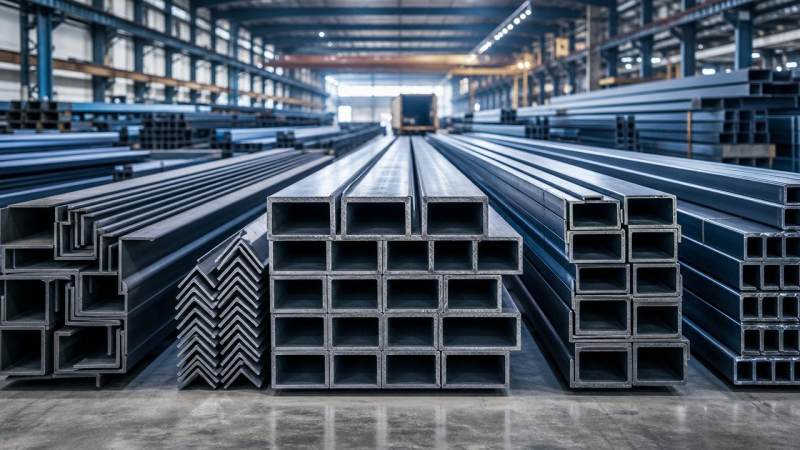
Hongteng Fengda, a structural steel manufacturer and exporter from China, serves global projects with angle steel, channel steel, steel beams, cold formed profiles, and customized components.
Its value comes from reliable production, compliance with ASTM, EN, JIS, and GB standards, and dependable lead times across North America, Europe, the Middle East, and Southeast Asia.
When project conditions make supplier reliability critical
Not every project measures supplier performance in the same way. A warehouse build, a bridge package, and an OEM fabrication order create different operational risks.
That is why selecting an industrial steel supplier should begin with the application scene, not only the quotation sheet.
In fast-track construction, delivery accuracy often matters more than minor price differences. In export distribution, documentation and standards alignment become decisive.
For industrial processing, dimensional tolerance, weldability, and consistency across batches usually define whether a supplier is truly dependable.
How reliability changes across common steel supply scenarios
Construction projects with tight schedules
In commercial buildings and infrastructure works, delays in steel arrivals quickly affect labor scheduling, crane planning, and downstream installation.
A dependable industrial steel supplier should confirm rolling schedules, packing lists, mill test records, and shipment timing before production starts.
The key judgment points include stable output, clear lead times, and the ability to handle mixed specifications without confusion.
Manufacturing and fabrication orders requiring consistency
For fabricated frames, supports, brackets, and machine structures, inconsistent steel properties can increase rework, welding variation, and material waste.
Here, a dependable industrial steel supplier must deliver repeatable chemistry, controlled tolerances, and stable mechanical performance across batches.
Quality control is not a marketing phrase in this scene. It directly influences fit-up efficiency and total production cost.
Export sourcing where compliance is the first filter
Cross-border steel buying adds documentation risk. Products may be technically usable, yet still rejected if standards or certificates are incomplete.
A reliable industrial steel supplier should understand ASTM, EN, JIS, and GB requirements, plus inspection needs from ISO, SGS, BV, or CE-related workflows.
The strongest partners also communicate packaging, marking, and traceability rules early, reducing customs and site acceptance issues later.
What to evaluate beyond quote price in real purchasing scenes
Price remains important, but low upfront numbers can hide expensive disruptions. A dependable industrial steel supplier protects overall project economics.
Look at the full performance picture:
- Production capacity that matches order volume and delivery windows.
- Quality systems that verify dimensions, grades, and surface condition.
- Technical support for customized profiles, OEM needs, and mixed orders.
- Export experience with inspections, documentation, and packing control.
- Communication speed when drawings, schedules, or specifications change.
These factors determine whether an industrial steel supplier remains dependable after the purchase order is signed.
A mid-project example: matching steel products to civil engineering needs
Some projects need more than structural sections. Civil engineering works often require reinforcement-related products for roads, bridges, tunnels, dams, foundations, beams, columns, walls, and slabs.
In these scenes, product range becomes part of supplier reliability. Buyers may prefer one source that can support multiple steel categories under aligned quality control.
For example, Wire rod can fit civil engineering construction and public facilities where hot-rolled ribbed steel bars are required.
Available grades may include HRB335, HRB400, and HRB500, with common sizes from 6mm to 50mm and lengths such as 5m to 14m.
Material options like Q195, Q235, Q345, ASTM A53 GrA, GrB, ST37, ST52, and 16Mn help support varied design and processing needs.
A dependable industrial steel supplier should also offer processing services, including bending, welding, decoiling, cutting, and punching, when project workflows require them.
Compliance with BS4449-2005, JIS G3112-2004, ASTM A615-A615M-04a, ISO, SGS, and related standards further reduces sourcing uncertainty.
Where scenario differences change the supplier decision
Practical signs that an industrial steel supplier is dependable
- Quotations clearly state grade, standard, size, tolerance, and delivery terms.
- Production timelines are realistic, not simply optimistic.
- Mill test certificates and inspection records are easy to provide.
- Technical discussions are specific, especially for customized steel components.
- Packaging methods reflect export and site-handling requirements.
- Communication remains consistent before, during, and after shipment.
Hongteng Fengda aligns well with these expectations through modern manufacturing facilities, strict quality control, and stable export support.
Common sourcing mistakes that weaken project outcomes
One frequent mistake is comparing only unit price while ignoring logistics reliability, quality variation, and document readiness.
Another mistake is assuming all steel products under the same nominal grade will perform equally in fabrication or site installation.
Some buyers also overlook mixed-order complexity. Combining beams, channels, angles, cold formed profiles, and custom parts requires strong coordination.
A dependable industrial steel supplier should manage that complexity without causing specification confusion or shipment fragmentation.
How to choose the right partner for the next steel sourcing decision
Start by defining the real project scene. Clarify whether delivery speed, compliance, fabrication consistency, or product range carries the highest risk.
Then request evidence, not only promises. Review standards compliance, quality records, production capacity, export experience, and response speed.
A truly dependable industrial steel supplier helps reduce sourcing risk, control hidden costs, and keep work moving on schedule.
For projects needing structural steel products or customized solutions from China, Hongteng Fengda offers a practical combination of quality, reliability, and professional service.
The best next step is simple: match supplier capability to your application scene, confirm technical details early, and build with a partner prepared for long-term performance.
Please give us a message


Please enter what you want to find