Choosing the right stainless steel square bar supplier goes far beyond price. For buyers comparing quality, compliance, and delivery performance, understanding what separates a dependable partner from an average vendor is essential. From material traceability to international standards and consistent supply, this guide explains the key factors that help procurement teams, engineers, and project managers make safer, smarter sourcing decisions.
In steel sourcing, a low unit price can quickly become expensive when tolerance issues, incomplete mill documentation, delayed shipments, or inconsistent chemistry affect fabrication and installation. That is especially true for stainless steel square bar used in structural supports, frames, brackets, equipment parts, and architectural applications where dimensional stability and corrosion resistance matter.
For technical evaluators, purchasing teams, quality managers, distributors, and project leaders, a reliable supplier is one that reduces risk across the full procurement cycle. That means clear specifications, repeatable quality control, stable production capacity, responsive communication, and export experience that supports projects across North America, Europe, the Middle East, and Southeast Asia.
Core Signs of a Reliable Stainless Steel Square Bar Supplier
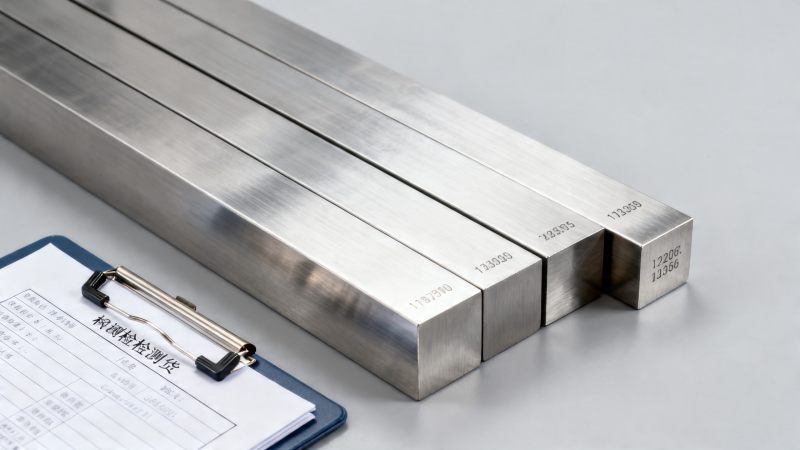
A dependable supplier stands out first through consistency. In the stainless steel market, buyers often compare grades, finish, straightness, edge condition, and dimensional tolerance within ranges such as ±0.5 mm to ±1.0 mm depending on bar size and processing route. If two shipments of the same item perform differently in cutting, welding, or machining, the true cost of procurement rises immediately.
The second differentiator is documentation. Reliable suppliers provide heat numbers, mill test certificates, chemical composition data, and mechanical property records that match the delivered batch. This matters to quality control teams and project owners because traceability supports inspection, compliance review, and dispute resolution when materials are used in regulated or high-load environments.
The third sign is production and delivery discipline. A supplier may quote a 2- to 4-week lead time, but reliability depends on whether that schedule remains stable under repeat orders, mixed sizes, or export packaging requirements. Consistent lead times help procurement planners avoid idle labor, storage congestion, and installation delays.
For global buyers, manufacturing depth also matters. A structural steel manufacturer and exporter with modern equipment, standardized inspection steps, and familiarity with ASTM, EN, JIS, and GB requirements is generally better prepared to handle both standard products and OEM requests without creating avoidable quality variation.
What professional buyers usually verify first
- Whether the supplier can confirm grade, size, tolerance, and finish before production begins.
- Whether each batch can be linked to test records and shipment documents within 24 to 72 hours of request.
- Whether packaging, marking, and export handling are suitable for sea freight, inland transport, and site unloading.
- Whether communication remains clear when drawings, customized lengths, or mixed container orders are involved.
The table below summarizes the practical differences between an average vendor and a reliable stainless steel square bar supplier in a B2B purchasing environment.
The key takeaway is simple: reliability is measurable. Buyers should evaluate documentation quality, tolerance consistency, and delivery performance with the same seriousness as price per ton or per piece. Those three points often determine whether a supplier supports long-term procurement efficiency or creates hidden downstream cost.
Why Quality Control, Standards, and Traceability Matter More Than a Low Quote
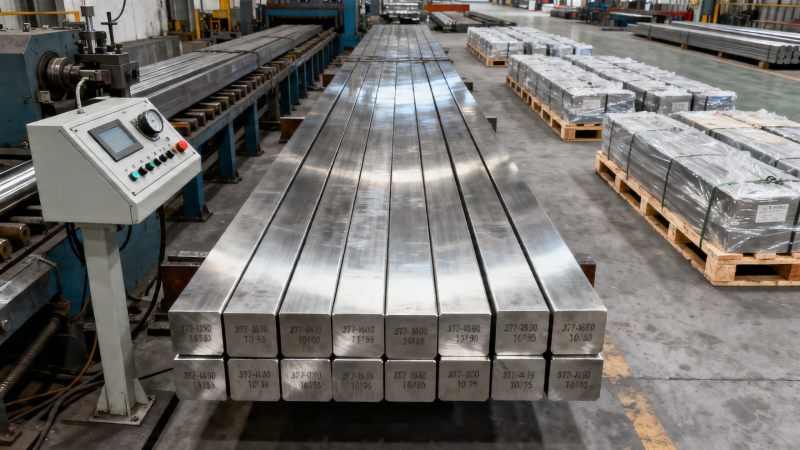
In stainless steel square bar procurement, quality problems rarely begin with obvious defects. More often, they appear as small deviations in surface finish, straightness, hardness, or chemical composition that affect bending, drilling, machining, or welding during fabrication. A difference of less than 1 mm in dimension or a mismatch in grade can disrupt production schedules, especially for repetitive assemblies.
That is why reliable suppliers build quality control into multiple stages rather than only checking finished goods. Common checkpoints include raw material verification, in-process dimensional inspection, surface review, final quantity confirmation, and packing inspection before loading. In export business, one missed label or one mixed batch can create customs, warehouse, and site acceptance issues.
Compliance with recognized standards is another practical advantage. Buyers working on infrastructure, industrial fabrication, equipment manufacturing, or public projects often need materials aligned with ASTM, EN, JIS, or GB expectations. A supplier familiar with cross-standard requirements can help avoid errors when converting specifications, especially for international orders with drawings, third-party inspection, or end-user approval.
For companies sourcing from China, export experience is not only about shipping documents. It also includes understanding packaging durability, bundling methods, marking clarity, container loading practice, and response speed when a buyer requests revised documents within 24 hours. These operational details can be as important as metallurgy when project timelines are tight.
Typical control points buyers should ask about
Before production
- Grade confirmation, target dimensions, cut length requirements, and finish expectations.
- Applicable standards and whether substitutions are allowed or not.
- Sampling, inspection, and certificate requirements for the batch.
Before shipment
- Heat number matching, quantity verification, packing photos, and label review.
- Availability of MTCs, invoice, packing list, and any origin or compliance documents.
- Container loading plan, moisture protection, and damage prevention for 20-foot or 40-foot shipments.
The following table shows how quality-related issues can affect cost and schedule when supplier control is weak.
For procurement and finance teams, this comparison highlights why the lowest quote is not always the lowest total cost. Strong quality systems and complete traceability reduce rework, shorten inspection time, and improve confidence during repeat purchasing cycles.
How to Assess Manufacturing Capacity and Product Range for Long-Term Supply
A reliable stainless steel square bar supplier should be able to support more than one urgent order. Long-term value comes from stable production capacity, broad processing capability, and the flexibility to supply related structural steel products when project requirements expand. This is particularly important for distributors, contractors, and manufacturers who want to consolidate suppliers and reduce sourcing complexity.
In practice, capacity evaluation should include at least 4 dimensions: monthly output, size range, customization capability, and order-mix handling. A supplier may perform well on standard bars but struggle with cut-to-length orders, secondary processing, or combined shipments that include angle steel, channel steel, beams, or cold formed steel profiles. Those limits matter when projects move from sampling to full-scale execution.
For buyers in construction, industrial plants, rail infrastructure, and equipment manufacturing, the supplier’s broader steel experience can be an advantage. A company that already serves multiple structural applications usually understands project sequencing, document control, and batch consistency better than a trader focused only on spot pricing.
This is also where product integration becomes useful. Some projects need not only stainless steel square bar but also complementary steel components. For example, transport and infrastructure buyers may also source Rail products for railway rail, bridge railings, or deck handrail applications, depending on the project package and material plan.
Example of integrated steel sourcing considerations
When evaluating a supplier with a wider structural steel portfolio, buyers should compare how technical data is presented and whether application guidance is specific. In rail-related procurement, common materials include carbon steel and medium manganese steel, with model options such as U74, U71Mn, PD2, PD3, BNbRE, Q235, 55Q, 50Q, U71, and 45Mn. Typical dimensions may include lengths from 12 m to 30 m, thickness from 3 mm to 24 mm, rail height of 134–170 mm, head width of 68–73 mm, base width of 114–150 mm, and tolerance around ±1%.
For procurement teams, this level of detail signals whether the supplier can handle application-based technical communication rather than only quoting a generic product list. It also shows readiness to support standard and custom requests, prompt delivery from stock, and documentation aligned with systems such as ISO9001-2008 and ISO14001:2004 where relevant to the provided product line.
The table below offers a practical framework for assessing whether a supplier is suitable for repeat business and multi-product sourcing.
The strongest suppliers combine manufacturing capability with project-oriented service. That combination supports both one-time orders and longer procurement cycles where consistency over 6 to 12 months becomes more important than a single low-price shipment.
Commercial Reliability: Communication, Lead Time, and Total Procurement Cost
Commercial reliability is often underestimated until a project enters execution. A technically acceptable supplier can still become a weak partner if quotations are vague, replies take 3 to 5 days, or delivery promises change after order confirmation. For project managers and decision-makers, communication speed and clarity are measurable indicators of supplier control.
A strong B2B supplier usually provides a clear quotation structure covering grade, size, unit basis, tolerance, packaging, Incoterms, lead time, and document scope. That reduces the risk of later disputes about what was included. It also helps finance and approval teams compare offers on a true total-cost basis rather than on headline price only.
Lead time should be reviewed in stages, not as one number. For example, a realistic process may include 1 to 3 days for technical confirmation, 7 to 20 days for production depending on quantity and specification, and another 3 to 10 days for packing, booking, and dispatch preparation. Breaking the schedule into stages helps buyers plan downstream work with greater accuracy.
Hidden cost also deserves attention. Re-inspection, replacement freight, production stoppage, and internal coordination time can exceed the savings from a cheaper quote. For distributors and contractors, a supplier that offers stable quality, abundant stock on selected items, and dependable export support often creates better annual procurement performance than one that wins only on initial price.
A practical 5-step supplier evaluation process
- Confirm technical scope: grade, dimension, tolerance, finish, quantity, and end use.
- Review documentation capability: MTCs, heat traceability, standard compliance, and marking.
- Validate commercial terms: lead time, Incoterms, packing details, and payment milestones.
- Check service responsiveness: quotation turnaround, revision speed, and issue handling process.
- Assess repeat-order readiness: capacity stability, customization support, and multi-market export experience.
Common sourcing mistakes to avoid
- Selecting a supplier based only on the lowest offer without checking document completeness.
- Assuming a sample-quality shipment guarantees consistency across future production lots.
- Ignoring packaging and shipment handling for corrosion-sensitive or appearance-critical items.
- Accepting unclear tolerance language that later creates inspection disputes at the destination.
For companies sourcing from a structural steel manufacturer and exporter in China, the strongest commercial partners are those that pair production capability with practical coordination. That includes professional service, transparent communication, and the ability to support global buyers with reliable lead times, not just attractive first-round quotations.
FAQ for Buyers Comparing Stainless Steel Square Bar Suppliers
How can I verify whether a supplier is truly reliable before placing a large order?
Start with 4 checkpoints: documentation sample, tolerance confirmation, delivery plan, and communication speed. Ask for recent mill test certificate formats, packing photos, marking examples, and a written lead-time breakdown. If a supplier responds clearly within 24 to 48 hours and can align technical and commercial details without contradiction, that is usually a positive sign.
What should procurement teams prioritize besides price?
Priority should typically follow this order: specification accuracy, quality consistency, traceability, lead-time stability, and then unit price. In many steel projects, one rejected shipment or one week of delay can cost more than a 2% to 5% price difference. Total procurement cost is usually the better decision metric.
Are international standards important for all buyers?
Not every order needs the same standard framework, but familiarity with ASTM, EN, JIS, or GB is highly valuable when materials move across borders or into regulated projects. Standards improve clarity on chemistry, mechanical properties, tolerance, and testing expectations, which lowers misunderstanding during sourcing and inspection.
What lead time is typical for stainless steel square bar orders?
Lead time depends on size, grade, quantity, and processing requirements. A common range for standard items is 2 to 4 weeks, while customized or mixed orders may require longer. Buyers should ask for stage-by-stage timing rather than a single estimate, especially when shipment booking or special packaging is involved.
Why do project teams prefer suppliers with broader structural steel experience?
Because broader experience usually means better understanding of drawings, fabrication needs, logistics coordination, and multi-item supply planning. A supplier that handles structural steel products across construction, industrial, and manufacturing projects is often better equipped to reduce sourcing risk and support long-term purchasing efficiency.
A reliable stainless steel square bar supplier is defined by far more than price. The right partner combines traceable quality, standard-aware production, stable delivery, and responsive service that supports real project execution. For buyers evaluating long-term sourcing options, these factors reduce risk, improve cost control, and create smoother coordination from inquiry to installation.
Hongteng Fengda supports global customers with structural steel manufacturing and export services built around consistent quality, dependable lead times, and customized solutions for construction, industrial, and manufacturing needs. If you are comparing suppliers, planning a new project, or looking for a more stable steel sourcing partner, contact us today to discuss specifications, request a tailored quotation, or learn more about available solutions.
Please give us a message


Please enter what you want to find