Choosing a reliable China Steel Supplier means more than comparing prices on products like hrc coil, gi sheet coil, or ASTM A106 pipe. It requires evaluating quality standards, production consistency, delivery reliability, and technical support. For buyers sourcing structural steel, API 5L Steel Pipe, or customized profiles, the right supplier can reduce risk, control costs, and keep global projects moving efficiently.
How do you identify a reliable China steel supplier in real sourcing work?
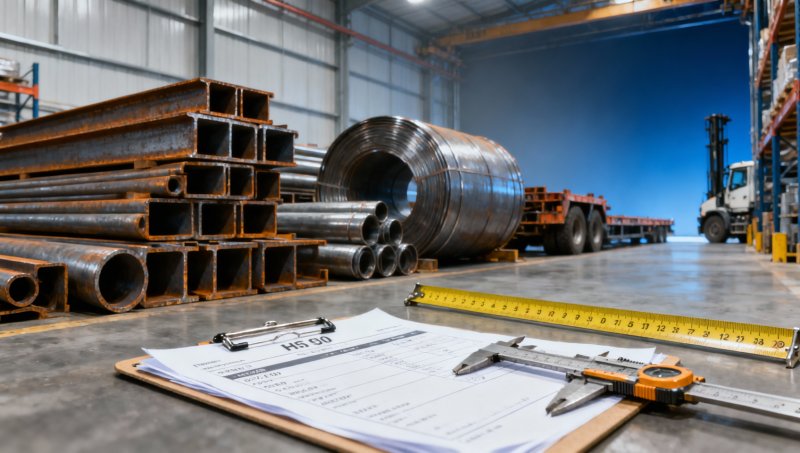
A reliable China steel supplier stands out by performing well across the full supply cycle, not just at quotation stage. For importers, project managers, technical evaluators, and procurement teams, the real difference appears in 5 core areas: specification accuracy, stable manufacturing capacity, inspection discipline, lead time control, and after-sales coordination. In steel procurement, even a small deviation in size tolerance, coating consistency, or mechanical properties can create delays that last 2–4 weeks.
In structural steel projects, reliability also means the supplier can match material grades with standards such as ASTM, EN, JIS, and GB without confusion. Buyers often compare several factories based on price per ton, but low pricing alone does not reveal whether angle steel, channel steel, steel beams, or cold formed profiles will arrive with complete mill documentation, correct heat numbers, or consistent dimensional control. These factors matter to QA teams, finance approvers, and decision makers alike.
Hongteng Fengda focuses on structural steel manufacturing and export for global construction, industrial, and manufacturing projects. This matters because a specialized supplier usually understands load-bearing applications, fabrication compatibility, packaging for sea transport, and OEM customization more deeply than a general trader. For overseas buyers, that specialization can reduce sourcing risk in 3 stages: pre-production review, production monitoring, and shipment release.
A dependable exporter should also support cross-border coordination. That includes document preparation, response speed, packaging planning, and reasonable production updates. In many B2B transactions, the hidden cost is not material price; it is the impact of one late batch, one wrong standard, or one missing test record. Reliable steel sourcing therefore begins with process control, not sales language.
The most practical checklist before shortlisting suppliers
- Confirm whether the supplier manufactures the main product category directly, such as structural sections, steel beams, channels, or customized profiles, rather than only consolidating orders from multiple unknown mills.
- Check whether they can provide standards-based production aligned with ASTM, EN, JIS, or GB, and whether test certificates are available batch by batch.
- Ask for normal lead time ranges, such as 15–30 days for standard items or 30–45 days for custom fabrication, instead of accepting vague promises.
- Review packaging, marking, and shipment methods, especially for long-length sections, mixed containers, and export destinations with strict handling requirements.
- Verify communication workflow, including drawing confirmation, tolerance approval, inspection reporting, and claim handling after delivery.
Which capabilities separate a dependable supplier from a low-risk supplier?
Many buyers ask a simple question: is the supplier reliable? In practice, a better question is whether the supplier is low-risk for your exact application. A steel supplier may handle commodity products adequately, yet struggle with OEM drawings, mixed specification orders, or deadline-driven shipments. For project procurement, the difference becomes obvious when orders involve 3–6 dimensional variants, multiple standards, or phased delivery schedules.
A dependable supplier should be able to translate project requirements into production language. That includes reviewing tolerances, steel grade substitution rules, surface finish expectations, and fabrication limits before production starts. This is especially important when custom structural steel components are required for industrial plants, warehouses, infrastructure, machinery frames, or commercial construction. Technical misunderstandings at this stage often cost more than freight or customs.
Quality consistency is another decisive factor. Serious buyers do not just ask whether inspection exists; they ask how it is implemented. A mature steel manufacturer normally manages incoming raw material checks, in-process dimensional verification, and final inspection before loading. For higher-risk applications, buyers may also request third-party inspection or witness checks at 2 key points: before finishing and before shipment.
Service reliability matters as much as material reliability. Global buyers often need quick answers on packing lists, test certificates, revised quantities, or replacement planning. A supplier that responds within 24–48 hours and provides clear follow-up can prevent procurement bottlenecks. For distributors and contractors working under liquidated damages clauses, this responsiveness directly affects project continuity.
Comparison table: common sourcing differences buyers should notice
The table below helps procurement and technical teams compare a general supplier with a more reliable China steel supplier using practical evaluation points rather than sales claims.
For buyers comparing offers from 3 or more suppliers, this type of review is more useful than a simple unit-price table. It highlights whether the supplier can actually support schedule, compliance, and documentation needs. That is the real line between a low quotation and a reliable procurement partner.
What should technical teams, purchasers, and project managers check before ordering?
Pre-order review should focus on fit-for-use, not just item description. Structural steel projects usually involve 4 linked checks: material grade confirmation, dimensional tolerance review, surface or finish requirements, and delivery condition. If one of these is unclear, downstream fabrication or installation can be affected. This is why experienced China steel suppliers spend time clarifying drawings, standards, and inspection expectations before production.
For example, a procurement package may include standard beams and channels together with a specialty item used in a different environment. In such cases, the buyer must confirm not only chemistry and strength, but also how the component will be processed. A naturally integrated example is 316 Stainless Square steel rod, which is often considered when square bar supply is required for industrial fabrication, decoration, medical-related components, automotive parts, shipbuilding, or general manufacturing where corrosion resistance and processing behavior matter.
When reviewing this kind of bar product, technical teams usually look at tensile strength, yield strength, elongation, hardness, finish, and available size range. The provided data set includes tensile strength of at least 520, yield strength of at least 275, elongation around 55–60, hardness up to 183HB or 100HRB, and common square bar sizes from 18mm to 47mm with lengths of 1–6 meters. These are the kinds of details that help engineers and QA personnel judge machining, forming, and application suitability.
Even when the project centers on structural steel sections rather than stainless bar, the procurement logic is similar. Buyers should request a clear parameter sheet, verify standards such as ASTM, AISI, JIS, GB, DIN, or EN where applicable, and confirm whether the product is supplied in black, bright polished, rough turning, matt surface treatment, or No. 4 / BA finish. Good suppliers can coordinate these details without slowing down the main order.
A practical 4-step pre-order review process
- Freeze the application scenario first, such as load-bearing construction, machinery fabrication, corrosion-exposed outdoor use, or decorative engineering.
- Match the relevant standard and dimensions, including section type, thickness, bar shape, length range, and tolerance expectations.
- Review mechanical properties and processing needs, especially if cold working, cutting, welding, drilling, or surface finishing will follow.
- Confirm packing, marking, documentation, and shipment split, especially if the order must be delivered in 2 or more phases.
Parameter-oriented review table for mixed steel procurement
The following table shows how buyers can organize technical review items when sourcing structural sections together with specialty steel products for industrial or project use.
This approach is useful because it aligns technical assessment with procurement execution. Instead of rechecking details through repeated emails, buyers can lock down 4 major variables early and reduce the chance of later revision, production hold, or shipment mismatch.
Why do standards, inspection, and delivery discipline matter so much?
In steel sourcing, compliance is not only about meeting a named standard. It is about making sure the supplied product matches the intended market, fabrication method, and safety requirement. A reliable China steel supplier should understand how ASTM, EN, JIS, and GB references influence grade selection, dimension tolerance, and documentation. This is especially important for buyers serving North America, Europe, the Middle East, and Southeast Asia, where project specifications may differ significantly.
Inspection discipline reduces uncertainty at each supply stage. For standard structural steel, common checks include section dimensions, straightness, length tolerance, surface condition, quantity verification, and traceable documentation. For customized components, drawing conformity adds another inspection layer. In practical terms, 6 inspection items completed before loading can save weeks of rework after arrival. That is why serious buyers prioritize inspection workflow over optimistic delivery promises.
Delivery discipline is equally critical. A supplier may manufacture acceptable steel but still create project risk through weak scheduling. Global buyers need realistic lead times for production, finishing, export packing, and vessel booking. Depending on order complexity, common lead times may range from 15–30 days for standard specifications to 30–45 days for custom fabrication. What matters is not the shortest promise but the supplier’s ability to hit the committed window consistently.
Hongteng Fengda supports customers with stable production capacity, strict quality control, and dependable lead times for structural steel and customized solutions. For buyers managing construction schedules or industrial shutdown windows, this kind of supply discipline supports cost control in a practical way. It helps avoid site labor idling, rescheduled crane time, and emergency local replacement purchases at higher prices.
Key compliance and delivery questions to ask
- Which standard will govern the final product: ASTM, EN, JIS, GB, or a project-specific equivalent?
- Will mill test documents and batch traceability be issued with the shipment as routine paperwork?
- How many production and inspection stages will be shared with the buyer before loading: 2, 3, or more?
- What is the realistic production lead time for standard items versus OEM parts, and how are delays communicated?
- How will long-length profiles, fabricated components, or mixed-spec orders be packed for export handling?
What sourcing mistakes cause the biggest losses, and how can buyers avoid them?
The most expensive sourcing mistake is choosing by nominal price alone. Buyers sometimes save a small amount per ton, then lose far more through incorrect dimensions, incomplete documents, coating mismatch, or late replacement shipments. In steel procurement, the total landed cost includes factory reliability, inspection cost, logistics coordination, and internal management time. Financial approvers should therefore compare full procurement risk, not just the first quotation line.
Another common issue is unclear specification control. This happens when buyers send a drawing or material list without locking down tolerance, standard equivalency, or finish condition. The result may be technically usable steel that still fails the project requirement. To avoid this, create a 5-point purchase file covering grade, dimensions, standard, inspection requirement, and delivery condition before placing the order.
Some distributors and project contractors also underestimate communication risk. If the supplier cannot explain deviations, advise on substitutes, or separate urgent and non-urgent lines, sourcing becomes reactive. A reliable China steel supplier should help customers manage alternatives when lead times or raw material availability shift. This is particularly valuable when procurement plans involve standard structural steel plus custom sections or secondary components.
The better strategy is to evaluate a supplier over the full order lifecycle. That means checking capability before order, communication during production, documentation before shipment, and issue handling after delivery. Buyers who use this lifecycle view usually make more stable decisions, even when comparing 2–3 similar quotations.
FAQ for buyers comparing China steel suppliers
How many suppliers should a buyer compare before deciding?
For most B2B steel purchases, comparing 3 suppliers is a practical starting point. This gives enough visibility on price, lead time, and technical response quality without slowing the project. If the order includes custom fabrication or multi-standard requirements, narrowing the final decision to 2 technically qualified suppliers can speed up approval.
What is a normal lead time for structural steel export orders?
A common range is 15–30 days for standard items and 30–45 days for customized structural steel, depending on quantity, processing steps, and shipping schedule. Buyers should also ask whether these periods include inspection, packing, and export document preparation, not production alone.
Is a lower quote always a better sourcing option?
Not necessarily. A lower quote may exclude inspection, use unclear standard equivalency, or carry longer and less predictable lead times. If one delayed shipment stops installation work for 7–10 days, the cost impact can exceed the initial price difference quickly. That is why total procurement reliability should be measured alongside unit price.
What documents should buyers usually request?
Typical requests include material specification confirmation, mill test records where applicable, packing list, commercial invoice, and shipment marks. For custom steel components, approved drawings and dimensional inspection records are also useful. The exact package depends on the destination market and the customer’s internal QA process.
Why work with Hongteng Fengda for structural steel sourcing and export support?
For global buyers looking for a reliable China steel supplier, Hongteng Fengda combines manufacturing focus with export-oriented coordination. The company specializes in angle steel, channel steel, steel beams, cold formed steel profiles, and customized structural steel components for construction, industrial, and manufacturing projects. This specialization is valuable because it connects product supply with application understanding, not just material availability.
The practical advantage lies in being able to support both standard and OEM requirements under controlled production and inspection processes. Buyers can discuss 3 important decision areas before ordering: technical parameters, certification or standard alignment, and delivery planning. That helps procurement teams, project managers, and QA personnel reduce uncertainty before budget approval or order release.
Hongteng Fengda serves customers across North America, Europe, the Middle East, and Southeast Asia with attention to stable production capacity, consistent quality, and dependable lead times. For importers, distributors, and contractors, this means better support on mixed orders, customized solutions, and schedule-sensitive shipments. It also means fewer sourcing gaps between commercial discussion and factory execution.
If you are comparing China steel suppliers for an upcoming project, you can contact Hongteng Fengda to discuss section type selection, standard confirmation, OEM customization, sample support, packaging method, and expected lead time. You can also ask for help reviewing drawings, clarifying inspection points, checking certification requirements, and preparing a quotation based on actual project quantities rather than generic assumptions.
What you can consult before placing an order
- Product selection for angle steel, channel steel, steel beams, cold formed profiles, and related structural steel components
- Technical parameter confirmation, including dimensions, tolerances, finish, and applicable standards
- Lead time planning for standard products, OEM items, and phased shipments
- Inspection and documentation requirements for internal QA, project approval, or export compliance
- Sample requests, quotation communication, and customized supply solutions for long-term sourcing programs
Please give us a message


Please enter what you want to find