Choosing the right steel rebar manufacturer can directly affect project safety, cost control, and supply reliability. For buyers comparing steel rebar cost, carbon steel price, and overall sourcing value, it is essential to look beyond low quotes. A dependable steel rebar supplier delivers consistent quality, certified standards, stable lead times, and professional support that keep construction and industrial projects on schedule.
In real procurement, the difference between a reliable producer and an average one is rarely visible in a single quotation sheet. It shows up in dimensional consistency, mill test documentation, batch traceability, response speed, packaging quality, and whether material arrives on time for concrete pouring, fabrication, or site installation. For project owners, EPC contractors, distributors, and technical evaluators, these factors often influence total project cost more than the initial unit price.
For global buyers sourcing from China, evaluating a manufacturer also means checking production capability, export experience, standards compliance, and communication discipline. Companies such as Hongteng Fengda, a structural steel manufacturer and exporter serving North America, Europe, the Middle East, and Southeast Asia, reflect the kind of supplier profile many buyers seek: stable capacity, controlled quality, and dependable delivery support across multiple steel product categories.
Key Signs of a Reliable Steel Rebar Manufacturer
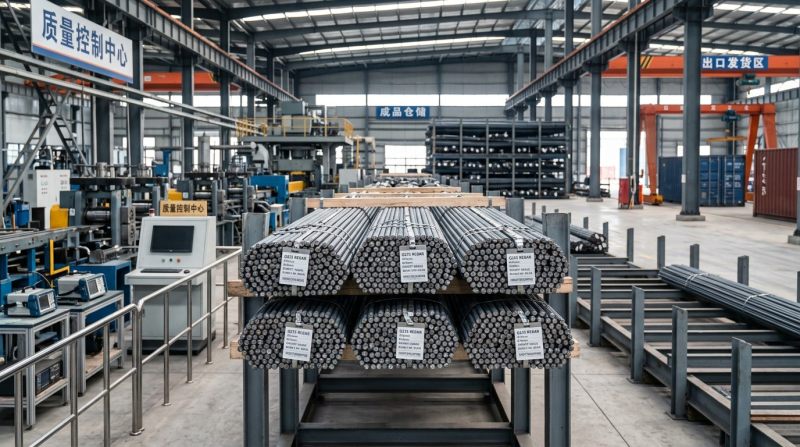
A reliable steel rebar manufacturer is not defined by marketing language. It is defined by repeatable output. In practical terms, buyers should expect consistency across at least 5 core dimensions: chemical composition, mechanical properties, dimensional tolerance, surface condition, and shipment accuracy. If even 1 of these areas is unstable, downstream risks increase for bending, welding, installation, and structural performance.
For carbon steel reinforcement products, dependable manufacturers usually operate with documented incoming material inspection, in-process control, and final release checks. That means heat numbers can be traced, test records can be reviewed, and batches can be matched to production dates. On major construction projects, this traceability can reduce dispute resolution time from several weeks to just 24–72 hours when a quality question appears.
Another sign is standards alignment. Serious exporters commonly work to ASTM, EN, JIS, or GB requirements depending on destination market needs. A buyer comparing steel rebar cost should verify whether the quote includes testing, third-party inspection support, and standard-specific tolerances. A lower carbon steel price means very little if the supplier cannot meet the required grade, rib geometry, or yield strength range for the intended project.
Core reliability indicators buyers should check
- Stable production scheduling with lead times typically in the 15–35 day range for standard export orders.
- Batch-level documentation including MTCs, packing lists, and heat trace records.
- Mechanical testing for tensile strength, yield strength, and elongation according to the applicable standard.
- Export packaging suited to sea freight exposure over 20–45 days depending on route.
- Clear communication during inquiry, production, inspection, and shipment stages.
Reliability also extends beyond rebar itself. Many construction and industrial buyers prefer suppliers that understand adjacent structural steel demand such as angle steel, channel steel, beams, and cold formed profiles. This reduces coordination across multiple vendors and helps align quality expectations, loading plans, and project delivery milestones under 1 procurement workflow.
Why low-price-only sourcing often fails
Suppliers that compete only on price may cut corners in billet selection, tolerance control, bundling, or export handling. The visible saving may be 2%–5% on paper, but the hidden cost can be much higher if there are rejections, delays, or rework. On time-sensitive infrastructure or industrial projects, a missed delivery window of just 7 days can disrupt labor planning, equipment scheduling, and concrete placement sequences.
How Quality Control Separates Top Suppliers From Average Ones
Quality control is where the strongest difference appears between suppliers. A dependable steel rebar manufacturer applies control before production starts, not only after products are finished. This includes raw material verification, furnace or rolling process monitoring, dimensional inspection, and final mechanical testing. Without this layered approach, defects may only become visible at the warehouse or jobsite, when correction is most expensive.
From a procurement perspective, quality systems should be reviewed in 3 stages: pre-order qualification, production-stage transparency, and pre-shipment verification. Technical teams often ask for grade confirmation, rib pattern details, straightness range, bundle weight, and tolerance standards. Quality managers may also require third-party inspection, especially for export cargo above 100 tons or for public sector infrastructure work.
The table below shows practical checkpoints that help separate a reliable mill or exporter from a trading source with limited process control.
The strongest conclusion is simple: quality must be visible in documents, process control, and shipment consistency. If a supplier cannot explain how it checks every batch, buyers should assume higher variability. That variability usually appears later as delays, claims, or installation inefficiency.
Related steel products and broader sourcing value
Many industrial buyers do not source rebar alone. They often combine reinforcement steel with stainless or structural components for equipment, fabrication, transport, or processing environments. In these mixed-material projects, supplier versatility matters. For example, when corrosion resistance or hygienic performance is required in auxiliary systems, buyers may also evaluate products such as 304 Stainless Steel Plate for chemical, food industry, kitchen equipment, vehicle parts, and conveyor applications.
Typical stainless plate specifications in this category include thickness from 0.3mm to 200mm, widths from 40mm to 3500mm, and lengths such as 2000mm, 3000mm, 6000mm, or 12000mm. Common finishes include BA, 2B, NO.1, NO.4, HL, and 8K, while recognized standards may cover ASTM, AISI, JIS, GB, DIN, EN, ISO, SGS, and BV. For buyers managing several metal categories at once, working with a supplier that understands both structural and specialty steel requirements can simplify qualification and logistics.
This cross-category capability does not replace rebar expertise, but it does strengthen supply coordination. It becomes especially useful when project teams need 2–3 material families delivered in phased shipments, with matching inspection documentation and predictable export handling.
Delivery Performance, Export Capability, and Cost Transparency
A steel rebar supplier may offer acceptable quality yet still fail on delivery discipline. For global construction and industrial procurement, lead time reliability is often as important as product quality. Projects are scheduled around procurement milestones, and a late shipment can affect excavation, formwork, concrete cycles, and installation teams. Reliable manufacturers typically provide a production timeline, inspection window, and estimated vessel booking sequence before order confirmation.
In export business, practical capability includes customs documentation, packing accuracy, loading efficiency, and familiarity with destination requirements. Orders of 50 tons, 200 tons, or more than 500 tons demand different planning. A supplier with stable capacity should be able to explain how it handles partial shipments, mixed-product containers, and bulk vessel coordination without creating avoidable delays.
Cost transparency matters just as much. When comparing steel rebar cost, buyers should break pricing into at least 4 layers: base material price, processing or cutting charges, packaging/export handling, and freight-related terms. This helps distinguish a genuinely competitive quotation from one that appears low only because necessary services were excluded at the RFQ stage.
What buyers should compare beyond unit price
- Lead time for standard and urgent orders, such as 15–25 days versus 30–45 days.
- MOQ flexibility for trial orders, distributor stocking, or project-based mixed loads.
- Incoterm clarity, including FOB, CFR, or CIF scope differences.
- Inspection support, including factory test reports and third-party witness options.
- Claims handling speed if shortages, damage, or quality deviations occur.
The following comparison table helps procurement teams evaluate total sourcing value rather than short-term quoted price alone.
For distributors and project managers, the main takeaway is that cost should be measured over the full order cycle. A price difference of $20–$40 per ton can be less important than reducing late delivery risk, scrap, manual sorting, or document-related customs delays.
A Practical Evaluation Framework for Procurement and Technical Teams
To identify the right steel rebar manufacturer, buyers should use a structured review process rather than informal supplier comparison. This is particularly important when sourcing from overseas mills and exporters. A useful framework combines technical qualification, commercial review, supply chain verification, and service response testing. In many organizations, these 4 layers involve engineering, QA, procurement, and management teams working together before final approval.
Technical evaluators should start with standard compatibility and material performance. Procurement then validates quotation scope, lead time, and payment terms. Quality teams review documentation and testing support. Business decision-makers finally compare risk, continuity, and long-term partnership value. This multi-step approach usually produces better results than awarding business to the lowest bidder after only 1 round of quote comparison.
For buyers handling recurring demand, a trial order of 20–100 tons can be an effective first step. It allows teams to verify packing quality, communication efficiency, document accuracy, and consistency between quoted and delivered specifications before moving to larger contracts.
Recommended 5-step supplier evaluation process
- Confirm applicable standards, grade requirements, size range, and destination market needs.
- Request production capability details, quality control process, and sample documents.
- Compare quotations based on scope, not just per-ton price.
- Validate delivery planning, packaging method, and export handling support.
- Start with a controlled trial order and review performance before scaling.
Common mistakes that increase sourcing risk
- Accepting a quotation without confirming whether testing and inspection are included.
- Comparing carbon steel price without checking destination standard equivalence.
- Ignoring bundle marking, packing method, or moisture protection for sea shipment.
- Skipping response-time evaluation during inquiry stage, even though communication delays often continue after payment.
- Ordering large volume immediately instead of validating the first shipment.
Suppliers like Hongteng Fengda can be attractive in this framework because buyers often value a combination of structural steel manufacturing capability, export familiarity, and customized support. For projects involving angle steel, channels, beams, cold formed profiles, or OEM structural components alongside reinforcement-related sourcing, this wider capability can reduce vendor complexity and improve procurement efficiency.
FAQ: What Buyers Most Often Ask Before Choosing a Steel Rebar Supplier
Before finalizing supplier selection, most buyers raise a similar set of questions around cost, standards, lead time, and risk control. The answers below reflect common industry practice and can help shorten internal evaluation cycles.
How do I compare steel rebar cost fairly between suppliers?
Use a same-scope comparison. Check grade, diameter range, standard, length, bundle method, testing inclusion, delivery term, and inspection support. A quotation that is 3% lower may actually be more expensive if it excludes testing, export packing, or document support. Fair comparison usually requires at least 8 line-item checks before award.
What lead time is typical for export steel rebar orders?
For standard specifications, many export orders fall in the 15–35 day production range, with shipping time varying by destination. More customized orders, mixed sizes, or high-volume contracts may require 30–45 days. Buyers should ask for separate timelines for production, inspection, and port loading.
Which documents should a reliable manufacturer provide?
At minimum, buyers should expect a commercial invoice, packing list, mill test certificate, and shipment documents aligned with the chosen Incoterm. For regulated or high-value projects, third-party inspection reports and traceability records may also be necessary. Missing documents can delay customs clearance and site acceptance.
Is a broader structural steel supplier better than a single-product source?
It depends on project scope. If your business routinely buys beams, channels, angles, cold formed profiles, and customized steel parts in addition to reinforcement products, a broader supplier can reduce coordination work and improve consistency. If the requirement is highly specialized and single-category only, focused expertise may matter more. The best choice is the supplier whose capability matches your purchasing pattern over the next 6–12 months.
What separates a reliable steel rebar manufacturer from the rest is not one feature but a disciplined combination of quality control, standards compliance, export execution, delivery stability, and transparent communication. Buyers who evaluate these areas carefully are more likely to reduce sourcing risk, control project cost, and avoid preventable delays.
For contractors, distributors, fabricators, and industrial buyers looking for a dependable structural steel partner from China, working with an experienced manufacturer and exporter can simplify procurement across multiple steel categories while supporting long-term project performance. If you are reviewing suppliers for upcoming orders, now is a good time to discuss specifications, delivery expectations, and customized sourcing options.
Contact us today to get a tailored steel supply solution, request technical details, or learn more about export-ready structural steel products for your market.
Please give us a message


Please enter what you want to find