Choosing a reliable stainless steel pipe exporter means more than comparing prices. Buyers need verified ASTM A106 Gr.B specification details, clear ASTM A106 Gr B chemical composition data, stable supply of ASTM A106 Gr B pipe, and dependable service for global projects. From stainless steel pipe wholesale to structural applications, the right partner helps reduce sourcing risks, control quality, and support efficient procurement decisions.
How Do You Identify a Reliable Stainless Steel Pipe Exporter at the First Screening Stage?
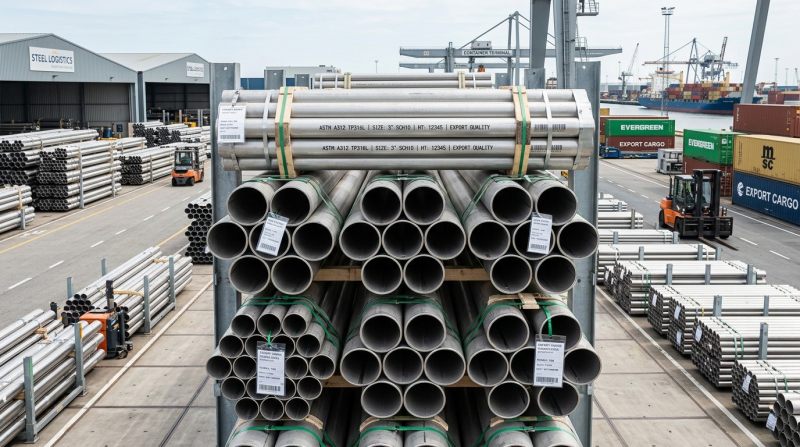
For importers, project managers, and technical reviewers, the first screening stage usually happens within 3 to 7 working days. In that short window, a reliable stainless steel pipe exporter should be able to provide clear product scope, standard references, production capability, and export coordination details. If a supplier cannot explain grades, tolerances, inspection flow, and delivery planning in a structured way, the sourcing risk rises quickly.
In the steel industry, reliability is not limited to the pipe itself. It includes document accuracy, communication speed, packaging discipline, traceability, and consistency across batches. Buyers looking for stainless steel pipe wholesale supply often compare 3 core factors first: technical compliance, delivery stability, and total procurement control. Price matters, but it is rarely the only reason a project succeeds or fails.
For global construction, industrial, and manufacturing projects, many buyers also need suppliers that understand adjacent steel products. A company with broader structural steel experience can often support integrated procurement more effectively, especially when a project includes channels, beams, profiles, and custom-fabricated components in the same purchasing cycle. That reduces vendor fragmentation and shortens coordination time.
Hongteng Fengda works as a structural steel manufacturer and exporter from China, supporting buyers across North America, Europe, the Middle East, and Southeast Asia. This matters because international procurement often requires alignment with ASTM, EN, JIS, or GB references, plus practical control of lead times, production scheduling, and shipment preparation over 2 to 4 weeks or longer, depending on specification and order volume.
What should buyers check before asking for a quote?
- Whether the exporter can clearly distinguish stainless steel pipe categories, dimensions, finish, and applicable standards instead of sending a generic price sheet.
- Whether technical documents include chemical composition, mechanical properties, size tolerance, and inspection method when relevant.
- Whether the supplier has stable production planning, especially for repeated orders, mixed container loading, or customized processing requirements.
- Whether the export team can support packing lists, mill-related documents, and communication for destination market expectations.
A serious exporter usually responds with targeted questions rather than only a low price. That is often a positive sign. It shows the team is trying to avoid mismatch on wall thickness, finish, length, end treatment, or project standard. For procurement teams, this early discipline can prevent costly changes after order confirmation.
Which Technical and Compliance Signals Matter Most in Steel Pipe Export Procurement?
Technical review is where many sourcing decisions become clearer. Even when the search starts with terms like ASTM A106 Gr.B specification or ASTM A106 Gr B chemical composition, buyers should verify whether the requested product category actually matches the project application. A reliable exporter should not simply repeat the inquiry wording. The supplier should confirm whether the project needs carbon steel pipe, stainless steel pipe, or another steel solution for pressure, structural, or corrosion-related conditions.
This distinction is especially important for technical evaluators and quality teams. ASTM A106 Grade B is commonly associated with seamless carbon steel pipe for high-temperature service, while stainless steel pipe procurement often focuses on corrosion resistance, finish, hygiene, fabrication behavior, and long-term environmental exposure. A dependable exporter should identify this difference before quotation, not after production starts.
For steel projects involving multiple materials, reliable suppliers can also support related stainless products that complement pipe procurement. In some manufacturing, food processing, transport, or equipment projects, buyers may also source sheet or coil materials for fabricated parts. One example is 304 Stainless Steel Coil, often used where corrosion resistance, formability, and stable surface finish are important in downstream processing.
When buyers compare suppliers, 5 technical checkpoints usually provide a more useful picture than a simple material name: material grade confirmation, applicable standard, dimensional tolerance, surface or finish requirement, and inspection documents. If these 5 points are unclear, even a competitive offer can become expensive after delays, claims, or replacement orders.
Key compliance questions that reduce procurement risk
Before approval, financial controllers, project leaders, and QA personnel often want a practical checklist rather than theory. The table below summarizes common evaluation points when selecting a stainless steel pipe exporter for international business.
This evaluation method helps both new buyers and experienced distributors. It also reflects a broader truth in the steel business: compliance is not one document, but a chain of controls from raw material selection to packing and shipment release.
Why related stainless material knowledge also matters
An exporter with broader stainless knowledge can often support fabrication-oriented customers more effectively. For example, 304 stainless material is frequently selected for high temperature and electrical industry use, medical equipment construction, chemical service, food industry components, agriculture and ship parts, and transport equipment. Typical coil thickness may range from 2.5 mm to 10.0 mm, with widths from 610 mm to 2000 mm and common lengths such as 2000 mm, 2440 mm, 3000 mm, 5800 mm, and 6000 mm for processed applications.
Mechanical references also help engineers assess whether a supplier understands real material performance. For 304 stainless material, commonly cited values include tensile strength of at least 520, yield strength of at least 275, elongation around 55 to 60, hardness up to 183 HB or 100 HRB, and density of 7.93. These figures do not replace final project validation, but they show whether the exporter can communicate with technical accuracy.
What Procurement Teams, Engineers, and Finance Reviewers Should Compare Beyond Unit Price
A low price per ton can hide several downstream costs. In international steel procurement, buyers usually face at least 4 cost layers: base product cost, processing or inspection cost, logistics cost, and risk cost. Risk cost includes production errors, claim handling, delay penalties, or mismatch between ordered and delivered specifications. Reliable stainless steel pipe exporters help reduce these hidden costs by keeping details transparent from the beginning.
This is why procurement teams should compare offers on a total-value basis. A supplier that answers quickly, confirms technical details, proposes realistic lead times, and supports mixed steel sourcing can often create better financial outcomes than a lower initial quote. For example, avoiding one wrong batch or one delayed shipment may save more than a small unit-price difference across the whole project cycle.
Project managers also need suppliers that can support phased procurement. Some orders begin with samples or trial quantities, move to mid-volume purchasing, and later shift to regular container shipments. An exporter with stable production capacity and quality control can support these 3 stages more smoothly, reducing re-qualification effort and communication loss.
For companies buying both pipes and structural steel products, supplier integration is another advantage. Hongteng Fengda specializes in angle steel, channel steel, steel beams, cold formed steel profiles, and customized structural steel components, which can simplify sourcing for industrial plants, infrastructure work, equipment fabrication, and construction-related packages.
Practical comparison table for supplier selection
The table below helps procurement and business review teams compare stainless steel pipe exporters using decision points that affect delivery, compliance, and total cost.
This comparison shows why professional exporters are often easier for finance teams to approve. Clear assumptions make landed-cost analysis more reliable, while structured communication reduces uncertainty in contract execution.
A 6-point procurement checklist
- Confirm whether the requested steel pipe standard truly matches the application environment, pressure condition, and corrosion expectations.
- Check if the supplier can handle standard specifications and OEM requirements within the same project framework.
- Review expected lead time ranges, especially for urgent orders, repeat orders, and combined structural steel shipments.
- Ask about inspection scope, marking rules, and packaging protection for sea freight or long-distance inland delivery.
- Evaluate communication quality during pre-sales discussion; unclear replies often predict later execution problems.
- Compare total procurement value, not just ex-works or FOB price, especially when risk control matters.
For buyers managing multiple stakeholders, this checklist helps align engineering, procurement, QA, and budget approval in one review flow. That reduces internal back-and-forth and speeds up purchase decisions.
How Can Buyers Reduce Quality, Delivery, and Communication Risks in Real Projects?
In steel export business, the most common risks usually appear in 3 moments: before order confirmation, during production, and before shipment. A reliable stainless steel pipe exporter reduces uncertainty at each stage. Before confirmation, the focus should be specification accuracy. During production, the focus shifts to consistency and schedule control. Before shipment, attention moves to inspection records, packing integrity, and document alignment.
Quality personnel and safety managers should pay close attention to traceability and receiving practicality. Pipes that arrive without clear identification, proper bundling, or useful inspection references may create delays at the warehouse or project site. For projects with installation deadlines, even a 2 to 5 day disruption can affect labor planning, crane scheduling, or downstream fabrication sequences.
Communication risk is often underestimated. If the supplier cannot explain what is included in the quote, whether cutting or custom lengths are available, or what export packing method is used, the buyer may face disputes later. This is especially relevant for distributors and agents who resell material and need accurate information for their own customers.
Exporters with modern manufacturing support and strict quality control are usually better positioned to handle these issues consistently. When a supplier also understands structural steel integration, buyers can coordinate broader project packages with fewer handover points and more predictable execution.
A simple 4-step control process buyers can request
- Pre-order confirmation: align material grade, standard, dimensions, quantity, finish, and delivery terms in writing.
- Production coordination: confirm production window, batch arrangement, and any required special processing or OEM details.
- Pre-shipment review: verify packing method, shipping marks, inspection content, and commercial documents.
- Arrival follow-up: check receiving condition, quantity consistency, and any visible transport-related issues promptly.
This 4-step process is practical because it does not depend on complex systems. It simply creates checkpoints that reduce misunderstanding and improve accountability. For many B2B steel purchases, this level of process discipline is more valuable than overpromising.
Common misconceptions that lead to avoidable sourcing mistakes
“The cheapest offer is the safest budget decision.”
Not always. If the quotation omits tolerance assumptions, inspection scope, or packing details, the hidden cost can exceed the initial saving. Budget control should consider total landed value and execution reliability.
“Any supplier familiar with steel can handle stainless steel pipe export.”
General steel knowledge is useful, but stainless requirements often involve finish, corrosion behavior, and processing expectations that must be communicated correctly. Export discipline also matters just as much as material knowledge.
“A standard name alone is enough for procurement approval.”
A standard reference is only one part of the purchasing picture. Dimension range, length, quantity split, documentation, shipment timing, and receiving conditions also need review before approval moves smoothly.
FAQ and Next Step: What Should You Ask Before Choosing an Export Partner?
Buyers often search with urgent and practical questions, especially when a project has a tight schedule or mixed-material requirement. The FAQ below addresses common concerns from technical teams, purchasers, distributors, and decision makers who need a supplier they can work with over the long term.
How do I know whether a stainless steel pipe exporter really understands my application?
Ask the supplier to confirm 5 items in writing: material grade, standard, dimensions, application environment, and inspection scope. A reliable exporter will usually ask follow-up questions about corrosion exposure, fabrication method, or delivery format instead of giving a one-line quote. That response quality is often an early indicator of project fit.
What is a reasonable lead time expectation for export steel orders?
Lead time depends on specification, quantity, and whether processing is required. In practice, many export orders are reviewed across a production and packing cycle of roughly 2 to 4 weeks, while urgent or stock-based situations may move faster. Buyers should always separate production time from booking and transit time when evaluating delivery promises.
Can one supplier support both stainless requirements and structural steel procurement?
Yes, and this can be a major advantage for industrial or construction-related projects. When the exporter can support structural steel categories such as angle steel, channel steel, steel beams, cold formed profiles, and customized components, the buyer reduces coordination complexity across 2 or more supplier interfaces. That often improves schedule visibility and procurement efficiency.
What should distributors or resellers care about most?
Distributors should focus on repeatability, documentation clarity, and communication speed. If product descriptions, packing details, and standard references are inconsistent, resale becomes harder and customer claims become more likely. A dependable export partner makes downstream sales easier by keeping information structured and repeat orders stable.
Why choose a supplier like Hongteng Fengda for consultation?
Because the decision is rarely about one steel item alone. Hongteng Fengda supports global buyers with structural steel manufacturing and export experience, modern production facilities, strict quality control, and familiarity with ASTM, EN, JIS, and GB aligned requirements. This is useful when your team needs support not only for stainless steel pipe exporter evaluation, but also for integrated steel sourcing, custom solutions, and dependable delivery planning.
If you are comparing suppliers now, the most productive next step is to send your required grade, size range, standard, quantity, destination, and expected timeline. You can also ask for help with parameter confirmation, product selection, delivery cycle review, custom fabrication needs, certification-related questions, sample support, and quotation communication. A structured inquiry saves time for both sides and leads to a more accurate procurement decision.
Please give us a message


Please enter what you want to find