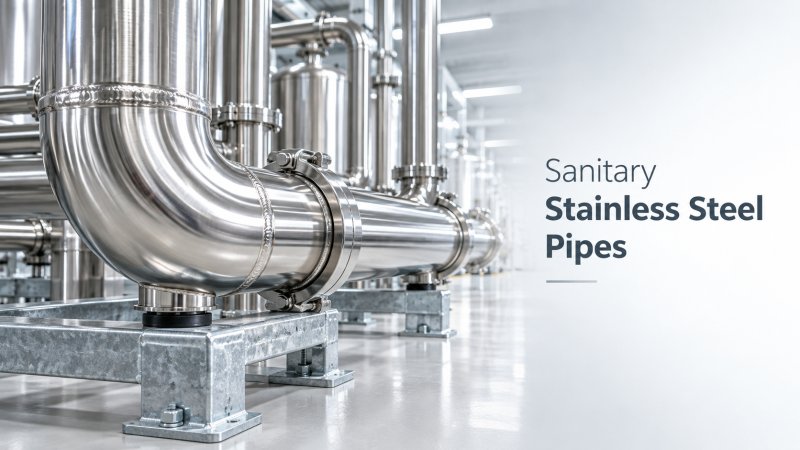
When designing modern food and beverage processing facilities, project managers must prioritize hygiene, durability, and strict regulatory compliance. Integrating a high-quality ss pipe is essential for ensuring safe fluid transport and resisting corrosion in demanding environments. As a trusted structural steel manufacturer, Hongteng Fengda delivers reliable, standards-compliant steel solutions to help you optimize facility efficiency, reduce maintenance costs, and ensure long-term operational success for your critical projects.
Navigating the Hygiene and Corrosion Reality
The reality on a food processing factory floor is unforgiving. You are not just moving liquids from point A to point B; you are managing a continuous battle against microbial growth, chemical degradation, and physical wear. Project managers often focus heavily on the internal fluid, but the external environment is equally destructive. High-pressure washdowns, steam cleaning, and ambient humidity create a harsh atmosphere that can quickly compromise inferior materials.
Regulatory frameworks like FDA, 3-A, and EHEDG do not just suggest best practices; they mandate them. A failure in the piping system can lead to product contamination, massive recalls, and facility shutdowns. Therefore, selecting the right piping material is not merely a procurement decision; it is a fundamental risk management strategy. The goal is to specify materials that can withstand aggressive Clean-in-Place (CIP) chemicals—such as caustic soda and nitric acid—while maintaining a smooth, non-porous surface that prevents bacterial harboring.
Material Selection: Beyond the Basic "Stainless" Label
A common mistake we see in early project planning is the blanket specification of the highest grade available, regardless of the actual application. While a premium ss pipe made from 316L stainless steel offers superior resistance to chlorides and pitting corrosion, it comes at a significant cost premium. An experienced project manager will segment the facility into different zones to optimize the budget without compromising safety.
For direct product contact lines, especially those handling acidic dairy products, juices, or those subjected to high-temperature chloride CIP cycles, 316L is non-negotiable. However, for general utility lines—such as chilled water, compressed air, or condensate return—304 stainless steel is typically more than adequate. This targeted approach can reduce piping material costs by 20% to 30% across a large-scale facility.
Another critical factor often overlooked in the initial specification is surface finish. The internal surface roughness (Ra value) directly impacts cleanability. For food and beverage applications, an Ra value of 0.8 μm or lower is generally required, with some sensitive pharmaceutical or dairy applications demanding 0.4 μm. Specifying the correct Ra early prevents costly rework or rejection during the final validation phase.
The Hidden Variable: Structural Support and Enclosures
While the fluid-contact piping requires premium stainless grades, the external infrastructure supporting the facility is a different story. Pipe racks, cable trays, protective enclosures, and architectural cladding do not need to be made of expensive stainless steel. Using stainless steel for structural supports is a massive waste of capital.
For these non-contact structural applications, materials like Galvanised Steel Sheet Metal provide excellent resistance to atmospheric corrosion and robust structural integrity. With thicknesses ranging from 0.12mm to 6.00mm and widths up to 1500mm, standard grades like SGCC or DX51D are widely used for fabrication. The zinc coating offers a sacrificial layer that protects the base steel, making it highly suitable for the humid, washdown-adjacent environments of a processing plant where structural failure is not an option, but direct food contact does not occur.
Integrating these galvanized components with the stainless process piping requires careful detailing. You must prevent galvanic corrosion where the two different metals meet. Using appropriate dielectric isolation materials, such as neoprene pads or specialized fasteners, ensures that the structural steel supports do not prematurely degrade and compromise the stainless piping system.
Welding, Slopes, and the "Dead Leg" Trap
Having the right material is only half the battle; how it is installed determines the actual hygiene level of the system. Manual welding in food and beverage facilities is largely a thing of the past for product lines. Orbital welding is the industry standard because it provides consistent, repeatable, and high-quality welds with minimal human error. It ensures a smooth internal weld bead that does not disrupt the flow or create microscopic crevices where bacteria can hide.
Every weld on a sanitary line should be inspected using a borescope. Project managers should mandate that a certain percentage of welds—often 100% for critical product lines—are documented with internal video records. This creates a traceable quality assurance file that is invaluable during regulatory audits.
Layout design is equally critical. The golden rule of sanitary piping is self-draining. Pipes must be installed with a continuous slope, typically a minimum of 1:100 (1%), toward a drain point. Furthermore, the industry is moving aggressively toward eliminating "dead legs." Historically, the 3D rule (the length of a branch line should not exceed three times the diameter of the pipe) was acceptable. Today, many forward-thinking facility designers and stringent auditors prefer a 2D rule or, ideally, zero dead legs. Any stagnant pocket of fluid is a potential biofilm incubator.
Strategic Sourcing for Global Facility Projects
Executing a large-scale food and beverage project requires a supply chain that is as reliable as the materials themselves. Delays in steel delivery can halt construction, leading to cascading schedule overruns. This is where partnering with a comprehensive structural steel manufacturer and exporter becomes a strategic advantage.
Hongteng Fengda, based in China, specializes in providing a wide array of steel products, including angle steel, channel steel, steel beams, cold formed steel profiles, and customized structural components. For global project managers sourcing from Asia, the ability to consolidate orders is a massive logistical benefit. Instead of dealing with multiple vendors for process piping supports, structural frameworks, and enclosure materials, a single reliable partner simplifies communication, quality control, and shipping.
Quality consistency is paramount. Hongteng Fengda operates with strict quality control protocols, ensuring that all products comply with major international standards such as ASTM, EN, JIS, and GB. This cross-standard capability is crucial for international projects where local engineering teams might specify EN standards, while the procurement team is more familiar with ASTM or GB equivalents. The ability to supply both standard specifications and OEM solutions means that custom structural brackets or unique support profiles can be fabricated precisely to the engineer's drawings.
Serving customers across North America, Europe, the Middle East, and Southeast Asia, the focus is on stable production capacity and dependable lead times. By helping partners reduce sourcing risks and control costs, the supply chain becomes a predictable variable in an otherwise complex project environment.
Final Considerations for Project Handover
As the project moves from the construction phase to commissioning, the documentation package becomes just as important as the physical installation. Ensure that all material test certificates (MTCs), welding logs, borescope inspection videos, and surface roughness reports are compiled and handed over to the facility management team. This documentation is not just for regulatory compliance; it forms the baseline for the facility's ongoing preventive maintenance program.
Building a food and beverage processing facility is a complex integration of hygienic process design and robust structural engineering. By making informed material selections, enforcing strict installation standards, and leveraging a reliable global supply chain for both specialized and structural steel components, project managers can deliver facilities that are safe, efficient, and built to last. The decisions made during the design and procurement phases will echo through the operational life of the plant, making careful planning the most valuable tool in your engineering arsenal.
Please give us a message


Please enter what you want to find