For distributors, agents, and stockholders, stainless steel pipe price changes directly affect margins, inventory planning, and quote speed. At Hongteng Fengda, we track stainless steel pipe price updates closely to help global buyers respond faster, reduce sourcing risks, and make smarter purchasing decisions. This article highlights the key pricing factors and market signals worth watching for more efficient steel procurement.
What Buyers Really Want to Know About Stainless Steel Pipe Price
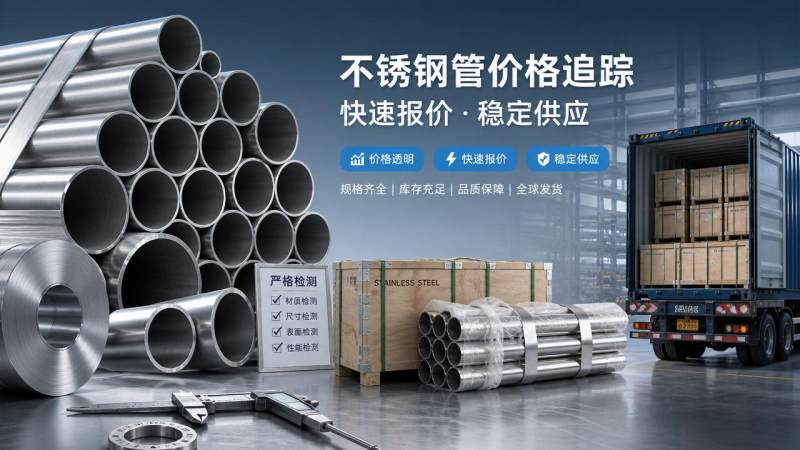
When buyers search for stainless steel pipe price, they usually do not want a simple number. They want to know whether prices are rising, what is driving the change, and how fast they should act.
For distributors and agents, the practical question is even more specific. Can you quote quickly without exposing your margin, and can you secure supply before the market moves again?
That is why price tracking matters more than isolated offers. A single quote may be valid for only a short time, while a pricing trend gives you a basis for planning purchases and negotiating better.
At Hongteng Fengda, we work with global steel buyers who need stable supply, dependable lead times, and clear communication. In fast-moving markets, speed only helps when it is backed by current market understanding.
The Core Search Intent Behind This Topic
The core search intent behind this topic is commercial decision support. Buyers want market-based guidance that helps them compare timing, supplier offers, and procurement risk before requesting or confirming an order.
They are not only asking, “What is today’s stainless steel pipe price?” They are asking, “What should I expect next, what affects my landed cost, and how can I quote customers faster with confidence?”
This means the most useful content is not broad industry theory. The most useful content is actionable information that connects price movements to sourcing decisions, quote management, and inventory strategy.
What Most Distributors and Stockholders Care About First
Distributors usually focus on six immediate concerns: current price direction, raw material volatility, mill lead times, specification differences, freight impact, and the risk of quoting too low or buying too late.
They also care about how long a supplier can hold a price, whether the supplier can support mixed specifications, and how much flexibility exists for repeat or scheduled orders.
For agents and traders, another key issue is response time. If your customer asks for a price today, waiting too long can mean losing the order or giving a quote based on outdated cost assumptions.
That is why a reliable exporter is valuable. Good suppliers do not just send quotations. They provide context, flag unusual movements, and help buyers understand whether a price shift is temporary or structural.
What Moves Stainless Steel Pipe Prices Most Often
The stainless steel pipe price is shaped by several connected factors. The most visible one is the cost of stainless steel raw materials, especially nickel, chromium, and molybdenum for higher alloy grades.
Grade differences matter a lot. Prices for 201 and 202 are usually more sensitive to different cost structures than 304, while 316 often reflects stronger alloy cost pressure due to molybdenum content.
Production route also affects price. Seamless and welded pipes have different manufacturing costs, and wall thickness, diameter tolerance, surface finish, and testing requirements all influence final quotations.
In addition, exchange rates can change export competitiveness. For overseas buyers, even a stable factory price may result in a higher or lower landed cost once currency movement and freight are included.
Energy cost, local environmental controls, and mill production schedules may also tighten supply. When multiple mills reduce output at the same time, available tonnage can become limited very quickly.
Why Daily Price Awareness Helps You Quote Faster
Fast quoting is not only about having a sales team online. It depends on whether you already understand current cost drivers and whether your supplier can translate those drivers into realistic quote windows.
If you track stainless steel pipe price updates daily or weekly, you can build quoting ranges by grade, specification, and destination market. This helps you respond before every exact detail is finalized.
For example, if nickel rises sharply and mills begin adjusting 304 offers, you can immediately warn customers that indicative pricing may move upward. That protects trust and reduces later quote revision disputes.
It also improves internal coordination. Procurement, sales, and inventory teams can make decisions from the same market view instead of reacting separately after a price jump has already affected margins.
How Distributors Can Read Market Signals More Effectively
Useful price tracking is not limited to checking one supplier’s offer. Buyers should compare raw material trends, mainstream export quotations, freight movement, inquiry frequency, and actual order lead times.
A rise in inquiries without immediate bookings may suggest customers expect future increases. Longer lead times combined with reduced discount flexibility often indicate mills are becoming more confident about the market.
On the other hand, if raw materials soften but export offers remain high, buyers should ask whether mills are clearing higher-cost inventory or whether supply remains tight despite lower input prices.
These details matter because they show whether a movement is likely to continue. Good procurement decisions often come from reading the structure behind the price, not the price alone.
How Product Mix and Cross-Sourcing Affect Purchasing Decisions
Many distributors do not source stainless steel pipe in isolation. They often manage mixed orders for structural sections, profiles, and project materials across construction, fabrication, and industrial applications.
That is where supplier coordination can create value beyond a single line item. If one partner can support multiple categories, buyers may reduce communication time, shipment complexity, and sourcing risk.
For projects involving structural packages, it can be useful to combine pipe procurement with sections such as H-beam where suitable. This is especially relevant for steel structure, bridging, mechanical manufacture, and shipbuilding requirements.
Available options may include grades such as Q235, Q345B, SS400, S275JR, S355JR, A572, and A992, with hot rolled or cold rolled specifications depending on the application and project design.
Technical flexibility also matters. Buyers often value support for flange thickness from 8 to 64 mm, web thickness from 5 to 36.5 mm, flange width from 50 to 400 mm, and web width from 100 to 900 mm.
When one exporter can align such structural products with international standards like JIS G3101, EN10025, ASTM A36, ASTM A572, and ASTM A992, purchasing becomes more predictable across multiple product groups.
How to Reduce Quoting Risk When Prices Are Unstable
The first rule is to avoid treating old prices as current references. Even recent transactions may no longer reflect the market if alloy costs, freight, or mill availability have changed suddenly.
Second, separate indicative pricing from confirmed pricing. This allows you to respond quickly to customer inquiries while clearly stating validity terms, volume assumptions, grade basis, and destination conditions.
Third, keep a rolling watchlist of sensitive items. For stainless pipe, that often includes 304 and 316, thin wall sizes, urgent production schedules, and small-lot orders that may carry weaker mill flexibility.
Fourth, work with suppliers who communicate transparently about lead time and production status. A lower quote is not always better if the material cannot ship when promised or the price cannot be held.
Finally, review landed cost, not ex-works price only. Ocean freight, port charges, packing, testing, and destination duties may change the real competitiveness of one quotation versus another.
What Makes a Supplier More Useful Than a Simple Price Source
Experienced buyers usually prefer suppliers who can explain price logic, not just issue numbers. That kind of support helps distributors defend quotations internally and communicate clearly with downstream customers.
At Hongteng Fengda, our role is to support steel buyers with stable production coordination, specification understanding, and responsive export service across international markets. Reliability matters as much as price.
Because we serve customers in North America, Europe, the Middle East, and Southeast Asia, we understand that different markets evaluate offers differently. Some focus on standards, some on lead time, and some on package cost.
For that reason, faster quotes should also be smarter quotes. They should reflect specification accuracy, practical production conditions, and realistic shipment planning instead of only chasing the lowest headline figure.
When It Makes Sense to Buy Now Versus Wait
Buying immediately makes more sense when alloy costs are rising, mills are extending lead times, freight is firming, or your customer has a fixed delivery deadline that leaves little room for delay.
Waiting may make sense when the market has recently spiked without strong order support, when raw material costs begin softening, or when buyers see clear signs of inventory pressure among mills or traders.
However, waiting should be a planned decision, not hesitation without data. Buyers should define trigger points such as target price ranges, restocking deadlines, and acceptable substitution options by grade or dimension.
This approach turns uncertainty into a managed process. Even if you do not buy today, you can still prepare a fast response path once the market reaches your target conditions.
Conclusion: Better Price Tracking Leads to Better Procurement Decisions
For distributors, agents, and stockholders, stainless steel pipe price tracking is not a passive market exercise. It directly supports faster quotes, stronger margin control, and more disciplined inventory planning.
The key is to look beyond one-time prices and focus on the drivers behind movement: alloy cost, mill behavior, specification complexity, freight conditions, and supply timing. Those signals help you act earlier and with more confidence.
In competitive export markets, the advantage often goes to buyers who combine speed with judgment. With consistent price monitoring and dependable supplier support, you can reduce sourcing risk and respond to customers more effectively.
If your business depends on timely steel quotations and stable cross-border supply, a structured view of the stainless steel pipe price market can help you protect margins and win more orders.
Please give us a message


Please enter what you want to find