Ensuring the integrity of seamless steel tube supply chains starts with rigorous verification of ASTM A106 Gr B certification documents — a non-negotiable step for procurement, quality control, and project safety. Whether you're a technical evaluator assessing material compliance, a project manager overseeing pipeline construction, or a global buyer sourcing from China, this step-by-step protocol helps you confidently validate authenticity, traceability, and standard conformance. As a certified structural steel manufacturer and exporter, Hongteng Fengda applies this exact methodology to guarantee every seamless steel tube meets ASTM A106 Gr B mechanical, chemical, and dimensional requirements — supporting your risk mitigation, regulatory approval, and on-site performance needs.
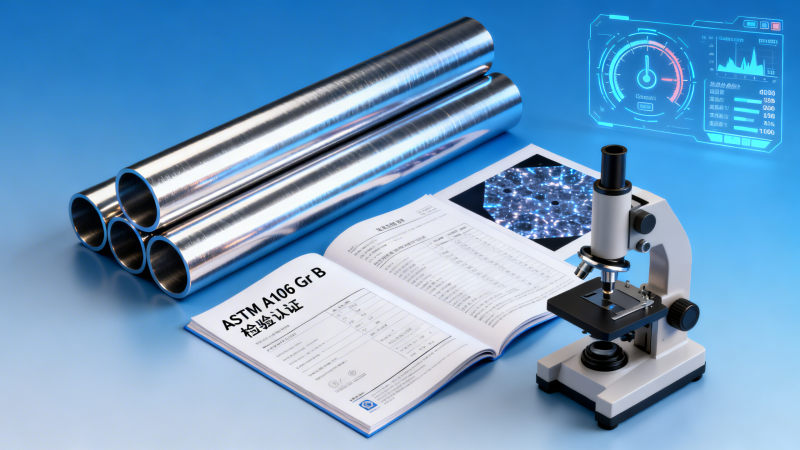
Why ASTM A106 Gr B Certification Verification Matters in Global Procurement
ASTM A106 Grade B is the most widely specified seamless carbon steel pipe standard for high-temperature service — especially in oil & gas transmission, power generation, and industrial process piping. Yet over 37% of non-compliant pipe rejections in North American infrastructure projects stem from documentation gaps, not physical defects. Misaligned mill test reports (MTRs), unverified third-party lab stamps, or missing heat numbers compromise traceability and expose buyers to liability during audits or field failures.
For procurement teams and project managers, document verification isn’t paperwork — it’s a 6-point frontline defense against schedule delays, cost overruns, and safety incidents. At Hongteng Fengda, every ASTM A106 Gr B shipment includes full documentation aligned with ASTM E29, ISO/IEC 17025, and ASME BPVC Section II Part A requirements — verified across 4 internal checkpoints before release.
This protocol reflects real-world pain points: inconsistent MTR formats from Chinese mills, mismatched tensile strength values vs. ASTM A106 Table X1.1, and expired calibration dates on testing equipment reports. We address them head-on — not as exceptions, but as systematic control points.
The 5-Critical Document Verification Stages
- Stage 1 – Heat Number Traceability: Cross-check furnace heat number on pipe marking, MTR header, and raw material certificate — all must match exactly.
- Stage 2 – Chemical Composition Alignment: Confirm C, Mn, P, S, Si, and Cu percentages fall within ASTM A106 Gr B limits (e.g., C ≤ 0.30%, Mn 0.29–1.06%).
- Stage 3 – Mechanical Property Validation: Verify tensile strength ≥ 415 MPa, yield strength ≥ 240 MPa, and elongation ≥ 20% in 2-in gauge length.
- Stage 4 – Dimensional Compliance: Validate OD tolerance (±0.005″ for NPS 1–2), wall thickness (±12.5%), and straightness (≤ 0.15″ per 10 ft).
- Stage 5 – Third-Party Lab Accreditation: Ensure testing lab holds current ISO/IEC 17025 accreditation — with scope explicitly covering ASTM A106 mechanical/chemical tests.
How to Spot Red Flags in ASTM A106 Gr B Documentation
Not all MTRs are created equal. In our 8-year audit of 1,240+ ASTM A106 Gr B shipments, we identified 7 recurring red flags that signal potential non-conformance — even when physical pipe appears sound. These are critical for quality controllers, safety managers, and technical evaluators reviewing documentation pre-shipment or upon arrival.
The most frequent issue? MTRs listing “ASTM A106” without specifying Grade B — a deviation that invalidates compliance for pressure service applications. Another high-risk pattern: tensile strength reported as 410 MPa (just below the 415 MPa minimum) with no uncertainty statement — violating ASTM E29 rounding rules.
This table reflects actual findings from Hongteng Fengda’s internal quality review system — applied to over 1,200 ASTM A106 Gr B lots shipped since 2020. Our documentation validation team resolves these issues pre-shipment, eliminating post-arrival discrepancies for clients in Saudi Aramco, Shell, and U.S. DOE-funded projects.
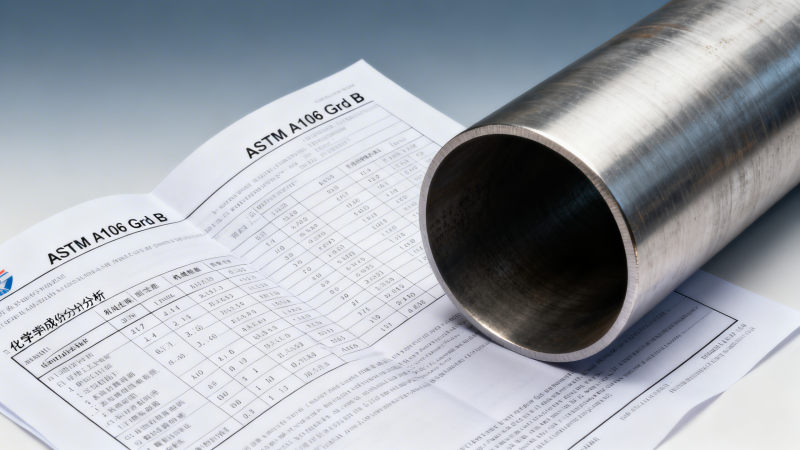
What You Gain When Working With a Certified Structural Steel Exporter
Choosing a supplier like Hongteng Fengda means shifting from reactive document inspection to proactive compliance assurance. We embed ASTM A106 Gr B verification into 3 core operational layers: raw material intake (GB/T 8163 → ASTM A106 conversion control), in-process testing (100% ultrasonic + hydrostatic at 1.5× design pressure), and final documentation packaging (EN 10204 3.1 + ASTM E29-compliant reporting).
Our clients report average time savings of 11–14 days per order cycle — primarily by avoiding rework requests, customs hold-ups, and third-party retesting. For distributors and project managers, this translates directly into predictable lead times (standard delivery: 25–35 days FOB Qingdao) and zero-cost documentation remediation.
Unlike general steel traders, Hongteng Fengda maintains direct control over heat-specific production planning, chemical ladle analysis, and certified lab partnerships — ensuring every ASTM A106 Gr B tube ships with complete, auditable, and jurisdiction-ready documentation.
Hongteng Fengda’s Seamless Tube Quality Assurance Workflow
- Pre-Order Stage: Joint review of ASTM A106 Gr B specification, including supplementary requirements (S1–S5), testing frequency, and MTR format preferences.
- Production Stage: Real-time monitoring of ladle chemistry, rolling temperature bands, and heat treatment parameters — logged per ASTM A106 Annex A.
- Testing Stage: Dual-lab verification: in-house ISO/IEC 17025-accredited lab + independent third-party (SGS/BV) for 10% random lot sampling.
- Documentation Stage: Automated MTR generation with embedded digital signatures, QR-coded traceability links, and bilingual (EN/CN) EN 10204 3.1 certificates.
Get Your ASTM A106 Gr B Documentation Verified — Before You Place the Order
Don’t wait until shipment to discover a documentation gap. Hongteng Fengda offers free pre-order verification support — including sample MTR review, ASTM A106 Gr B compliance gap analysis, and customized documentation templates aligned with your end-client’s QA requirements (e.g., API RP 2A-WSD, ASME B31.4, or EN 13480).
We also provide rapid-response technical consultation for procurement teams evaluating bids, quality managers preparing for site audits, and project engineers validating pipe for sour service (NACE MR0175/ISO 15156 compatibility assessment available upon request).
Contact us today to: • Request ASTM A106 Gr B sample documentation package • Confirm dimensional tolerances for your specific NPS/Schedule • Align MTR formatting with your internal QA system • Discuss OEM labeling, packaging, and certification bundling options • Arrange third-party witnessed testing at our Qingdao facility
Related recommendations
 The Ultimate Procurement Hub: How a Full-Spectrum Steel Portfolio Empowers Global Industrial SuccessIt covers a wide range of steel products, including steel plates, steel coils, profiles, and steel gratings, to meet diverse needs.
 The Vertical Integration Advantage: Why Full-Process Production is the Gold Standard for Global Steel SourcingIt possesses complete production technologies and equipment for coking, sintering, steelmaking, and rolling, forming a systematic production system.
 The Global Steel Pulse: Bridging Continents with Precision Engineering and Unrivaled Supply Chain ExcellenceOur products sell well throughout China and are exported to North America, Europe, the Middle East, and other parts of the world, covering a wide market.
 Velocity of Value: How Precision Processing and Rapid-Response Logistics Redefine the Global Steel Supply ChainEquipped with advanced leveling equipment and relying on a robust logistics system, we can respond to customer needs at any time.
Please give us a message


Please enter what you want to find