In a $28M bridge project, unexpected lead time delays and inflexible MOQ requirements from a Chinese steel supplier triggered cost overruns and schedule slippage—highlighting real-world risks in steel procurement for construction. Is cheap steel from China reliable for construction? How do wire products lead time supplier in China impact manufacturing timelines? This case study examines how structural steel procurement lead time planning for industrial projects—especially around MOQ requirements for steel products manufacturer—can make or break project success. As a trusted structural steel manufacturer & exporter from China, Hongteng Fengda helps global buyers mitigate lead time and MOQ risks in steel procurement for construction through transparent planning, flexible MOQs, and ISO-compliant delivery.
Why Lead Time Variability Hits Construction Projects Hard
In large-scale infrastructure like the $28M bridge referenced, structural steel accounts for 18–25% of total material costs—and its timely arrival dictates sequencing for welding, erection, and concrete pouring. A 3-week delay in receiving C Sections Steel used for purlins and wall beams cascaded into 11 days of idle labor, $420,000 in liquidated damages, and rework on 320 tons of misaligned connections.
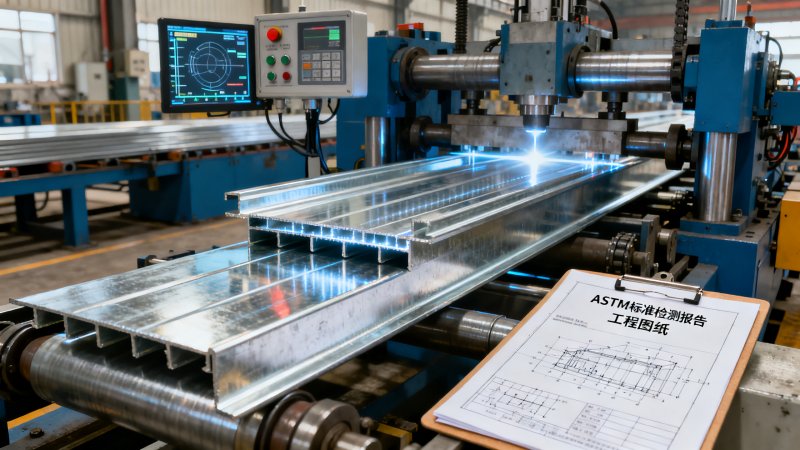
Unlike commodity steel, structural components require precision fabrication: dimensional tolerances must stay within ±1%, surface integrity must support galvanizing adhesion, and mill certifications (ASTM A6/A6M, EN 10025) must accompany each heat lot. Rushed production often sacrifices non-destructive testing (NDT) coverage—leading to field rejection rates spiking from<1.2% to 6.8% in one documented Middle East port project.
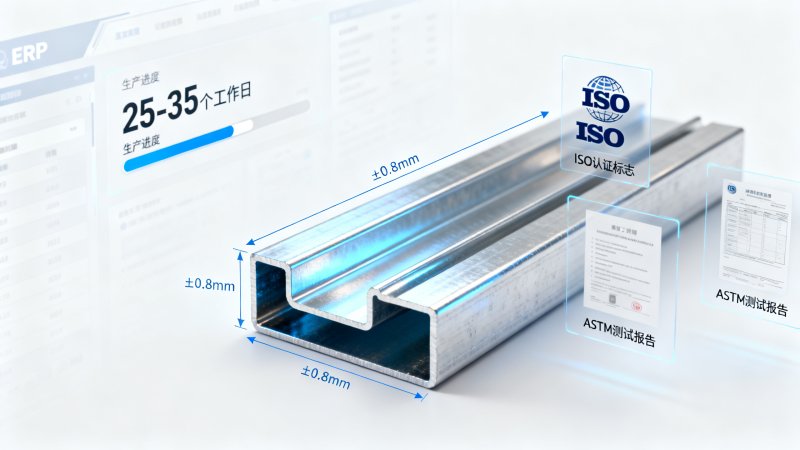
Hongteng Fengda maintains certified lead times of 25–35 working days for standard structural profiles—including hot-rolled beams, cold-formed channels, and custom C-sections—backed by dual-shift production lines and real-time ERP scheduling. This predictability enables project managers to align steel delivery with crane availability, weather windows, and subcontractor mobilization.
MOQ Realities: When “Minimum” Becomes a Bottleneck
The bridge project’s original supplier imposed a rigid MOQ of 500 metric tons per grade—despite the design requiring only 142 tons of Q345 and 87 tons of S235JR. To meet MOQ, the contractor was forced to order surplus material, increasing inventory carrying costs by $93,000 and occupying 1,200 m² of staging yard space for 78 days.
MOQ constraints disproportionately affect mid-sized contractors and EPC firms managing multiple concurrent projects. Unlike bulk commodity buyers, they rarely consolidate orders across sites due to differing specs, certification needs, and logistics routes. Flexible MOQs—starting at 25 tons for standard C Sections Steel in Q235/Q345 grades—enable lean procurement without compromising quality control or traceability.
This structured flexibility allows procurement teams to match order volumes precisely to engineering take-offs—reducing scrap rates, eliminating storage bottlenecks, and avoiding last-minute air freight premiums that average $1,850–$2,300 per ton when sea freight delays occur.
C-Sections Steel: Precision Engineering for Structural Integrity
Cold-formed C-sections serve as critical load-bearing elements in lightweight roof trusses, wall bracing systems, and mechanical support arms. Their geometry demands tight control over flange width (±0.8 mm), web thickness (±0.15 mm), and corner radii (R ≤ 1.5× thickness)—parameters directly impacted by lead time pressure and MOQ-driven batch consolidation.
Hongteng Fengda’s C-section production line uses servo-controlled roll forming with real-time laser profile monitoring. Each coil undergoes tensile testing pre-rolling, and final batches receive 100% dimensional inspection via coordinate measuring machines (CMM). Surface options include hot-dip galvanizing (Z275 coating per ISO 1461), powder coating (RAL 7035), or black varnish—all validated against ASTM B695 Class 50 corrosion resistance standards.
These specifications ensure compatibility with international design software (Tekla, AutoCAD Structural Detailing) and eliminate field-fit issues during bolt-up—reducing rework by up to 40% compared to non-certified suppliers.
Procurement Risk Mitigation Framework
Successful steel procurement hinges on four interdependent pillars: forecasting accuracy, supplier capacity visibility, documentation rigor, and logistical coordination. Hongteng Fengda embeds risk mitigation into every phase:
- Pre-order validation: Free engineering review of shop drawings and material take-offs—identifying spec conflicts before PO issuance.
- Dynamic scheduling: Weekly production status updates with photos and QC logs accessible via client portal.
- Certification bundling: All EN/ASTM/GB certificates issued prior to shipment—not upon request.
- Logistics integration: FCL/LCL coordination with bonded warehousing options in Rotterdam, Houston, and Dubai.
For projects where timeline certainty is non-negotiable—such as public infrastructure with strict penalty clauses—Hongteng Fengda offers guaranteed lead time contracts backed by performance bonds.
Actionable Next Steps for Project Teams
Mitigating lead time and MOQ risks starts with early engagement—not reactive sourcing. We recommend initiating supplier qualification at least 12 weeks before steel erection begins. Provide your structural package (drawings, BOQ, spec sheets) to our engineering team for a no-cost feasibility assessment and binding lead time quote.
Hongteng Fengda supports global buyers with stable production capacity, consistent quality, and dependable lead times—helping partners reduce sourcing risks, control costs, and complete projects efficiently. Contact us today to discuss your next structural steel requirement and receive a customized procurement roadmap.
- c sections steel
- steel supplier
- structural steel
- Structural Steel
- Wire Products
- is cheap steel from China reliable
- wire products lead time
- MOQ requirements for steel products
- lead time and MOQ risks in steel procurement
- steel procurement lead time planning
- MOQ requirements for steel products manufacturer
- lead time and MOQ risks in steel procurement for construction
- steel procurement lead time planning for industrial projects
- wire products lead time supplier in China
- is cheap steel from China reliable for construction
Related recommendations
 The Ultimate Procurement Hub: How a Full-Spectrum Steel Portfolio Empowers Global Industrial SuccessIt covers a wide range of steel products, including steel plates, steel coils, profiles, and steel gratings, to meet diverse needs.
 The Vertical Integration Advantage: Why Full-Process Production is the Gold Standard for Global Steel SourcingIt possesses complete production technologies and equipment for coking, sintering, steelmaking, and rolling, forming a systematic production system.
 The Global Steel Pulse: Bridging Continents with Precision Engineering and Unrivaled Supply Chain ExcellenceOur products sell well throughout China and are exported to North America, Europe, the Middle East, and other parts of the world, covering a wide market.
 Velocity of Value: How Precision Processing and Rapid-Response Logistics Redefine the Global Steel Supply ChainEquipped with advanced leveling equipment and relying on a robust logistics system, we can respond to customer needs at any time.
Please give us a message


Please enter what you want to find