Installing Electrical Conduit Pipe in Underground Trenches
For project managers overseeing underground infrastructure, installing an electrical conduit pipe in trenches requires precision, durability, and strict adherence to safety standards. Proper installation ensures long-term protection for critical wiring against soil movement, moisture, and environmental stress. This comprehensive guide outlines the essential steps, material selections, and best practices to help you execute your trenching projects efficiently. By optimizing your installation process, you can minimize costly downtime, control project budgets, and deliver reliable structural integrity for your construction endeavors.
 Backfill material must be carefully selected. The initial backfill, or haunch fill, surrounding the lower half of the conduit should consist of select granular material free of large rocks, debris, or organic matter. This material must be carefully placed and compacted in thin layers (lifts) to ensure it flows into the voids beneath the conduit, providing uniform lateral support.
Project managers must mandate compaction testing for each lift. The required compaction density, usually specified as a percentage of the maximum dry density (e.g., 95% Standard Proctor), must be verified by a qualified technician before the next layer is added. Compacting too thick a layer, or using heavy machinery directly over the conduit before sufficient cover is established, will crush or deform the pipe.
Once the required cover depth is achieved, a warning tape and durable marker tiles should be installed. These visual indicators are critical for future excavation activities, preventing accidental strikes by other utility contractors. The final backfill layers can utilize native soil, provided it is free of expansive clays and large stones, and is compacted to match the surrounding grade to prevent surface water from pooling above the trench.
Geotechnical Assessment and Trench Preparation
The longevity of any underground conduit system is fundamentally dictated by the condition of the trench bed. Before any materials are lowered into the excavation, project managers must verify that the trench bottom meets specific geotechnical requirements. Excavating to the correct depth is only the initial phase; the native soil at the bottom must be evaluated for its load-bearing capacity and moisture content. In areas with a high water table, continuous dewatering is mandatory during the installation process. Working in a saturated trench compromises the bedding material and weakens the trench walls, leading to immediate or delayed structural failures. If the native soil consists of sharp rocks, expansive clays, or unstable organic material, it must be removed to a specified depth below the conduit invert. The bedding layer, typically composed of sand or finely graded gravel, acts as a continuous cushion. This layer prevents point loading on the conduit, which can cause localized stress fractures over time, especially under heavy surface traffic loads. Project managers should enforce strict inspection protocols for the bedding thickness and uniformity before authorizing the placement of the first conduit section. Uneven bedding is a primary cause of joint separation and conduit misalignment in later stages.Conduit Selection, Handling, and Joint Integrity
Selecting the appropriate electrical conduit pipe involves balancing mechanical strength, corrosion resistance, and the specific environmental hazards of the site. For heavy-duty industrial applications or areas subject to severe external mechanical damage, rigid metal conduits, such as galvanized steel pipes, are often specified. In highly corrosive soils, the external coating and material grade of the conduit become critical variables. Handling the conduit on-site requires careful attention to prevent surface damage. Scratches or gouges in protective coatings compromise the material's ability to resist subterranean corrosion. When cutting and threading metal conduits, the exposed threads must be treated with an approved corrosion-inhibiting compound before assembly. Joint integrity represents the most vulnerable point in an underground conduit run. Whether using solvent-welded joints for PVC conduits or threaded and sealed connections for steel pipes, the sealing mechanism must be impermeable to groundwater and soil chemicals. For long, straight runs of rigid conduit, thermal expansion and contraction can generate significant axial forces. Incorporating expansion fittings at calculated intervals prevents the conduit from buckling or pushing apart at the joints due to temperature fluctuations. Project managers must ensure that expansion joints are installed according to the manufacturer's temperature-deflection charts, accounting for the ambient temperature at the time of installation versus the expected extreme seasonal variations.Execution of Cable Pulling and Rigging Operations
Once the conduit bank is assembled and secured, the subsequent phase involves threading the conductors. Cable pulling in underground trenches introduces significant execution risks, primarily related to exceeding the maximum allowable pulling tension, which can permanently damage cable insulation. Managing tension requires calculating the cumulative friction along the conduit route, factoring in the coefficient of friction between the cable jacket and the conduit inner wall, the total weight of the cable, and the presence of bends. Using compatible, high-quality cable lubricants is essential to reduce friction, but the lubricant must be approved for the specific cable jacket material to prevent chemical degradation. In deep trenches or environments with persistent moisture and corrosive soil elements, the rigging and pulling equipment used to maneuver heavy conduit sections or assist in cable threading faces harsh operational conditions. Standard lifting slings or pulling lines may degrade rapidly when exposed to subterranean moisture and chemicals. To maintain operational safety and prevent equipment failure during critical heavy lifting or winching operations, utilizing a Hot dipped Galvanized Steel Wire Rope provides the necessary high tensile strength and superior corrosion resistance. The thick zinc coating ensures that the rigging hardware maintains its structural integrity even when repeatedly exposed to wet, aggressive underground environments, thereby reducing the risk of snap-back incidents and project delays.Backfilling Strategy and Compaction Control
The backfilling process is frequently rushed on construction sites, yet it is the most common cause of post-installation conduit failure. Improper backfill leads to differential settlement, which places uneven bending stresses on the conduit, eventually causing joints to separate or the conduit itself to fracture.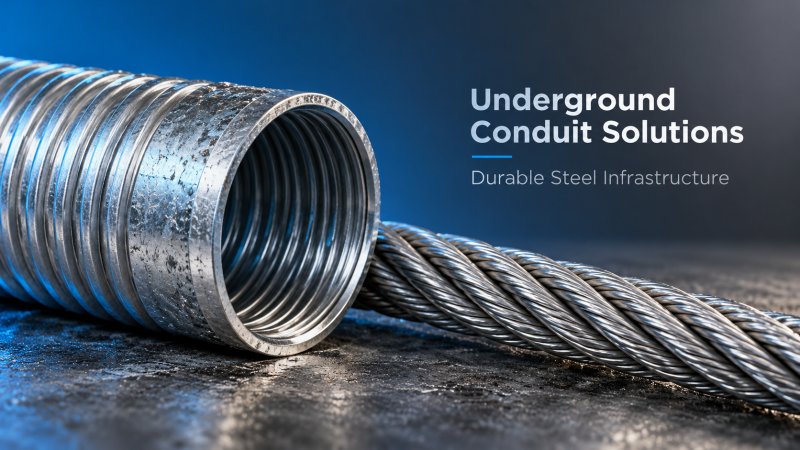
Testing, Commissioning, and Quality Assurance
Before the trench is finally closed out, a series of verification tests must be conducted to ensure the system's readiness. For conduit systems intended to house future cables, a mandrel test is often required. Pulling a rigid mandrel of a specific diameter through the empty conduit verifies that no deformation, ovality, or internal obstruction occurred during installation and backfilling. The interior of the conduit must be thoroughly cleaned using a swab or compressed air to remove any moisture, dirt, or debris that could damage cable insulation during the final pull. A continuous pull-wire should be left inside each conduit section to facilitate future cable installation. From a project management perspective, quality assurance extends beyond physical inspections. Comprehensive documentation is required for project handover. This includes as-built drawings detailing the exact routing and depth of the conduit, material certificates verifying the specifications of the conduit and jointing compounds, and signed compaction test reports. Maintaining rigorous documentation not only ensures compliance with engineering standards but also provides a reliable baseline for future maintenance and troubleshooting, ultimately securing the long-term operational reliability of the underground electrical infrastructure.Previous page: Already the first one
Next page: Already the last one
Please give us a message


Please enter what you want to find