Project delays often start with unstable material supply, inconsistent quality, or poor coordination. Choosing the right galvanized pipe supplier helps project managers reduce procurement risks, keep schedules on track, and avoid costly disruptions. For construction and industrial buyers, a dependable supplier with stable capacity, strict quality control, and export experience is essential to ensuring smooth project execution.
Why does the right galvanized pipe supplier matter so much for project timelines?
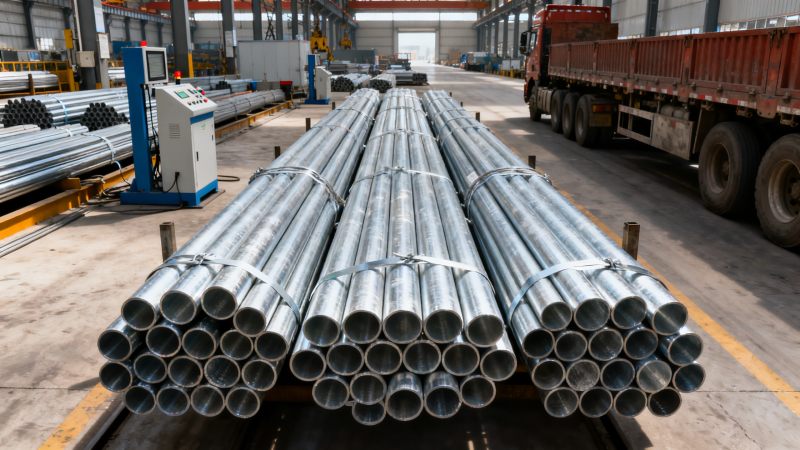
For project managers, pipe procurement is not just a purchasing task. It is a schedule control task. A weak galvanized pipe supplier can trigger late production, failed inspections, port delays, missing documents, and site installation interruptions.
In steel-related projects, one delayed material category can affect multiple downstream trades. Pipe supports, utility routing, structural connections, and equipment installation often depend on synchronized delivery. When galvanized steel pipe arrives late or out of specification, labor idle time rises quickly.
This is why experienced buyers evaluate a supplier beyond price. They look at production stability, compliance with ASTM, EN, JIS, or GB standards, coating consistency, packaging quality, export handling, and communication speed during execution.
- Late raw material sourcing can delay rolling, forming, galvanizing, and final dispatch.
- Poor dimensional control may cause on-site fit-up problems and rework.
- Inadequate zinc coating or surface defects can result in inspection rejection.
- Weak export documentation can slow customs clearance and inland delivery.
A reliable galvanized pipe supplier protects the schedule by reducing uncertainty at every stage, from quotation and sample confirmation to production planning and shipment release.
What causes delays when working with the wrong supplier?
Most delays are not caused by one dramatic failure. They come from small process gaps that accumulate. A trading source without real production visibility may promise lead times it cannot control. A mill without export discipline may manufacture correctly but miss packing, marking, or documentation requirements.
Project managers should pay attention to the following risk points before placing an order with any galvanized pipe supplier.
- Unclear material origin, making consistency between batches difficult to maintain.
- No confirmed inspection plan for dimensions, coating, marking, and bundle identification.
- No buffer in production planning during peak steel demand seasons.
- Weak response to drawing revisions or urgent quantity adjustments.
- Insufficient export experience for destination-specific documentation.
If your project includes multiple steel items, the risk becomes even higher. Delays in pipe often overlap with delays in sections, beams, channels, or custom fabricated parts. Coordination matters as much as product quality.
A practical delay-risk comparison for buyers
The table below helps project teams compare a dependable galvanized pipe supplier against a high-risk source using criteria that directly affect engineering schedules and cost control.
The difference is not theoretical. It directly affects whether your team installs on time, passes inspection smoothly, and avoids expensive rescheduling of cranes, labor, and subcontractors.
How should project managers evaluate a galvanized pipe supplier before ordering?
A structured prequalification process reduces surprises later. The best supplier is not simply the one with the lowest quote. It is the one that can meet your technical requirements, support your schedule, and execute reliably across borders.
Key checks before issuing a purchase order
- Confirm applicable standards, such as ASTM, EN, JIS, or GB, based on project location and engineer requirements.
- Request details on steel grade, dimensions, wall thickness range, zinc coating process, and tolerance control.
- Check whether the supplier has stable production capacity during your required delivery window.
- Ask about inspection methods, traceability, and how nonconforming materials are handled.
- Verify export experience to your destination market, including packaging, labeling, and shipping coordination.
For larger steel packages, it also helps to work with a supplier that understands related structural products. Coordination between galvanized pipe and other steel components can simplify sourcing and reduce communication gaps.
Evaluation matrix for procurement teams
Use this selection table when comparing each galvanized pipe supplier under consideration. It turns general claims into measurable procurement criteria.
This approach is especially useful for EPC contractors, industrial buyers, and project coordinators managing multiple work fronts with tight material release dates.
What service strengths reduce sourcing risk in steel projects?
In international steel procurement, project success often depends on whether your supplier can support more than one product line with consistent quality and lead-time discipline. Hongteng Fengda serves global construction, industrial, and manufacturing projects as a structural steel manufacturer and exporter from China.
The company focuses on angle steel, channel steel, steel beams, cold formed steel profiles, and customized structural steel components. This matters for project managers because multi-item sourcing is easier when one supplier understands standard sections, OEM needs, and export execution together.
With modern manufacturing facilities and strict quality control, products are supplied according to major international standards including ASTM, EN, JIS, and GB. For buyers in North America, Europe, the Middle East, and Southeast Asia, dependable lead times and stable production capacity are not marketing extras. They are essential risk-control factors.
For example, some projects need not only galvanized pipe procurement planning but also anti-slip plates, walkways, platform materials, or machinery-floor steel. In such cases, buyers may also evaluate SM400A Patterned steel plate for applications such as transportation, construction, decoration, equipment-floor areas, machinery, and shipbuilding.
This patterned steel plate is available in grades such as SM400A and SM400B, with thickness from 2-8mm, width from 600mm-1800mm, and length from 2m-12m or according to project requirements. Its anti-skid function, patterned surface, and compliance options including ASTM, DIN, JIS, BS, GB/TC, ISO, SGS, and BV make it relevant where safety and surface performance matter alongside structural supply planning.
How can you balance price, lead time, and quality without causing hidden project costs?
The cheapest quotation may become the most expensive purchase if it creates delay, replacement, or re-inspection. Project managers should calculate total procurement impact, not just unit price per ton or per meter.
Hidden costs in steel sourcing often include site waiting time, split shipments, corrective fabrication, urgent local replacement, extra inland transport, and delayed project milestones. A capable galvanized pipe supplier helps control these costs by keeping execution predictable.
Common cost trade-offs to consider
- A slightly higher unit price may include better coating control, tighter tolerance, and more reliable packing.
- Shorter lead times can reduce site standby losses and improve contractor coordination.
- Better communication during production can prevent costly mistakes before shipment.
- Integrated supply across several steel categories can lower administration and logistics complexity.
In practice, the right sourcing decision often comes from choosing a supplier with stable operational control rather than chasing the lowest initial quote.
What standards, documents, and compliance points should not be overlooked?
Compliance errors can cause the same level of disruption as production delays. A galvanized pipe supplier should understand the standard required by your project specification and prepare documents that match contract and destination needs.
The exact document package varies by market and order type, but project teams usually review several common items before shipment approval.
- Material grade and size confirmation against approved drawings or purchase specifications.
- Inspection records for dimensions, appearance, and relevant coating characteristics.
- Packing list details with bundle marks, quantity breakdown, and shipment references.
- Requested compliance references aligned with ASTM, EN, JIS, or GB where applicable.
If your project also includes patterned floor steel or platform materials, check thickness tolerance, width tolerance, and applicable standard references early. This avoids document mismatches when multiple steel products ship together.
How do successful project teams work with a galvanized pipe supplier during execution?
The selection decision is only the start. Good results come from disciplined communication after order placement. Even a strong galvanized pipe supplier performs better when the buyer manages approvals and updates clearly.
Recommended execution workflow
- Freeze key specifications early, including sizes, coating expectations, marking, and packing method.
- Agree on a milestone schedule covering production start, inspection, packing, booking, and dispatch.
- Assign one technical contact and one logistics contact from each side to reduce response delays.
- Review progress regularly, especially for mixed orders containing structural sections and custom items.
- Confirm final documents before shipment release rather than after the cargo reaches port.
This workflow is particularly effective for overseas buyers coordinating production in China with installation teams in other regions. Clear checkpoints reduce misunderstanding and help prevent last-minute schedule pressure.
FAQ: what do buyers ask most when choosing a galvanized pipe supplier?
How do I know whether a galvanized pipe supplier can really meet my lead time?
Ask for a breakdown of production timing, not only one final shipping date. A serious supplier should explain raw material preparation, manufacturing window, inspection, packing, and shipment planning. If the answer stays vague, schedule risk remains high.
Is price the best way to compare suppliers?
No. Price is one factor, but project managers should compare total delivery reliability, quality consistency, and export accuracy. A low offer that causes delay or rejection usually increases the final project cost.
What should I send when requesting a quotation?
Provide size range, quantity, required standard, destination port, target delivery date, and any packing or marking requirements. If the project includes other structural steel products, include them in the same inquiry to improve coordination and scheduling.
Can one supplier support both standard steel products and customized items?
Yes, if the supplier has manufacturing and export experience across structural steel categories. This can simplify procurement for buyers who need beams, channels, cold formed profiles, custom components, or related steel plates in one project package.
Why choose us for steel procurement planning and delivery support?
Hongteng Fengda supports global buyers with stable production capacity, strict quality control, and dependable lead times across structural steel products. For project managers, this means fewer sourcing gaps, better coordination, and a more predictable path from order confirmation to site delivery.
If you are evaluating a galvanized pipe supplier or planning a broader steel package, you can discuss practical topics before ordering: parameter confirmation, product selection, delivery schedule, OEM customization, applicable standards, sample support, packing details, and quotation alignment with project milestones.
This is especially useful when your project needs a combination of structural sections, custom steel components, and related products such as anti-slip plates or platform materials. Early coordination helps reduce sourcing risk, control cost, and keep installation work on schedule.
Contact us with your specifications, drawings, destination, and timeline. We can help review the steel product mix, confirm standard requirements, estimate delivery windows, and support a sourcing plan that fits your project execution goals.
Please give us a message


Please enter what you want to find