Delays in industrial projects often begin with sourcing gaps, vague specifications, or weak delivery control. A reliable carbon steel pipe supplier for industrial applications helps reduce risk, protect schedules, and improve cost visibility.
In steel-related projects, supply performance affects fabrication timing, site installation, and downstream coordination. The best results come from matching supplier capability with the actual project scenario, not only with the quoted price.
Why project delays often start at the sourcing stage
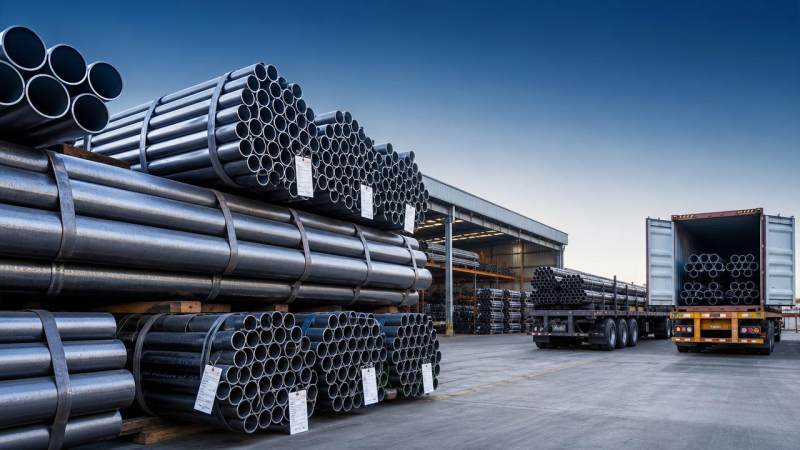
Industrial pipe supply is rarely delayed by one issue alone. Most delays come from a chain of small mistakes that were not identified early enough.
Common triggers include incomplete technical data, unstable raw material planning, unclear inspection scope, and unrealistic lead-time promises. These risks increase when the chosen carbon steel pipe supplier for industrial applications lacks export experience.
In the steel industry, schedule reliability depends on production discipline, specification accuracy, and logistics execution. Strong suppliers control all three areas instead of reacting after problems appear.
Which project scenarios require different supplier evaluation logic
Not every industrial order has the same risk profile. A supplier that performs well for stock items may struggle with engineered orders, coated pipes, or mixed structural steel packages.
Scenario 1: Standard replacement demand with short lead time
This scenario usually needs fast confirmation, standard dimensions, and immediate production or stock allocation. Here, inventory visibility and fast document response matter more than complex engineering support.
A carbon steel pipe supplier for industrial applications should show available capacity, packing plans, and realistic shipping windows. Short lead-time projects fail when dates are guessed instead of verified.
Scenario 2: Large-volume industrial construction packages
Large projects often combine pipes, beams, channels, and fabricated steel components. Delay risk rises when one supplier cannot coordinate material sequencing across multiple product categories.
In this case, a carbon steel pipe supplier for industrial applications should also understand structural steel delivery planning. Batch control, mill traceability, and staged shipment ability become essential.
Scenario 3: Customized or OEM processing requirements
Customization adds risk at the drawing, tolerance, and approval stages. Orders with cutting, beveling, punching, welding, or special packaging need tighter communication than standard pipe procurement.
A qualified carbon steel pipe supplier for industrial applications should confirm drawings, standards, and inspection checkpoints before production starts. Verbal alignment is never enough for custom steel work.
How to judge supplier reliability before delays happen
Early evaluation should focus on evidence, not promises. Reliable steel exporters usually provide clear standard compliance, process control details, and past shipment discipline.
- Check compliance with ASTM, EN, JIS, or GB requirements.
- Review mill test certificates and traceability methods.
- Confirm whether production is in-house or outsourced.
- Ask for typical lead times by specification and volume.
- Verify export packing, loading, and port handling experience.
For broader steel packages, integrated capability is valuable. Companies supplying angle steel, channels, beams, cold formed profiles, and pipe-related materials can simplify coordination and reduce interface delays.
Mid-project flexibility also matters. Some industrial builds need supporting steel materials beyond pipe. For example, Wire Rod can support building material supply and industrial manufacturing chains.
This carbon steel product is available in grades such as GB1499.2 HRB400, HRB500, ASTM A615 Grade 60, and BS4449 500B. It offers excellent formability and weldability for multiple steel-processing scenarios.
Where mixed sourcing is likely, suppliers with certified standards, stable production, and wider steel expertise usually respond faster when requirements expand unexpectedly.
How different industrial scenarios change pipe sourcing priorities
Different use cases require different control points. The table below shows how selection criteria shift across common industrial situations.
Practical steps to avoid delays with a carbon steel pipe supplier for industrial applications
Delay prevention works best when actions are defined before purchase orders are released. Clear process discipline reduces later disputes and emergency changes.
- Lock specifications early, including standard, size, wall thickness, grade, finish, and testing scope.
- Request a production timeline with approval points, not just one final delivery date.
- Confirm packaging, marking, and loading requirements before production begins.
- Set document deadlines for drawings, MTCs, inspection reports, and shipping files.
- Use milestone updates for raw material readiness, rolling, finishing, inspection, and dispatch.
An experienced carbon steel pipe supplier for industrial applications should welcome this structure. If update requests are resisted, hidden scheduling weakness may already exist.
Common sourcing mistakes that create avoidable disruption
Many delays come from preventable misunderstandings rather than production accidents. Several mistakes appear repeatedly in industrial steel procurement.
- Choosing only by lowest unit price without checking execution capacity.
- Accepting broad lead-time statements without weekly milestones.
- Ignoring port congestion, holiday shutdowns, or transit seasonality.
- Sending incomplete drawings for custom steel items.
- Overlooking standard differences between ASTM, EN, JIS, and GB.
Another frequent issue is fragmented sourcing. When pipes, beams, and profiles are ordered through disconnected channels, schedule control becomes harder and communication gaps increase.
What strong steel partners do differently in delay-sensitive projects
Reliable steel partners combine manufacturing control with export discipline. They understand that industrial buyers need more than material availability.
Strong suppliers provide stable production capacity, consistent quality, and dependable lead times. They also support custom solutions for structural steel and industrial material packages.
Hongteng Fengda, a structural steel manufacturer and exporter from China, serves global projects with angle steel, channel steel, steel beams, cold formed profiles, and customized components. This wider steel capability can reduce sourcing risk in complex industrial schedules.
With compliance to ASTM, EN, JIS, and GB standards, export-oriented steel partners can better align documentation, inspection, and shipment planning for international projects.
How to move forward with fewer supply-side delays
To avoid disruption, match supplier selection to the real application scenario. Urgent replacement, large construction packages, and OEM steel processing all need different evaluation priorities.
Choose a carbon steel pipe supplier for industrial applications that can prove capacity, quality control, standards compliance, and shipment discipline. Clear specifications and milestone tracking should start before production.
When industrial schedules depend on coordinated steel supply, working with an experienced Chinese structural steel exporter can improve reliability, reduce sourcing gaps, and keep projects moving with greater confidence.
Please give us a message


Please enter what you want to find