Choosing the right pipe stainless steel supplier is critical for quality, cost control, and project reliability. Whether you are comparing an ss pipe price, evaluating a stainless steel pipe manufacturer, or sourcing from a trusted stainless steel pipe exporter, careful vetting helps reduce procurement risks. This guide explains the key factors buyers should review before selecting a stainless steel pipe supplier for industrial, construction, and distribution needs.
What should you verify first when screening a stainless steel pipe supplier?
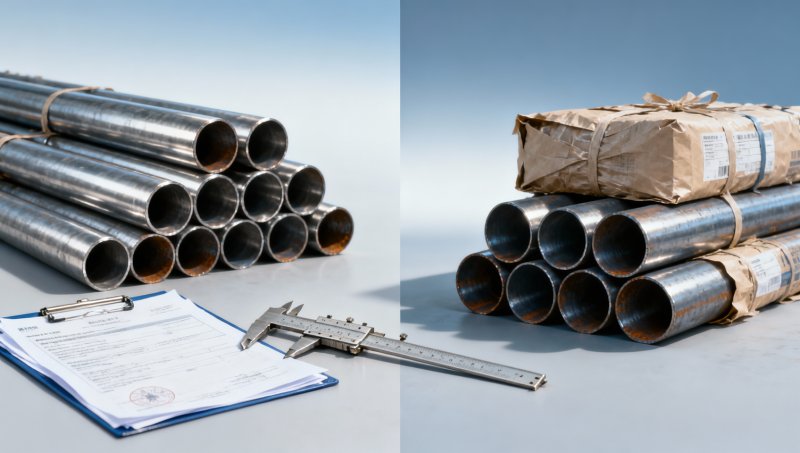
The first step is not price. It is supplier identity, production scope, and document consistency. In the steel industry, many buyers compare a stainless steel pipe supplier based on quotation alone, but the real risk often comes from unclear manufacturing capability, unstable raw material sources, or incomplete quality records. A proper screening process should start with 3 core checks: business legitimacy, product range, and technical matching to your project.
For procurement teams, technical reviewers, and project managers, the question is simple: can this supplier consistently deliver the grade, size, tolerance, and documentation you require over 1 order, 3 shipments, or a 6–12 month supply cycle? A supplier that can only satisfy a sample order but struggles with batch consistency creates hidden costs in inspection, site delay, and replacement.
A reliable supplier should clearly explain whether it is a direct manufacturer, trader, or integrated exporter. This matters because communication speed, technical control, and lead time accuracy often differ. In many global sourcing projects, the practical lead time window for standard steel items may range from 2–6 weeks depending on size, grade, and finishing requirements. Buyers should ask where the material is made, who controls inspection, and how production scheduling is managed.
For companies working across construction, manufacturing, and industrial supply chains, it is also useful to evaluate whether the supplier understands related structural steel needs beyond one product line. Hongteng Fengda, as a structural steel manufacturer and exporter from China, supports global buyers with angle steel, channel steel, steel beams, cold formed steel profiles, and customized structural steel components. This broader capability can reduce sourcing fragmentation when a project includes multiple steel categories.
Initial verification checklist
- Confirm whether the company is a manufacturer, exporter, or both, and request matching business and export documentation.
- Check if the supplier can provide common international standards such as ASTM, EN, JIS, or GB when required by the project.
- Review typical production lead times, such as stock supply in several days or mill production in 2–6 weeks, depending on specification.
- Ask for sample quality documents, including heat number traceability, dimensional inspection, and material test records.
- Verify export experience to your target market, especially if shipping to North America, Europe, the Middle East, or Southeast Asia.
How do you evaluate manufacturing capability, quality control, and technical fit?
A stainless steel pipe manufacturer should be judged by process control, not brochure language. Buyers should ask about raw material procurement, forming method, welding or seamless process, heat treatment where relevant, dimensional tolerance control, and final inspection flow. For quality control personnel and safety managers, the critical issue is repeatability. One acceptable batch does not prove stable long-term performance.
In practical sourcing, 5 technical checkpoints usually matter most: material grade, wall thickness tolerance, outer diameter tolerance, surface condition, and test documentation. If your pipe is used in industrial processing, fluid transport, fabrication, or structural support, these items affect fit-up, weldability, corrosion behavior, and installation efficiency. Even small deviations can create downstream losses during cutting, threading, welding, or assembly.
A capable supplier should also communicate clearly about what is standard and what is custom. For example, some buyers need standard stainless steel pipes, while others need mixed sourcing support for structural steel packages. Mid-project procurement often expands from pipe to beams, channels, profiles, or rail-related steel products. In such cases, integrated supply coordination can reduce vendor management time by 20%–30% in complex projects, although exact results vary by purchasing structure and inspection method.
For projects involving rail infrastructure, bridge safety edges, or handrail systems, some buyers also compare related carbon steel products such as Rail. Typical options include grades such as U74, U71Mn, PD2, Q235, 55Q, and 50Q, with common length ranges of 12m–30m, thickness ranges of 3mm–24mm, and tolerance around ±1%. This kind of adjacent product capability can be useful when a supplier is expected to support both pipe procurement and broader steel package planning.
Key technical questions to ask
Process and inspection
Ask how many inspection stages are used before shipment. A practical answer should include at least 3 stages: incoming raw material verification, in-process dimensional control, and final inspection before packing. If the supplier cannot explain this workflow, quality consistency may depend too much on manual judgment.
Standards and traceability
Ask whether each bundle or batch can be linked to heat number, mill certificate, and inspection report. Traceability is especially important for technical evaluators, distributors, and end users handling maintenance or warranty claims after installation.
The table below helps compare supplier capability beyond basic quotation language and gives procurement teams a practical scoring framework.
This comparison shows why technical fit and process transparency should be validated before final price negotiation. A lower unit quote may become more expensive after re-inspection, delay, or partial rejection at destination.
How should buyers compare ss pipe price without missing hidden costs?
An ss pipe price should never be compared in isolation. Procurement teams should compare at least 6 dimensions: grade, size tolerance, testing scope, surface finish, packing method, and delivery terms. Two offers that look similar on a unit-price basis can differ significantly once you include inspection fees, port charges, extra finishing, document handling, and replacement risk.
For distributors and project purchasers, the most common hidden cost appears in specification ambiguity. If the quotation does not clearly define OD, wall thickness, length, finish, standard, or testing, the supplier may ship technically acceptable but commercially unsuitable material. This often creates losses in cutting efficiency, welding preparation, stock management, or end-customer claims.
Commercial reviewers should also separate stock orders from mill orders. Stock supply may support urgent projects in 3–10 days if material is available, while production orders often require 15–45 days depending on volume and processing. If your project schedule has only a 2-week installation buffer, this difference matters more than a small unit-price reduction.
The same logic applies when comparing adjacent steel products for bundled sourcing. For example, if a supplier can coordinate pipe, structural profiles, and rail-related items with standard documentation and stable export packing, the total procurement cost may be easier to control across multiple line items than splitting orders among 3–4 unrelated vendors.
Price comparison matrix for practical procurement
Use the table below when reviewing quotations from a stainless steel pipe exporter or manufacturer. It helps identify where a lower quoted price may hide higher delivered cost.
A useful buying rule is to compare landed value, not quoted value. That means the best supplier is often the one with stable quality, complete paperwork, and predictable delivery rather than simply the lowest number on the first quotation sheet.
Which standards, documents, and compliance points matter most?
For technical approval, supplier evaluation should include standards compatibility and document readiness. Depending on destination market and application, buyers may need reference to ASTM, EN, JIS, or GB standards. The key point is not just whether the supplier mentions these standards, but whether quotation, production, inspection, and shipping documents all align with the same requirement.
Quality control teams should confirm 4 document groups before mass purchase: commercial documents, material certificates, inspection records, and shipping documents. If any one of these is incomplete, customs clearance, site acceptance, or downstream resale may be delayed. For distributors, poor paperwork can also create inventory hold and customer complaint exposure.
If your sourcing project includes structural steel products together with stainless steel pipe, it is useful to work with a supplier that already understands multi-standard export requirements. Hongteng Fengda supplies structural steel products under recognized international standards and supports buyers across North America, Europe, the Middle East, and Southeast Asia. For cross-border steel procurement, this kind of standards familiarity helps reduce communication gaps and approval delays.
Related steel products may also carry specific quality systems. For example, some rail products used in railway rail, bridge railings, or deck handrail applications are produced with certifications such as ISO9001-2008 and ISO14001:2004, and may come in finishes like oil, black, galvanized, or painted. While these details apply to a different product family, they show the importance of asking for application-based specifications rather than relying on generic descriptions.
Documents buyers should request before approval
- A formal quotation with exact grade, size, standard, quantity, Incoterm, and lead time range.
- Sample mill test certificate or material test report showing heat traceability.
- Inspection format for dimensional checks, appearance review, and packing verification.
- Shipping document list, usually including packing list, invoice, and related export paperwork.
What common mistakes do buyers make when choosing a stainless steel pipe supplier?
One common mistake is treating all stainless steel pipe suppliers as interchangeable. In reality, product capability, export discipline, and response quality vary widely. Buyers focused only on initial price often discover problems later in tolerance mismatch, delayed production, mixed marking, or incomplete quality documents. These problems are especially costly when installation schedules are tight or material is needed across multiple project phases.
Another mistake is skipping cross-functional review. In B2B steel procurement, at least 4 roles should align before order release: purchasing, technical review, quality control, and project planning. If procurement confirms a supplier without checking fabrication needs or acceptance criteria, the material may pass commercial review but fail on-site usability. This is a frequent issue in construction, process equipment support, and distribution resale.
Some buyers also ignore supply continuity. A supplier may provide attractive pricing for the first order but lack capacity for repeat supply over the next 3–6 months. For dealers, contractors, and OEM buyers, continuity matters because matching future batches to previous chemical, dimensional, and surface expectations is often necessary for customer satisfaction and project uniformity.
Finally, many teams fail to evaluate communication quality. Slow or vague answers during the inquiry stage often become bigger problems after payment and production start. A dependable supplier should answer specification questions clearly, flag technical conflicts early, and confirm milestones such as drawing review, sample support, inspection timing, and estimated shipping date.
FAQ for supplier vetting and purchasing decisions
How many suppliers should I compare before selecting one?
For most industrial and project purchases, comparing 3 suppliers is a practical minimum. This gives enough range to judge price, lead time, and technical clarity without creating unnecessary delay. If the order involves custom processing or high compliance requirements, 4–5 suppliers may provide a better benchmark.
What is a reasonable lead time to expect?
Lead time depends on stock status, quantity, and processing depth. Standard stock items may move in 7–15 days including preparation, while mill production or customized orders often take 20–45 days. Buyers should ask for separate timelines for production, inspection, packing, and booking rather than one single estimate.
Should I request samples before placing a bulk order?
If the application is sensitive to welding, surface finish, dimensional fit, or downstream resale quality, sample review is useful. Even a small sample or documentation package can help validate finish, marking, and paperwork quality before a larger purchase.
Is a broad steel product range an advantage?
Yes, especially for project buyers sourcing more than one category. A supplier that can support stainless steel pipe together with structural steel sections, customized components, or related steel products may simplify vendor coordination, document review, and shipment planning across a project lifecycle.
Why work with a structural steel exporter that supports broader project sourcing?
For many buyers, the ideal supplier is not only one that can quote quickly, but one that can support technical clarification, document control, and multi-item sourcing over the full procurement cycle. Hongteng Fengda provides structural steel manufacturing and export support from China, serving global construction, industrial, and manufacturing projects with stable production capacity and strict quality control.
This matters when your purchasing plan includes standard steel sections, OEM components, or combined shipments. With experience in angle steel, channel steel, steel beams, cold formed steel profiles, and customized structural steel components, the team can help buyers reduce sourcing complexity and improve coordination across specifications, standards, and delivery schedules.
If you are currently vetting a stainless steel pipe supplier, we can support your decision process with practical information rather than generic sales claims. You can discuss 5 key areas before ordering: parameter confirmation, product selection, delivery timing, customization scope, and certification or documentation needs. This is especially useful for importers, distributors, project contractors, and technical review teams comparing multiple steel supply options.
Contact us to review your required grade, size range, standard preference, quantity plan, and delivery destination. We can also discuss sample support, bundled structural steel sourcing, packaging requirements, and quotation details for your next procurement cycle. A clear technical and commercial review at the start usually saves far more time and cost than solving material issues after shipment.
Please give us a message


Please enter what you want to find