Before placing bulk orders with a Shandong supplier, buyers need more than a price list—they need proof of quality, compliance, and delivery capability. Whether you source U Channel Steel, ASTM C-beam, galvanized C-beam, I-Beam, Q235B channel, angle iron, or other Steel Construction Material, careful verification helps reduce risk. This guide explains how to assess a supplier’s factory strength, certifications, quality control, and export reliability before committing.
Why supplier verification matters before bulk steel orders
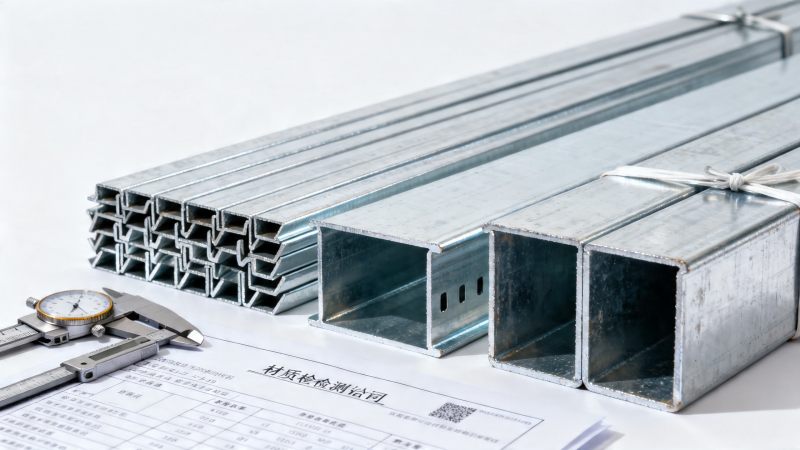
In the steel industry, a low quote can hide expensive downstream problems. A buyer may save 2%–5% on unit price, yet lose far more through delayed shipments, off-tolerance dimensions, coating inconsistency, or documents that do not match import requirements. For project managers, procurement teams, and technical evaluators, supplier verification is not an extra step. It is part of risk control before issuing a purchase order.
Shandong is one of China’s major industrial regions for steel processing and export, so buyers often find many suppliers offering similar channel steel, structural beams, and cold formed sections. The challenge is not finding a seller. The challenge is separating a genuine manufacturer with stable production from a trading source with limited process control. This difference becomes critical when your order volume moves from samples or trial lots to container-level or multi-batch purchasing.
For financial approvers and business decision makers, verification also improves budget predictability. A reliable supplier can usually confirm lead time windows such as 20–35 days for standard sections or longer cycles for custom profiles, while an unverified source may provide optimistic timelines without secured mill scheduling. In large projects, even a 7–10 day delay can affect installation sequencing, labor allocation, and contract penalties.
For quality control teams and safety managers, the issue is equally practical. Structural steel components must match the specified grade, dimensions, surface treatment, and applicable standards. If the supplied steel does not align with ASTM, EN, JIS, or GB expectations, the result may be failed inspection, rework, or material rejection at site. That is why verification should cover not only company identity, but also production capability, inspection discipline, and export execution.
What bulk buyers should confirm in the first 3 stages
- Stage 1: Basic legitimacy check, including business scope, export experience, product range, and whether the supplier acts as a manufacturer, processor, or trader.
- Stage 2: Factory capability review, including equipment, section forming processes, welding or cutting support, coating options, monthly capacity, and tolerance control.
- Stage 3: Commercial and logistics validation, including payment terms, packing methods, document accuracy, shipment schedules, and response speed for nonconformity handling.
A supplier that passes these 3 stages is more likely to support repeat orders, OEM demands, and project-based fulfillment. This is especially relevant for distributors, engineering contractors, and overseas buyers who cannot inspect every batch in person.
How to verify factory strength, processing ability, and production consistency
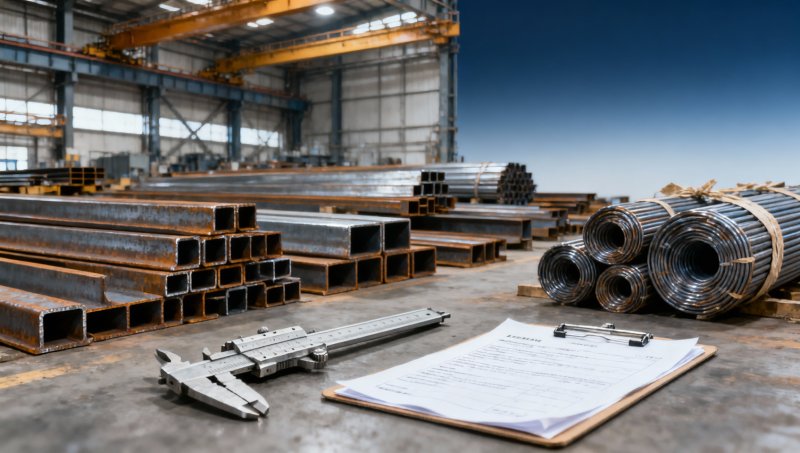
The first question is simple: can the supplier actually produce what you need at the required scale? In structural steel sourcing, buyers should check whether the factory handles standard profiles only, or whether it can also support punching, cutting, coating, bundling, and customized fabrication. If your project requires repeated orders over 2–4 months, stable capacity matters more than a one-time sample result.
Ask for a current product list with matching production photos or videos. For steel sections such as channels, beams, angle steel, and cold formed profiles, visible evidence should show roll forming, cutting lines, storage management, and loading operations. A serious supplier should also explain how it controls dimensions across batches, especially for thickness, length, hole position, and straightness. In practical sourcing, dimensional consistency within agreed tolerance is often more important than marketing claims.
When custom sections are needed, buyers should confirm design translation ability. A reliable structural steel manufacturer can review drawings, recommend material grade options, and identify whether a profile is better produced by cold forming, cutting from plate, or fabricated assembly. This is where mid-project changes can either be absorbed smoothly or create costly delays. Technical communication in the quotation stage often reveals the real competence of the supplier.
Hongteng Fengda focuses on structural steel manufacturing and export from China, supplying angle steel, channel steel, steel beams, cold formed profiles, and customized structural components. For overseas buyers, that matters because a supplier with both manufacturing and export orientation usually understands not only section production, but also document preparation, packaging requirements, and standard matching for different markets.
A practical factory verification checklist
Before approving a bulk order, many procurement teams use a weighted checklist. The table below helps compare whether a Shandong supplier is prepared for real project supply or only basic spot sales.
If a supplier can answer these points clearly, with supporting documents and process details, the chance of stable performance increases significantly. If answers remain vague after 2–3 rounds of communication, buyers should treat that as an early warning sign.
Product example to test verification depth
A useful way to verify technical depth is to discuss one real product in detail rather than asking broad questions. For example, C-Shaped Steel is widely used in construction, machinery frameworks, storage racks, conveyors, vehicle chassis, renewable energy installations, purlins, and prefabricated buildings. A qualified supplier should be able to explain section applications, material options, coating choices, and dimensional control without relying on generic sales language.
Buyers can ask whether the profile can be supplied in galvanized, painted, or hot-dip finishes; how the supplier maintains uniform dimensions; and how it balances lightweight structure with load-bearing capacity. The response should also reference common standards such as ASTM, EN, JIS, and GB when needed. This kind of product-level discussion is often the fastest way to separate experienced manufacturers from superficial resellers.
Which documents, standards, and quality controls should you review?
Once factory capability looks reasonable, the next step is documentation. In bulk steel procurement, documents are not paperwork for its own sake. They are evidence that the ordered material, the delivered material, and the declared material are aligned. At minimum, buyers should review product specifications, material grade references, inspection records, packing details, and export documents before shipment.
For structural steel supplied to international markets, common standard references include ASTM, EN, JIS, and GB. These standards do not automatically mean the same thing across all products, so buyers should confirm exactly which standard applies to grade, dimensions, tolerance, and testing basis. For example, a supplier may state that a section is produced according to one dimensional framework while the project requires another material-performance basis. That mismatch can create confusion during approval.
Inspection control should also be reviewed in practical terms. Ask how many checkpoints are used in the production cycle—many buyers look for at least 3 key stages: raw material confirmation, in-process dimensional inspection, and final packing inspection. For coated steel, it is also reasonable to ask how surface appearance and coating condition are checked before loading. A supplier that can describe inspection flow clearly is easier to audit and easier to trust.
For quality teams, traceability is another deciding factor. Each batch should be identifiable through production records, packing marks, or heat-related documentation where applicable. If a problem appears after arrival, traceability shortens root-cause analysis and speeds up corrective action. Without it, even a minor claim can turn into a long dispute.
Key documents to check before payment release
The table below summarizes the most useful documents for technical review, procurement control, and import clearance in steel orders.
For finance and business approval, document quality is also a sign of supplier discipline. Clean, consistent paperwork reduces customs risk, speeds internal approval, and makes future reorders more efficient.
Red flags that should pause the order
- The supplier cannot clearly state whether it is manufacturing in-house or outsourcing key steps.
- Documents from different stages show inconsistent product descriptions, grades, or dimensions.
- Inspection evidence is limited to a single photo or a generic certificate without batch linkage.
- Lead time promises remain unchanged even after quantity increases from trial order to full container volume.
Any one of these issues does not automatically mean the supplier is unsuitable, but together they indicate that more verification is needed before deposit payment or contract finalization.
How to compare suppliers on price, lead time, and export reliability
Buyers often compare 3–5 Shandong suppliers and find that the lowest offer is not always the lowest final cost. In steel sourcing, total procurement value depends on more than ex-works price. Packaging, coating quality, cutting accuracy, document completeness, and shipment punctuality all affect the real landed result. This is especially important for distributors, OEM buyers, and construction projects where one delayed batch can block the next activity.
A practical method is to evaluate each supplier across 5 dimensions: product fit, quality assurance, lead time reliability, export coordination, and after-sales response. If two suppliers are close in unit price, the one that can provide clearer tolerance control, faster drawing review, and cleaner shipping documents usually creates lower total risk. This is a better decision framework for procurement departments and enterprise decision makers than price-only comparison.
Lead time assessment should be specific. Ask for order confirmation timing, production cycle, pre-shipment inspection window, and port booking coordination. In many routine steel export scenarios, standard items may move in roughly 20–35 days, while custom sections can require extra processing time depending on drawing complexity and surface treatment. The key is not the shortest claim, but whether the supplier can explain each node and keep it stable across repeat orders.
Export reliability also includes packaging and loading logic. Bundled sections should be labeled clearly, protected for transport, and counted in a way that matches the packing list. This matters for warehouse teams, site crews, and distributors who need smooth receiving and inventory control after arrival.
Supplier comparison model for procurement teams
Use the table below to score suppliers beyond price. It works well for trial orders, framework agreements, and annual sourcing reviews.
This kind of comparison protects both procurement efficiency and financial control. It also creates a documented decision basis when technical, commercial, and management teams need to approve the same supplier.
A useful negotiation tip
Instead of pushing only for a lower price, ask the supplier to optimize one of 4 variables: batch size, finish option, cutting scope, or delivery split. In many steel projects, better logistics and clearer processing scope create more savings than a small price reduction on paper.
Common mistakes buyers make when checking a Shandong steel supplier
One common mistake is relying on catalog language rather than process evidence. Many suppliers can list channel steel, I-beams, angle steel, and cold formed sections on a website. That does not confirm monthly output, tolerance consistency, or export readiness. Buyers should always move from brochure-level claims to evidence-level verification within the first 1–2 rounds of communication.
Another mistake is checking quality only at the final stage. In steel sourcing, prevention is cheaper than correction. If the drawing, grade reference, finish requirement, and packing method are not confirmed early, final inspection becomes a dispute rather than a control tool. Project owners and quality managers should push for alignment before production starts, not after goods are ready to ship.
A third mistake is underestimating export details. Even when the steel itself is acceptable, errors in bundle marks, document names, or quantity presentation can create receiving problems at port or site. For overseas procurement, documentation accuracy should be checked with the same discipline as material specification.
Finally, some buyers do not test communication responsiveness before placing a large order. A practical approach is to ask 5–6 targeted questions on standard, tolerance, lead time, finish, packaging, and after-sales process. The clarity and speed of response often predict how the supplier will behave once production pressure increases.
FAQ for overseas steel buyers
How many suppliers should I compare before placing a bulk steel order?
In most cases, comparing 3 suppliers is enough for a focused technical and commercial review, while 4–5 suppliers may be useful for high-value or custom structural steel projects. The key is not quantity alone. It is whether you compare them using the same drawings, standards, finish requirements, and delivery terms.
Should I request samples before a container order?
Yes, especially for custom profiles, coated sections, or parts requiring dimensional coordination with other components. A sample or trial batch helps verify section shape, surface finish, and packaging logic. For standard profiles, a sample is still useful when you are working with a new supplier for the first time.
What is the minimum quality control information I should request?
At minimum, request product specification confirmation, material grade basis, dimensional inspection records, finish description, packing details, and shipment documents. If the project is more demanding, add batch traceability and pre-shipment review checkpoints. These 6 items create a solid baseline for technical and commercial control.
How can I reduce risk if I cannot visit the factory in person?
Use a staged approach: first review documents and product evidence remotely, then request live factory video verification or third-party inspection if needed, and finally place a controlled trial order before scaling up. This 3-step method is widely used by importers, distributors, and project buyers sourcing from overseas factories.
Why work with a structural steel manufacturer that understands export projects
When bulk purchasing structural steel from China, buyers need a partner that can connect production, quality control, and export execution in one workflow. Hongteng Fengda supplies angle steel, channel steel, steel beams, cold formed profiles, and customized structural steel components for construction, industrial, and manufacturing projects. This is valuable for buyers who need both standard specifications and OEM support instead of a one-size-fits-all offer.
Our approach is built around practical sourcing needs: confirming applicable standards such as ASTM, EN, JIS, and GB; supporting technical review for section selection; maintaining consistent quality control; and coordinating dependable lead times for international shipments. For procurement teams, engineers, distributors, and project owners, this means fewer gaps between quotation, production, inspection, and delivery.
If you are evaluating a Shandong supplier before placing a bulk order, we can help you review key points in advance. You can consult with us on parameter confirmation, profile selection, coating options, standard matching, sample support, packaging method, delivery schedule, and quotation details. This helps reduce sourcing risk before money and timelines are committed.
Contact us if you want a clearer technical and commercial assessment for your next steel purchase. Share your drawings, target grade, quantity range, finish requirement, and destination market, and we can discuss a suitable supply plan, expected lead time, customization options, and documentation needs for your project.
Please give us a message


Please enter what you want to find