Choosing the right steel tube supplier for custom sizes is critical for project quality, cost control, and delivery reliability. Whether you source from a steel tubing supplier, a stainless steel tube manufacturer, or need seamless stainless steel tube solutions, knowing how to evaluate production capability, tolerance control, and customization support can help buyers and engineers reduce risk and secure dependable results.
What proves a steel tube supplier can truly deliver custom sizes?
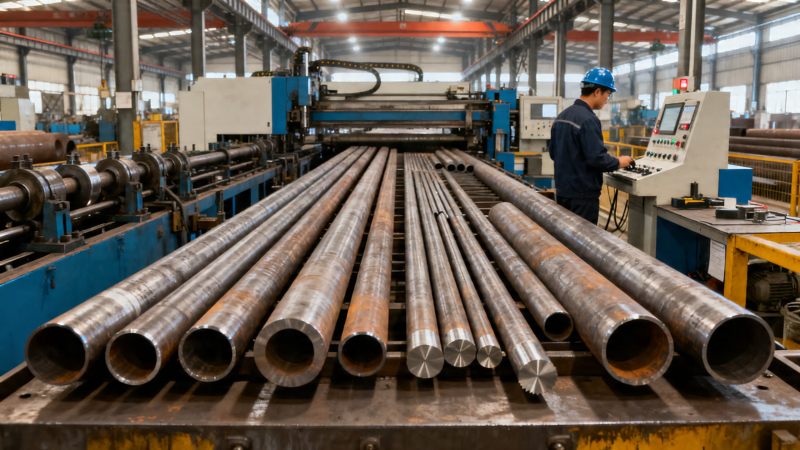
Many suppliers say they offer custom steel tubes, but real capability is visible in process depth, equipment range, and quality discipline. For procurement teams and technical evaluators, the key question is not whether a supplier accepts a drawing, but whether it can consistently manufacture to that drawing within agreed tolerances, lead times, and inspection requirements.
In steel projects, custom sizes often involve outer diameter, wall thickness, length, end treatment, hole position, coating, bundling, and marking. A supplier that handles only standard catalog items may outsource part of the work. That adds 2 to 3 extra coordination points and increases the risk of dimensional mismatch, delayed delivery, or mixed traceability.
A dependable partner should be able to explain how custom orders move from drawing review to raw material selection, forming, cutting, straightening, testing, packing, and export loading. In most B2B steel sourcing cases, the decision should be based on 5 core checks: equipment fit, tolerance control, standards compliance, sample verification, and delivery planning.
For global buyers, this matters even more when projects follow ASTM, EN, JIS, or GB requirements. Hongteng Fengda, as a structural steel manufacturer and exporter from China, supports buyers who need both standard specifications and OEM solutions. That combination is valuable when a project includes conventional structural sections together with non-standard fabricated or cut-to-size steel components.
Three early signs of real customization capability
- The supplier asks for detailed drawings, tolerance targets, material grade, coating request, end-use, and inspection method instead of giving a fast generic quote.
- The supplier can discuss practical manufacturing ranges such as wall thickness variation, cut length tolerance, and minimum order impact on setup time.
- The supplier offers a review path that usually includes drawing confirmation, sample or pre-production approval, and batch inspection before shipment.
If a steel tube supplier cannot explain these points clearly within the first 1 to 2 rounds of technical discussion, buyers should assume customization capability is limited or dependent on subcontractors. That does not always mean poor quality, but it does mean higher management effort and less control over final consistency.
Which production and inspection details should buyers verify first?
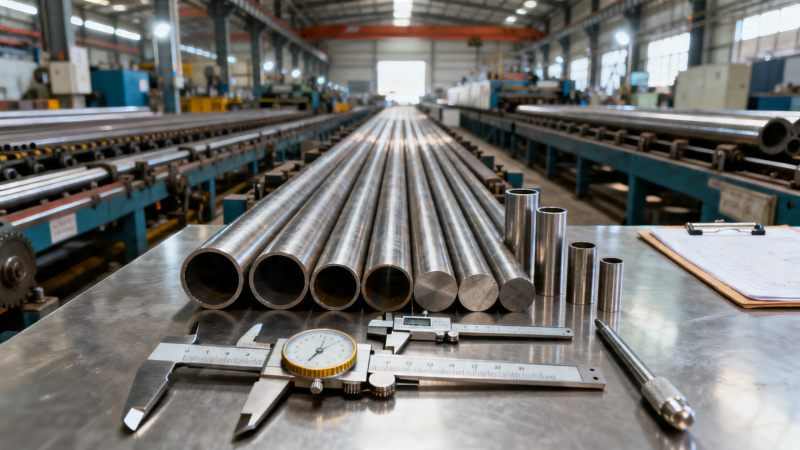
The fastest way to assess a custom steel tube supplier is to review its production and inspection logic. Buyers should focus on how the supplier controls dimensions across the full order, not just on a single sample. A capable supplier usually defines checkpoints at raw material intake, in-process forming or cutting, and final inspection before packing.
For custom steel tubing, common risk points include ovality, wall thickness deviation, burrs after cutting, end squareness, twist, and coating damage during handling. These issues can affect installation speed, welding quality, structural fit-up, or downstream fabrication. In practical terms, even a small deviation such as ±0.5 mm or ±1.0 mm can matter depending on connection design and assembly method.
Technical teams should also ask whether the supplier uses fixed gauges, calipers, thickness tools, straightness checks, and traceable records per batch. For larger projects, a routine inspection frequency such as every bundle, every heat, or every production lot gives more confidence than a final visual check alone.
The table below helps procurement, QA, and project managers compare what to request before placing a custom-size steel tube order.
A clear answer to these 4 items usually reveals whether the supplier is organized for engineering-grade orders. For many export projects, a realistic production cycle may be 7 to 15 days for sample preparation and 2 to 6 weeks for bulk production, depending on size complexity, coating, and order volume.
Why standards and traceability matter in custom tube sourcing
Custom sizes do not remove the need for standards. In fact, they make compliance more important. A stainless steel tube manufacturer or carbon steel tube supplier should still define material grade, production route, and relevant standard references. Buyers often need this to satisfy engineering approval, import documentation, or internal supplier qualification procedures.
Hongteng Fengda serves global buyers with products aligned to major international standards including ASTM, EN, JIS, and GB. For companies sourcing multiple structural steel items together, this helps unify technical communication and reduce supplier fragmentation across frames, supports, channels, beams, and made-to-order steel components.
Traceability should cover at least 3 levels where possible: raw material identity, production batch, and final shipment marking. This is especially useful for projects with site acceptance procedures, third-party inspection, or post-delivery quality review.
How to compare suppliers beyond price and avoid hidden cost risks
Price matters, but custom-size steel tube purchasing is rarely decided by unit price alone. A lower quotation can become more expensive if tolerance problems lead to field modification, material waste, delayed installation, or repeated shipments. Financial approvers and business evaluators should therefore compare total sourcing cost across manufacturing, logistics, quality, and project delay exposure.
One useful method is to compare suppliers in 6 dimensions: quoted price, minimum order quantity, tooling or setup charge, sample policy, delivery reliability, and defect handling process. This gives a more practical decision basis than comparing price per ton or price per meter in isolation.
In some projects, buyers also source related building steel products from the same exporter to reduce coordination time. For example, industrial or agricultural construction may need structural members together with roof and cladding materials. In those cases, products such as Colored Corrugated Roof Sheet can be considered alongside structural steel procurement to simplify communication on color, coating, shipment planning, and application fit for garages, warehouses, workshops, barns, schools, or hospitals.
This insert matters because many project managers are not buying one item only. They may evaluate tube supply together with envelope materials. A coordinated supplier discussion can help align lead times, packing plans, and site sequence, especially when roofing sheets in PPGL or similar coated steel options are part of the same project package.
Comparison table for supplier selection
The table below is designed for procurement teams comparing a steel tube supplier for custom sizes, especially when project schedules are tight and the risk of rework is expensive.
A comparison like this helps decision makers spot hidden risk before contract approval. In many cases, a 3% to 8% price difference is less important than preventing late delivery, inconsistent batches, or on-site correction costs. That is especially true for industrial fabrication, infrastructure support systems, and export orders with long transit time.
A practical 4-step procurement checklist
- Submit a drawing package with material grade, target tolerances, finish requirement, and end use.
- Ask the supplier to mark which dimensions are critical and which follow general tolerance.
- Confirm sample, pilot batch, or first-article inspection when the order is new or technically sensitive.
- Align production, packing, and shipping milestones before purchase order release.
This process is simple, but it prevents many common issues that appear only after arrival at the job site or fabrication workshop.
What common mistakes do buyers make when ordering custom steel tubes?
One common mistake is assuming that “custom size” means every dimension can be produced with the same tolerance at the same cost. In reality, tighter tolerance often means slower processing, more inspection points, and a narrower production window. Buyers should identify 2 to 4 critical dimensions rather than applying strict tolerance to every feature without engineering need.
Another mistake is approving a quote before confirming packaging and shipment conditions. Steel tubes can be damaged by poor bundling, weak end protection, or mixed marking during loading. For export supply, this becomes more important because transit, port handling, and warehouse transfer can add several handling cycles before final installation.
A third issue is separating technical review from commercial review. When procurement, engineering, and QA work in isolation, the order may miss essential details such as surface finish acceptance, testing method, or acceptable substitute grade. Cross-functional review usually saves time even if it adds 1 extra approval meeting at the beginning.
Finally, some buyers focus only on the tube itself and ignore wider project integration. If the project also requires structural sections, cold formed profiles, fabricated components, or related building envelope materials, working with a supplier that understands total steel package coordination can reduce sourcing complexity and improve delivery sequencing.
FAQ for engineers, buyers, and project managers
How do I know if a supplier can meet custom tolerance requirements?
Ask for the measurable tolerance range by dimension, the inspection method, and the batch control plan. A reliable supplier should state which items are checked during production and which are verified at final inspection. If the answer stays generic, capability may be uncertain.
Is a sample always necessary for custom steel tubing?
Not always, but a sample or first-article review is recommended for new dimensions, special end processing, coated tubes, or projects with strict assembly fit. For medium or high-risk orders, sample confirmation can prevent larger losses later in the batch.
What is a realistic lead time for custom sizes?
It depends on material availability, process complexity, and quantity. For many orders, sample review may take 7 to 15 days, while bulk production can take 2 to 6 weeks. Additional testing, special packaging, or mixed-container export planning can extend the schedule.
Should I choose one supplier for multiple steel items?
If the supplier has proven capability across structural steel categories, this can reduce communication cost, shipment coordination effort, and quality inconsistency between related items. It is especially useful for contractors, distributors, and project owners managing larger steel packages.
Why work with a structural steel manufacturer that supports custom solutions?
For buyers sourcing from China, supplier selection is not only about manufacturing cost. It is about stable output, communication efficiency, compliance understanding, and the ability to support custom requirements without losing control of quality or lead time. That is where an experienced structural steel manufacturer becomes more valuable than a trading-only source with limited technical depth.
Hongteng Fengda supplies angle steel, channel steel, steel beams, cold formed steel profiles, and customized structural steel components for global construction, industrial, and manufacturing projects. This product coverage is useful for companies that need a broader steel solution, not just a single item. It also helps distributors and contractors simplify supplier management across multiple categories.
With modern manufacturing facilities and strict quality control, the company supports orders aligned with ASTM, EN, JIS, and GB requirements and serves buyers across North America, Europe, the Middle East, and Southeast Asia. For decision makers, that means practical support in 4 areas: parameter confirmation, product selection, delivery planning, and export-oriented communication.
If you are evaluating a steel tube supplier for custom sizes, you can contact Hongteng Fengda to discuss drawings, tolerance targets, material options, related structural steel items, sample support, estimated production cycle, packing requirements, and quotation terms. This is especially helpful when your project needs dependable custom solutions, controlled sourcing risk, and coordinated delivery rather than a simple catalog purchase.
Please give us a message


Please enter what you want to find