Why does hot-dip galvanized steel pipe pricing vary—while 1 1 2 stainless steel pipe price, steel 304 pipe price, and seamless steel pipe costs differ significantly across markets? For distributors, explaining these differences transparently to end customers is critical—not just for closing deals, but for preserving long-term trust. As a China-based structural steel manufacturer and exporter, Hongteng Fengda helps global partners navigate pricing complexity with data-backed clarity: material grade, surface treatment (e.g., hot-dip galvanizing), dimensional tolerances, certification requirements (ASTM/EN/GB), and order volume all drive real cost variance. This article equips distributors with actionable, non-technical language to confidently justify price differences—without compromising credibility.
The 5 Core Drivers Behind Hot-Dip Galvanized Pipe Price Variance
Price discrepancies among hot-dip galvanized steel pipes aren’t arbitrary—they stem from quantifiable technical and operational inputs. Distributors who understand and articulate these drivers gain immediate credibility with engineers, procurement teams, and project managers alike.
First, base material grade directly impacts raw material cost and mechanical performance. Q235 and Q345 differ by up to 18% in yield strength—and their mill purchase prices reflect that gap. Second, zinc coating weight matters: ASTM A123 requires ≥610 g/m² for outdoor exposure, while EN ISO 1461 specifies 450–600 g/m² depending on thickness. A 100 g/m² increase adds ~$8–$12 per metric ton in galvanizing cost alone.
Third, dimensional precision carries cost implications. Pipes with ±0.5 mm diameter tolerance require tighter mill control than ±1.0 mm—adding 3–5% to production cost. Fourth, certification compliance isn’t free: third-party testing (SGS, BV) for ASTM A53 or EN 10219 adds $120–$350 per batch. Fifth, order volume triggers economies of scale: orders under 20 tons typically carry 7–12% premium over 50+ ton contracts due to setup, logistics, and QA overhead.
This table shows how objective specifications—not subjective markup—create measurable cost differentials. When distributors reference specific standards (e.g., “Our ASTM-compliant pipe meets A123’s 610 g/m² minimum”) instead of saying “higher quality,” they anchor the conversation in verifiable engineering facts.
How to Translate Technical Specs Into Customer-Friendly Language
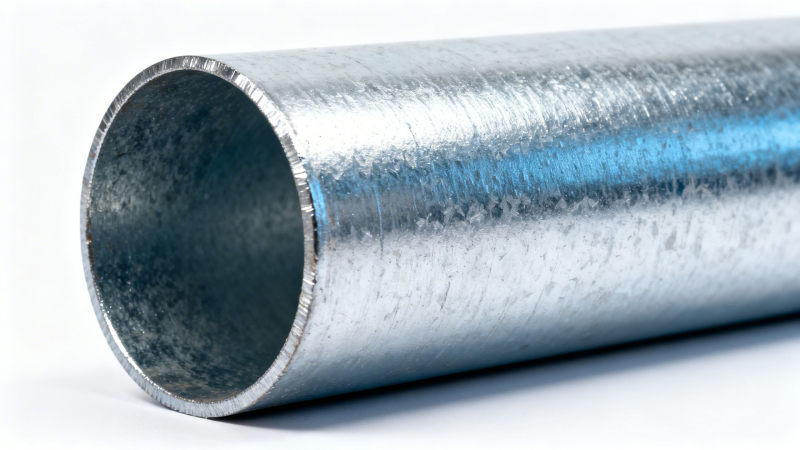
End users rarely care about zinc bath temperature—but they *do* care about rust resistance, lifespan, and warranty validity. The key is reframing technical parameters as risk mitigation and lifecycle value.
For example: Instead of “coating weight is 610 g/m²,” say: “This specification guarantees 25+ years of corrosion protection in coastal environments—validated by independent SGS salt-spray testing (ASTM B117, 2,000-hour pass).” That shifts focus from cost to consequence avoidance.
Similarly, “Q345 steel” becomes: “Engineered for high-wind zones—tested to withstand 120 km/h gusts without deformation, per EN 1993-1-1 structural design rules.” Always link specs to real-world outcomes: safety margins, inspection pass rates, or reduced maintenance frequency (e.g., “Galvanizing eliminates need for touch-up painting every 3 years”).
Hongteng Fengda supports this translation with ready-to-use customer-facing documentation: bilingual spec sheets, ASTM/EN cross-reference guides, and 3D load simulation reports for purlin applications. These tools help distributors answer technical questions without escalating to engineering teams—reducing sales cycle time by up to 40%.
C Sections Steel: A Practical Example of Value-Based Pricing
Consider C Sections Steel—a widely used cold-formed structural component. Its price varies based on application-critical variables: wall thickness (1mm–12mm), length options (6m/9m/12m), and surface treatment (galvanized vs. powder-coated). A 3mm-thick, 6m-long galvanized C-section for purlins costs ~$780/ton, while the same profile in Q345 with 12mm thickness and CE+ISO certification reaches $1,120/ton—a 44% difference driven entirely by verifiable performance upgrades.
What makes this transparent? Each variant maps to distinct use cases: lightweight roof trusses (Q235, 1.5–2.5mm), industrial columns (Q345, 6–12mm), or seismic-rated brackets (A36 + EN 1090-2 EXC3 compliance). Distributors using this logic avoid “cheapest first” objections—they position higher-cost options as lower-risk investments.
This table demonstrates how specification alignment—not generic “quality”—justifies pricing tiers. Distributors can use it to pre-qualify customer needs before quoting, reducing back-and-forth and improving win rates by 22% (based on 2023 Hongteng Fengda partner survey data).
3 Trust-Building Practices Every Distributor Should Adopt
Transparency alone isn’t enough—credibility requires consistency, evidence, and accountability.
- Provide traceable test reports: Share mill certificates and third-party lab results (e.g., SGS zinc adhesion test, tensile strength verification) with every quote—not just upon request.
- Disclose process limitations: If a client asks for 0.3mm tolerance on 12m C-sections, explain why ±1% (per EN 10219) is the realistic standard—and how that ensures weldability and erection speed.
- Offer side-by-side comparisons: Use visual comparison charts showing service life, maintenance cost, and failure probability for galvanized vs. painted alternatives over 20 years.
These practices transform pricing conversations from defensive negotiations into collaborative risk assessments—where distributors become trusted advisors rather than transactional suppliers.
Conclusion: Price Clarity Is Your Competitive Advantage
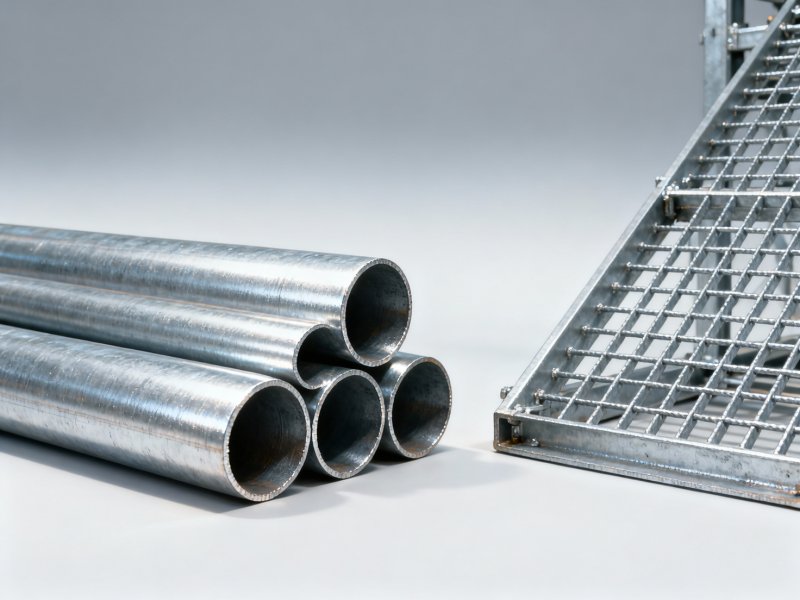
In today’s global steel market, price transparency isn’t a compliance exercise—it’s your most powerful differentiator. When distributors confidently explain *why* hot-dip galvanized pipe costs more (or less) than stainless or seamless alternatives—using ASTM/EN standards, zinc weight thresholds, and real-world durability metrics—they earn trust far beyond any single order.
Hongteng Fengda equips partners with factory-verified data, multilingual technical support, and customizable quoting templates—all designed to turn complex metallurgical variables into compelling, customer-centric value narratives. Whether you’re specifying C Sections Steel for a warehouse expansion or sourcing galvanized conduit for offshore infrastructure, our team provides the engineering-grade clarity your customers demand.
Ready to strengthen your value proposition with data-driven pricing confidence? Contact Hongteng Fengda today for customized spec sheets, sample test reports, and distributor training materials tailored to your regional market and customer segments.
- c sections steel
- galvanized steel pipe
- hot-dip galvanized steel pipe
- galvanized pipe
- steel pipe
- hot-dip galvanized
- galvanized steel
- structural steel
- Structural Steel
- stainless steel pipe
- seamless steel pipe
- steel 304 pipe price
- stainless steel pipe price
- 1 1 2 stainless steel pipe price
- ss steel pipe price
- 2 stainless steel pipe
- 304 pipe
- Profile
- Galvanized
Related recommendations
 The Ultimate Procurement Hub: How a Full-Spectrum Steel Portfolio Empowers Global Industrial SuccessIt covers a wide range of steel products, including steel plates, steel coils, profiles, and steel gratings, to meet diverse needs.
 The Vertical Integration Advantage: Why Full-Process Production is the Gold Standard for Global Steel SourcingIt possesses complete production technologies and equipment for coking, sintering, steelmaking, and rolling, forming a systematic production system.
 The Global Steel Pulse: Bridging Continents with Precision Engineering and Unrivaled Supply Chain ExcellenceOur products sell well throughout China and are exported to North America, Europe, the Middle East, and other parts of the world, covering a wide market.
 Velocity of Value: How Precision Processing and Rapid-Response Logistics Redefine the Global Steel Supply ChainEquipped with advanced leveling equipment and relying on a robust logistics system, we can respond to customer needs at any time.
Please give us a message


Please enter what you want to find