Choosing the right industrial steel supplier is critical for business leaders who need stable sourcing, predictable lead times, and consistent product quality. In today’s competitive global market, a reliable partner can reduce procurement risks, support project schedules, and help control costs. This article explores how an experienced structural steel manufacturer helps companies build a stronger, more dependable supply chain.
What an industrial steel supplier means in modern sourcing
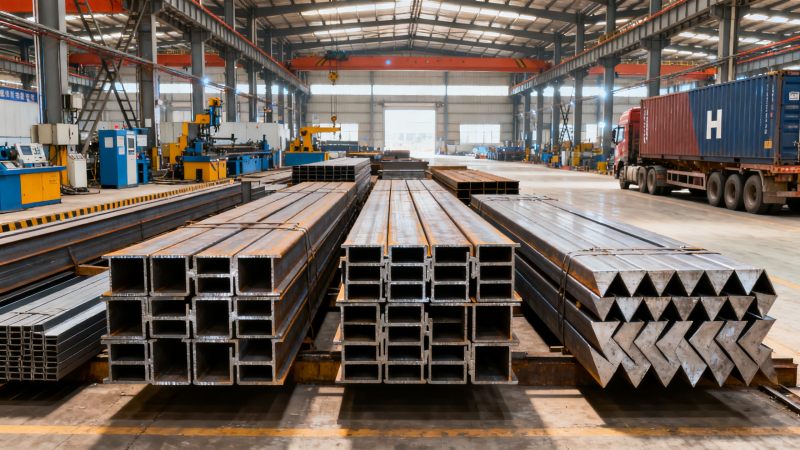
An industrial steel supplier does more than ship metal products.
It connects production planning, quality assurance, logistics control, and technical support into one sourcing system.
In the steel industry, supply stability depends on process discipline.
That includes raw material coordination, manufacturing capacity, inspection standards, and export experience.
For construction, industrial, and manufacturing projects, interruptions can raise total project cost quickly.
A dependable industrial steel supplier helps prevent those disruptions before they affect schedules.
This role is especially important when projects require angle steel, channel steel, steel beams, or custom structural components.
Consistency across specifications and delivery windows becomes a direct business advantage.
Why stable sourcing has become a central industry concern
Global steel sourcing now faces more variables than in previous years.
Price volatility, freight changes, compliance demands, and regional supply shifts affect procurement decisions.
As a result, the value of an industrial steel supplier is measured by resilience, not only price.
- Production continuity supports long-term project planning.
- Multi-standard compliance reduces requalification effort.
- Reliable lead times improve inventory control.
- Stable quality lowers rejection and rework rates.
- Export coordination reduces customs and shipping delays.
A strong industrial steel supplier responds to these signals with planning visibility and disciplined execution.
That support is practical, measurable, and highly relevant to cost control.
How manufacturing capability supports dependable supply
Stable sourcing begins inside the factory.
An industrial steel supplier with modern facilities can align production loads with order urgency and technical requirements.
This matters when buyers need both standard sections and OEM structural steel solutions.
Hongteng Fengda, a structural steel manufacturer and exporter from China, focuses on this operational balance.
Its product range includes angle steel, channel steel, steel beams, cold formed steel profiles, and custom fabricated components.
With stable production capacity, orders can be sequenced more efficiently.
That helps reduce uncertainty during peak demand periods.
A capable industrial steel supplier also maintains process controls that support dimensional consistency.
When repeat orders are common, consistency becomes as valuable as availability.
Key supply-side strengths that matter
Quality control as the foundation of sourcing stability
Quality instability often creates larger costs than late delivery.
Rejected steel can delay assembly, trigger replacement freight, and affect site productivity.
That is why a qualified industrial steel supplier must build quality control into every stage.
Hongteng Fengda manufactures to major international standards, including ASTM, EN, JIS, and GB.
This standard coverage helps support projects across North America, Europe, the Middle East, and Southeast Asia.
An industrial steel supplier with clear inspection discipline improves confidence before shipment, not after delivery.
That distinction matters for buyers handling engineering schedules and compliance documentation.
Quality stability also supports more accurate forecasting of total landed cost.
Product range flexibility and mid-project sourcing needs
A reliable industrial steel supplier should cover more than one product type.
Projects often combine structural sections with specialized steel products for filtration, processing, or architectural use.
This is where integrated sourcing can simplify vendor coordination.
For example, Stainless Steel Welded Mesh can support filters, sieve systems, chemical processing, mining, architecture, and residential applications.
Available grades include SS 201, 304, 304L, 316, 316L, and 430.
Its diameter range is 0.0008″ to 0.12″, with mesh options from 2 to 635 mesh.
Open area reaches 25 to 84.6, with roll width up to 240″ and roll length up to 2000′.
The material offers resistance to rust, corrosion, acid, alkali, heat, and chemicals.
High strength, durability, and customized sizes improve fit for technical applications.
When an industrial steel supplier supports both structural and specialized categories, sourcing becomes more coordinated.
Business value created by a reliable industrial steel supplier
The right industrial steel supplier creates value across procurement, operations, and project execution.
This value is not limited to purchase price.
It also includes predictability, communication quality, and issue prevention.
- Lower sourcing risk through stable production capacity
- Better schedule control through dependable lead times
- Reduced waste through consistent specification control
- Simplified compliance through recognized standards
- Improved communication during design or quantity changes
These advantages help explain why supplier reliability influences long-term competitiveness.
In global steel trade, fewer disruptions often mean stronger margins.
Typical sourcing scenarios across steel applications
Different sectors expect different forms of support from an industrial steel supplier.
In each case, a dependable industrial steel supplier supports project continuity through practical coordination.
Practical evaluation points before selecting a supplier
A careful evaluation process improves sourcing outcomes.
Before finalizing cooperation, review the supplier against clear operational criteria.
- Verify manufacturing scope and available steel categories.
- Confirm compliance with ASTM, EN, JIS, or GB as needed.
- Assess production capacity for current and future volume.
- Review inspection methods and quality documentation.
- Check export experience in your destination market.
- Discuss lead time management and response to urgent changes.
- Evaluate communication speed and technical clarity.
A strong industrial steel supplier should perform well across all these factors, not just one.
Next-step planning for stronger steel supply continuity
Stable sourcing is built through planning, not luck.
The most effective approach is to align technical requirements, delivery expectations, and quality standards early.
A proven industrial steel supplier can then turn those inputs into a reliable execution plan.
Hongteng Fengda supports global buyers with structural steel production, customized solutions, and dependable export service.
Its focus on consistent quality, stable capacity, and professional coordination helps reduce sourcing uncertainty.
When reviewing future supply needs, compare product coverage, standards support, and delivery discipline in one framework.
That method makes it easier to identify an industrial steel supplier that can support long-term project success.
A dependable partner today can protect cost, schedule, and quality performance across the next sourcing cycle.
Please give us a message


Please enter what you want to find