Choosing the right h beam manufacturer for custom sizes can directly affect project cost, strength, and delivery reliability. For buyers comparing I beam vs H beam strength, checking steel plate for construction quality, or reviewing steel rebar cost alongside steel coil price per ton, understanding how custom production works helps reduce sourcing risk and improve project planning.
What does a custom-size H beam manufacturer actually handle?
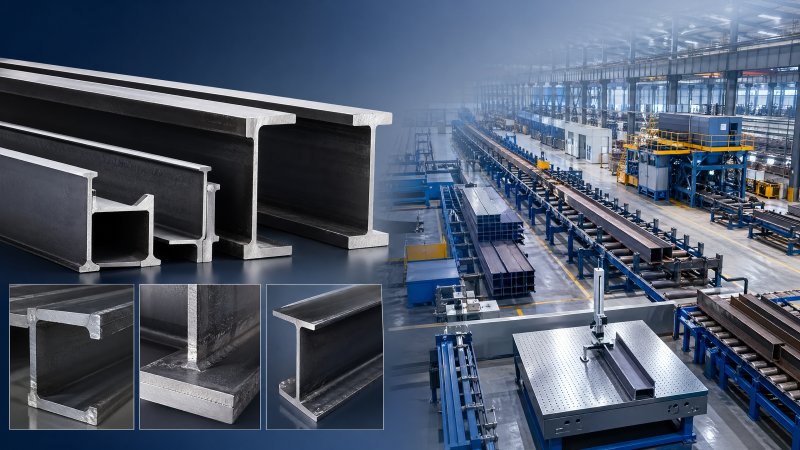
A custom-size H beam manufacturer does far more than roll steel into a standard section. In practical B2B sourcing, the manufacturer must translate structural drawings, load requirements, fabrication tolerances, coating demands, and shipping constraints into a stable production plan. For project managers and procurement teams, this means the supplier should support at least 3 core stages: technical review, manufacturing coordination, and final inspection before dispatch.
In the structural steel industry, custom H beams are commonly required when standard dimensions do not match project loads, connection details, or local code preferences. This often happens in industrial buildings, equipment platforms, warehouse frames, bridge-related support systems, and retrofit work. A capable supplier should understand section geometry, flange and web relationships, welding or rolling routes, and how dimensional variation can influence installation and field alignment.
For technical evaluators, the key issue is not only whether the beam can be made, but whether it can be made repeatedly within an acceptable tolerance range. In many export projects, buyers pay attention to common checkpoints such as thickness range, straightness, cut length, end preparation, surface condition, and marking. Even a seemingly small deviation such as a few millimeters in flange width can affect base plate fitting, bolt positioning, or downstream welding efficiency.
Hongteng Fengda, as a structural steel manufacturer and exporter from China, supports global buyers with both standard specifications and customized structural steel solutions. For contractors, distributors, and industrial users, this matters because a manufacturer with export experience is usually better prepared to coordinate ASTM, EN, JIS, and GB related requirements, documentation expectations, and lead-time planning across different markets.
Typical custom work involved in H beam production
Custom H beam supply usually includes more than one modification. A project may need a non-standard height, a changed flange thickness, special cut lengths such as 5.8 m, 6 m, 9 m, or 12 m, or additional fabrication like drilling, beveling, welding, or protective treatment. In many projects, 4 to 6 specification points must be confirmed before production can start without risk of rework.
- Section dimension confirmation, including web height, flange width, thickness, and theoretical weight.
- Material grade review against design intent, such as Q235, Q345, S235JR, SS400, or equivalent references.
- Processing requirements, including hole patterns, chamfering, end cuts, and weld preparation for site installation.
- Inspection and logistics coordination, especially for export packing, bundle identity, and loading sequence.
When a supplier can organize these details early, buyers gain better cost visibility, fewer installation surprises, and more accurate delivery planning. That is especially important when structural steel is one line item among many others in a larger budget that may also include plate, rebar, coil, and fabricated components.
How custom sizes are reviewed before production starts
The pre-production review is where a reliable h beam manufacturer prevents most project problems. Before rolling or fabrication begins, the manufacturer typically checks drawing consistency, section feasibility, grade availability, quantity level, and delivery window. For medium-volume orders, this review phase may take 2 to 5 working days depending on whether drawings are complete and whether standards conversion is needed.
From a buyer’s perspective, one of the biggest risks is assuming that all custom sizes can be produced from the same route. In reality, the method may depend on section dimensions, steel grade, order volume, and whether the beam is hot rolled, built-up, or further fabricated. A manufacturer should explain this clearly so engineering and purchasing teams can align expectations on cost, tolerances, and lead time.
For international projects, another important step is standards mapping. A design team may specify one system, while a local inspection team or fabricator references another. Experienced exporters help reduce confusion by confirming mechanical property expectations, dimensional conventions, and required documentation before production. This is especially useful when the order combines structural beams with channels, angles, or cold formed profiles in one shipment.
The table below shows common checkpoints that buyers should review with a custom H beam supplier before issuing a purchase order.
This review process helps finance teams as well as engineers. When dimensions, grade, and processing scope are fixed early, quotation accuracy improves and the risk of later variation claims becomes lower. That is especially valuable for projects with 2 to 4 shipment lots or multi-stage site schedules.
Why comparison with I beam matters during specification
Many buyers start with the question of I beam vs H beam strength. The answer depends on geometry and load path, but in many structural applications an H beam is preferred where wider flanges and better section balance are needed for heavier support duties. A skilled manufacturer should not oversimplify this choice. Instead, the supplier should ask about span, connection method, support condition, and whether the beam works mainly in bending, axial load, or combined stress.
A responsible supplier also highlights when a custom H beam may not be the only answer. In some projects, a fabricated section, channel combination, or complementary profile can improve efficiency in cost or assembly. This consultative approach is often more useful to decision-makers than receiving a price alone.
Which manufacturing and quality controls matter most for custom H beams?
Once specifications are approved, production control becomes the next deciding factor. Buyers often focus on unit price, but quality control is what protects schedule and installation performance. For custom H beams, manufacturers usually monitor incoming raw material, dimension setup, forming or fabrication accuracy, surface condition, identification marking, and final quantity verification. In practical terms, there are often 5 key inspection points between material release and packing.
For projects that also require secondary structural components, integration can create purchasing advantages. For example, a beam package may be combined with angles, channels, or custom bracing parts. In the middle of such packages, buyers often source support members from an Angle Steel Supplier to complete framing, brackets, reinforcements, or architectural connections under one procurement plan.
Angle steel is especially relevant where connection stiffness, trim support, or bracing components are required alongside H beams. Common grade options include Q195-Q420, Q235, Q345, SS400, ST37-2, ST52, and S235JR. Typical thickness is 3-20 mm, with specification ranges such as 20*20mm*3mm to 200*200mm*20mm and common lengths of 5.8 m, 6 m, 9 m, and 12 m. For buyers consolidating orders, alignment of standards such as ASTM, DIN, GB, JIS, bs, and AiSi can simplify acceptance and documentation work.
Hongteng Fengda’s manufacturing scope covers structural beams, angle steel, channel steel, cold formed steel profiles, and customized structural steel components. This broader capability can reduce coordination gaps between separate suppliers, especially when a project includes both primary and secondary steel members. For procurement managers, fewer interfaces can mean easier communication, more consistent packing plans, and lower risk of mismatched material certificates across the same job.
Quality checkpoints that affect acceptance and site use
The table below summarizes the quality areas that usually matter most when evaluating a custom-size h beam manufacturer.
For site users and quality personnel, these checks directly influence installation efficiency and safety management. A beam that arrives with correct identification, consistent dimensions, and clear documentation is easier to inspect, easier to allocate, and less likely to delay downstream work such as welding, bolting, or platform assembly.
A practical 4-step control flow
- Step 1: Confirm final drawings, grade list, and cutting schedule before material release.
- Step 2: Inspect dimensions during forming or fabrication instead of waiting until packing stage.
- Step 3: Verify fabrication details and identify any pieces requiring rework before surface treatment or bundling.
- Step 4: Check quantity, marking, and shipping list against the purchase order and packing plan.
For urgent projects, this staged approach is often more reliable than a single end-of-line inspection because it prevents errors from accumulating across large batches.
How should buyers evaluate cost, lead time, and sourcing risk?
Cost evaluation in custom structural steel is rarely just about the beam price per ton. Buyers should look at total project cost, which includes processing complexity, inspection effort, packaging, transport utilization, and the hidden cost of field modifications. A cheaper quote can become more expensive if dimensional mismatches create installation delays or if missing documents block customs or site acceptance.
Lead time also depends on several variables. Standard-size steel beams may move faster, while custom H beam orders usually require additional drawing confirmation and production scheduling. For many export orders, a practical planning window is often 2 to 6 weeks depending on quantity, material availability, processing depth, and shipment method. Buyers with phased construction schedules should communicate required lot splits early rather than after production starts.
Procurement and business evaluation teams should compare suppliers using a broader matrix. The right manufacturer is not simply the one with a low initial number, but the one that can maintain grade consistency, meet documentation needs, and support dependable dispatch. This is especially important when the steel package is tied to crane bookings, subcontractor schedules, or cross-border logistics windows.
The following table provides a practical sourcing comparison framework for custom H beam purchases.
This approach helps finance approvers and enterprise decision-makers evaluate the full sourcing picture. It also creates better internal alignment among engineering, procurement, and site teams, which is often where delays can be prevented before the purchase order is issued.
Common cost drivers buyers often overlook
- Non-standard cut lengths can reduce loading efficiency and raise freight cost per ton.
- Additional drilling, beveling, or weld preparation can change shop hours significantly.
- Mixed-grade orders may require more careful material segregation and traceability control.
- Poor early communication can cause drawing revisions after material preparation, which adds delay and waste.
When these factors are discussed early, sourcing becomes more predictable and total installed cost is easier to manage.
What questions should buyers ask before placing a custom H beam order?
Even experienced buyers can miss technical details when deadlines are tight. Asking the right questions before order confirmation reduces variation, rework, and shipping disputes. This applies to information researchers collecting supplier options, operators preparing for installation, quality teams planning inspection, and distributors who need dependable repeat supply for multiple end customers.
A practical rule is to review 5 categories before purchase: dimensions, grade, fabrication, standards, and delivery. If any one of these remains unclear, the quote may not reflect the true project scope. A manufacturer with strong export experience should be able to answer these questions in a structured way and identify gaps before they become site issues.
Below are common buyer questions that improve order accuracy and supplier evaluation quality.
How do I confirm the right custom size?
Start from the structural drawing, not from a previous order alone. Confirm section height, flange width, web and flange thickness, piece length, quantity, and any hole or cut details. If the project compares I beam vs H beam strength, ask the engineering side to define the functional requirement first. That gives the manufacturer a better basis for recommending a suitable section rather than simply matching a rough description.
What standards and certificates should I discuss?
Discuss which standard framework the project follows, such as ASTM, EN, JIS, or GB related requirements. Also confirm whether the project needs material traceability, dimensional inspection records, packing lists by piece count, or other acceptance documents. The exact set varies by market and contract, so it is better to define it at the inquiry stage instead of after shipment.
How long does custom production usually take?
There is no single answer because lead time depends on grade availability, tonnage, complexity, and fabrication depth. As a practical industry range, simple custom work may move within 2 to 4 weeks, while more complex or multi-item export packages can extend further. Buyers should ask for a staged schedule covering drawing confirmation, production, inspection, and dispatch rather than relying on one final date only.
What are the most common mistakes in custom H beam sourcing?
The most common mistakes are incomplete drawings, unclear tolerance expectations, missing fabrication notes, and comparing quotations that do not include the same scope. Another frequent issue is ignoring the relationship between beam dimensions and transport efficiency. A strong supplier should challenge missing information and help clarify these items before production starts.
A short pre-order checklist
- Confirm final drawings and revision number.
- List exact grade, section dimensions, and total quantity.
- Define processing details such as holes, bevels, and cut ends.
- Agree on required standards, inspection scope, and shipment documents.
- Review delivery schedule in lots if the project will install in phases.
This checklist is simple, but it often prevents the most expensive misunderstandings in structural steel procurement.
Why choose a manufacturer with broad structural steel capability?
A manufacturer that handles not only H beams but also angle steel, channel steel, cold formed profiles, and customized structural components can provide stronger project coordination. For buyers, this means fewer separate RFQs, more consistent quality control, and better shipment consolidation. It also helps when one project includes both main load-bearing sections and secondary members such as bracing, trims, or reinforcement supports.
Hongteng Fengda serves customers across North America, Europe, the Middle East, and Southeast Asia with structural steel products and customized solutions. For global buyers, the main value is practical: stable production capacity, consistent quality, and dependable lead times. These are the factors that help reduce sourcing risk, control procurement cost, and keep installation schedules moving.
If your team is evaluating a custom h beam manufacturer, it is useful to discuss more than price. You can ask for support on parameter confirmation, section selection, matching of ASTM, EN, JIS, or GB related requirements, fabrication scope review, sample or drawing communication, and delivery planning by batch. These topics help both technical and commercial teams make a stronger decision.
For new inquiries, prepare 3 basic inputs first: drawings or target dimensions, required grade or standard, and expected quantity with schedule. With those details, the manufacturer can give more accurate feedback on feasibility, production route, and quotation scope. If your project also includes angles, channels, or other structural steel components, combining them into one sourcing discussion can improve consistency and reduce coordination time.
Contact us for a more accurate custom steel evaluation
If you need support for custom H beam sizes, section comparison, product selection, standards confirmation, lead-time review, or quotation planning, Hongteng Fengda can help evaluate your project requirements based on real structural steel manufacturing and export practice. You can also ask about complementary items such as beams, channels, angles, cold formed profiles, and customized steel components for one coordinated supply plan.
Send your drawings, dimensions, grade requirements, target market standard, quantity, and delivery window. Our team can help review processing details, identify possible risk points, discuss feasible production options, and support clearer communication for procurement, engineering, quality, and project management teams.
Please give us a message


Please enter what you want to find