Choosing the right stainless steel pipe supplier can make or break project schedules, costs, and quality control. Whether you source ASTM A106 Gr.B pipe, compare ASTM A106 Gr.B specification details, or need dependable stainless steel pipe wholesale support, supplier capability directly affects lead time. For buyers evaluating a stainless steel pipe manufacturer or stainless steel pipe exporter, understanding these factors is essential to reduce sourcing risk and keep construction and industrial projects on track.
In steel procurement, lead time is not just the number of days between purchase order and shipment. It includes quotation response, technical confirmation, raw material preparation, production scheduling, inspection, packaging, export documentation, and logistics coordination. A delay of 3 to 7 days at any one stage can easily turn into a 2 to 4 week project impact when installation crews, fabrication windows, or site access plans depend on fixed delivery dates.
This matters to more than procurement teams. Engineers need dimensional consistency and standards compliance, project managers need predictable milestones, quality teams need traceability, and finance teams need better inventory timing and cash-flow control. For global buyers working across North America, Europe, the Middle East, and Southeast Asia, supplier reliability often has a greater impact on total project cost than unit price alone.
What lead time really means in steel pipe sourcing
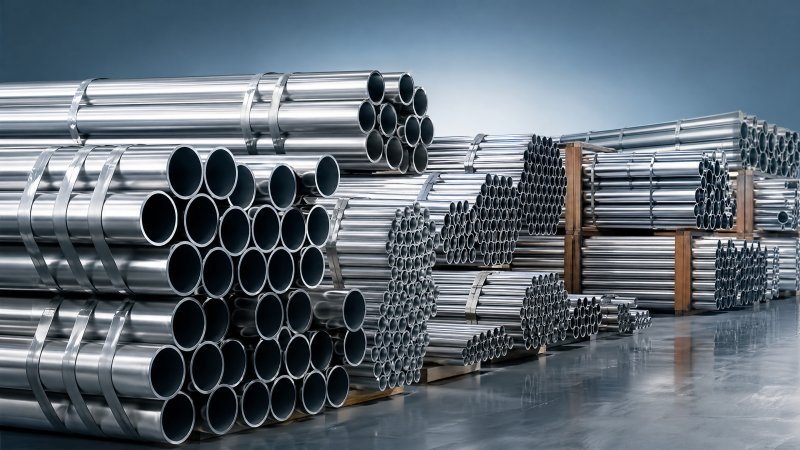
In practical steel sourcing, lead time usually covers 5 core stages: inquiry review, technical confirmation, production planning, manufacturing and testing, then packing and shipment. For standard pipe sizes in regular volumes, a competitive supplier may complete production in 15 to 30 days. For custom dimensions, special testing, mixed container loads, or export markets with stricter document requirements, the timeline can extend to 30 to 45 days or more.
Many buyers focus only on factory production days, but upstream and downstream coordination often determines the final delivery date. If a supplier takes 48 to 72 hours to clarify wall thickness tolerance, surface finish, end preparation, or standard interpretation, the clock has already started moving. When approval drawings, mill test certificates, or third-party inspection bookings are slow, the shipment date moves again.
This is especially important when sourcing pipe alongside structural sections such as angle steel, channel steel, or steel beams. Projects rarely purchase one steel product in isolation. A supplier with export experience and broader steel manufacturing coordination can often reduce handoff time between different product categories, helping buyers consolidate shipments and avoid partial deliveries that disrupt fabrication or site installation.
Typical lead-time components
The table below shows how lead time is usually distributed in industrial steel pipe procurement. Actual timing depends on order volume, specification complexity, and whether the material is standard stock or made to order.
The key takeaway is simple: lead time is cumulative. Even if each stage slips by only 1 or 2 days, the total delay can become significant. That is why experienced buyers evaluate suppliers not just by price per ton, but by process control across the full order cycle.
How supplier capability shortens or extends delivery schedules
A strong stainless steel pipe supplier affects lead time through capacity planning, technical understanding, quality systems, and export execution. In many cases, the difference between a 21-day order and a 35-day order is not the pipe itself. It is the supplier’s ability to confirm details fast, allocate production slots early, maintain raw material availability, and coordinate inspection without rework.
For example, suppliers with modern production facilities and stable steel processing experience can usually manage broader dimensional ranges and mixed-specification orders more efficiently. When the order includes several outer diameters, varying lengths, or custom packaging instructions, a supplier with better workflow control can combine operations instead of treating each item as an independent delay point.
Export experience also matters. A manufacturer serving multiple regions often understands document expectations under ASTM, EN, JIS, and GB standards, and can prepare certificates, packing lists, and shipping marks accurately the first time. That can save another 2 to 5 days compared with suppliers that only focus on domestic shipments.
Four supplier factors buyers should verify
- Production capacity: Ask whether the supplier can handle your monthly or project-based volume without pushing you into the next production cycle.
- Technical response speed: A capable team should clarify standards, tolerance, end use, and inspection scope within 24 to 48 hours for common products.
- Quality consistency: Stable quality reduces rework, retesting, and replacement orders, all of which add hidden time.
- Logistics coordination: Export packing, container loading, and shipping document accuracy are essential for on-time dispatch.
Why communication discipline matters
One of the most overlooked lead-time issues is fragmented communication. When sales, engineering, quality control, and logistics teams work separately, buyers may receive inconsistent answers on wall thickness, test scope, or shipment readiness. Each clarification loop can cost 12 to 24 hours. Over a 10-item order, these small delays add up quickly.
This is where an experienced structural steel manufacturer and exporter can offer practical value. Companies that routinely support construction and industrial projects tend to understand cross-functional coordination better because they often manage multiple steel categories, OEM requests, and standard-compliance documentation at the same time.
Specification accuracy, quality control, and the cost of rework
Incorrect or incomplete specifications are among the top reasons lead time slips. In pipe sourcing, details such as outer diameter, wall thickness, length tolerance, surface condition, testing method, and applicable standard must be aligned before production starts. A missing requirement may not look serious on day 1, but after production it can trigger rejection, retesting, or replacement, extending the schedule by 1 to 3 weeks.
For buyers comparing carbon steel pipe, structural steel products, and stainless-related supply chains, it is important to review the entire data sheet rather than only the grade label. Some projects ask for low-temperature toughness, others prioritize high strength, and others need a mix of standard lengths and custom cut pieces. A supplier that checks these conditions early can protect both timeline and budget.
A practical example in this area is a106 gr b Seamless Pipe. For project planning, details such as thickness from 0.5 to 75mm, outer diameter from 10 to 3048mm, and length from 1 to 12m can materially affect manufacturing route, packing method, and shipment preparation. Tolerance control such as outer diameter ±0.5mm, thickness ±0.05mm, and length ±5mm also influences inspection time and acceptance risk.
Example of specification items that influence lead time
The following table highlights technical items that often seem routine but directly affect the delivery schedule when they are not confirmed early enough.
The lesson for procurement and engineering teams is clear: the earlier a supplier validates technical details, the lower the risk of schedule disruption. This is particularly relevant for replacement applications where higher-strength solutions are used instead of traditional Q235 steel pipes in engineering work.
How global buyers can evaluate suppliers before placing an order
Before issuing a purchase order, buyers should review the supplier using a structured checklist rather than relying on a low quotation alone. In international steel trade, the cheapest initial price can become the most expensive option if it causes delayed production, demurrage charges, emergency air shipment of critical components, or field idle time for installation teams.
For B2B projects, an effective evaluation usually covers 6 dimensions: standards compliance, capacity stability, customization ability, inspection control, export support, and communication speed. If the supplier can answer technical and commercial questions within 1 working day, provide realistic production windows, and explain quality checkpoints clearly, the buyer has a much stronger basis for decision-making.
Suppliers like Hongteng Fengda, which serve construction, industrial, and manufacturing projects across multiple regions, are often valued because they combine stable production capacity with broader steel solution support. For buyers managing mixed procurement packages, that can reduce sourcing complexity and improve schedule coordination across several product lines.
Supplier evaluation checklist
- Confirm whether the quoted lead time is based on stock, rolling production, or a future slot not yet reserved.
- Ask for tolerance capability, testing scope, and document samples before order confirmation.
- Check whether mixed sizes, custom lengths, or OEM marking will extend the schedule.
- Verify packaging method, port of loading, and estimated booking time for containers or bulk shipment.
- Clarify who manages inspection coordination and how nonconforming items are handled.
- Request milestone updates at least at 3 stages: order confirmation, production completion, and shipment release.
Common evaluation mistakes
A frequent mistake is treating all suppliers as interchangeable if they quote the same standard grade. In reality, two suppliers may offer similar specifications but very different schedule reliability. One may have internal quality control and export documentation teams, while another depends heavily on external processing or third-party coordination, which adds uncertainty.
Another mistake is failing to match delivery terms with project urgency. If a site needs material in 4 weeks, a supplier quoting 25 production days but requiring another 10 to 14 days for shipping preparation may already be too late. Buyers need to measure total delivered lead time, not factory-only lead time.
Practical ways to reduce lead-time risk in pipe and structural steel projects
Reducing lead-time risk starts with better planning. Buyers should release complete technical documents early, group similar sizes where possible, and confirm inspection requirements before production booking. Even simple actions such as finalizing end-use, coating expectations, and marking format can save several days by preventing back-and-forth revisions after the order enters the workshop.
It is also helpful to work with suppliers that can support broader project procurement, especially when structural steel and pipe products are ordered together. Manufacturers with experience in angle steel, channel steel, steel beams, cold formed steel profiles, and customized steel components can often coordinate production planning more efficiently than traders managing several unrelated factories.
For urgent projects, buyers should distinguish between critical-path items and non-critical items. If only 20% of the order is needed to start fabrication, partial shipment planning may be worth discussing. That approach is not suitable for every project, but in time-sensitive construction and industrial schedules it can reduce site waiting time significantly.
Lead-time risk control actions
The table below summarizes practical measures that help procurement, engineering, and project teams lower delivery uncertainty before and after order placement.
These actions are especially useful for procurement teams managing multiple stakeholders. Engineers gain better control of technical compliance, quality teams gain earlier visibility into testing, project managers gain more predictable sequencing, and finance teams can time payments and inventory arrivals more efficiently.
FAQ for buyers comparing pipe suppliers
How long does steel pipe delivery usually take?
For standard specifications, many orders fall in the 15 to 30 day production range, plus shipment preparation and transit. Custom sizes, added testing, or complex packaging can push total lead time to 30 to 45 days or longer depending on destination and shipping mode.
What should procurement teams ask first?
Start with 4 essentials: production slot availability, full specification confirmation, quality testing scope, and export readiness. These four areas usually reveal whether a supplier’s quoted delivery is realistic or only an optimistic estimate.
Why do some low-priced offers have longer real lead times?
Low-priced offers may depend on future raw material purchases, subcontracted processing, or overloaded production lines. The quotation looks attractive, but once the order starts, the real schedule may stretch because the supplier lacks immediate capacity or internal control.
A stainless steel pipe supplier affects lead time through every stage of execution, from technical review and scheduling to testing, packing, and export coordination. Buyers who evaluate only price often miss the factors that create the biggest project delays: weak communication, incomplete specifications, unstable capacity, and avoidable rework.
For construction, industrial, and manufacturing projects, a dependable steel partner should offer consistent quality, standards-based production, practical customization support, and realistic delivery planning. That combination helps reduce sourcing risk, control total cost, and keep projects moving according to plan.
If you are reviewing pipe or structural steel supply options for an upcoming project, now is the right time to compare technical capability, lead-time control, and export support in detail. Contact Hongteng Fengda to discuss your specifications, get a tailored sourcing plan, and learn more about reliable steel solutions for global projects.
Please give us a message


Please enter what you want to find