For quality control and safety managers, choosing a reliable stainless steel sheet manufacturer means more than securing supply—it means reducing surface defects, ensuring compliance, and protecting downstream performance. This article explains how leading manufacturers control surface quality through raw material inspection, process consistency, finishing standards, and strict testing to meet the demands of industrial and construction applications.
What Quality and Safety Managers Need to Verify First
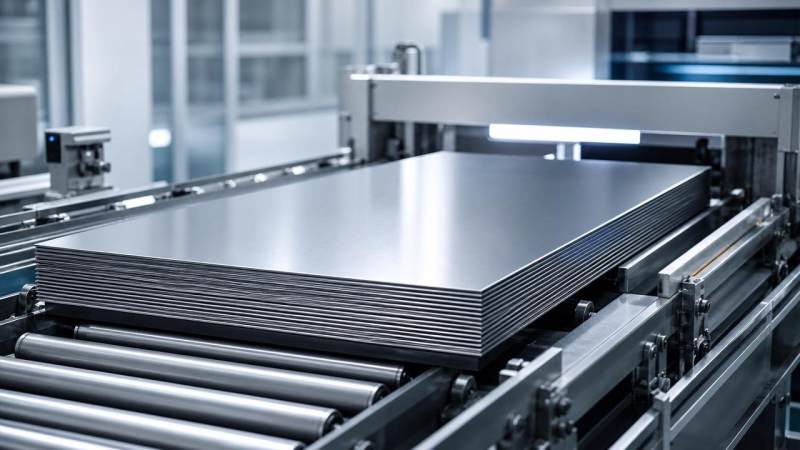
When buyers search for a stainless steel sheet manufacturer, they usually want one answer first: how does the supplier prevent visible and functional surface defects before material reaches the jobsite or production line?
That question matters because surface quality is not only cosmetic. It affects corrosion resistance, coating adhesion, weld consistency, cleanability, passivation performance, and acceptance during incoming inspection or third-party audits.
For quality teams, poor surfaces create claim risk, rework cost, and production delays. For safety managers, they can also increase hazards through sharp burrs, coating failure, contamination traps, or compromised performance in demanding environments.
The most reliable manufacturers do not treat surface quality as a final inspection issue. They build control into raw material selection, process parameters, handling methods, operator discipline, and documented release standards.
Why Surface Quality Is a Process Control Issue, Not a Final Check
Many procurement teams still focus heavily on certificates and dimensions. Those are important, but a sheet can meet thickness and grade requirements while still failing on scratches, waviness, stains, pits, roller marks, or inconsistent finish.
A capable stainless steel sheet manufacturer understands that defects often originate much earlier than the packing stage. Surface problems usually begin with unstable raw material quality, contaminated rollers, poor lubrication, mishandling, or uncontrolled slitting and leveling.
If the mill or processor waits until final inspection to look for surface problems, correction options become limited and expensive. At that point, the material may already require downgrade, rework, polishing, or rejection.
That is why serious manufacturers apply layered controls across the entire production path. The goal is prevention first, detection second, and traceable disposition whenever defects are found.
Raw Material Inspection Sets the Starting Point
Surface quality control starts before stainless sheet enters production. Reputable suppliers inspect coil origin, heat number traceability, grade conformity, surface class, edge condition, and packaging integrity before processing begins.
Incoming coils should be checked for transit damage, moisture exposure, rust contamination from carbon steel contact, and signs of improper storage. Even a high-grade stainless product can suffer staining or embedded contamination if handling is poor.
Quality teams also verify whether the raw material finish matches the customer’s intended use. A decorative application, for example, demands different acceptance criteria than a structural or concealed industrial application.
For export-focused manufacturers serving construction and industrial projects, material control must also align with standards such as ASTM, EN, JIS, and GB. This reduces the risk of mismatch between specification and expected finish quality.
Clean Production Lines Reduce Random Defects
One of the clearest signs of a disciplined manufacturer is line cleanliness. Dirt, metallic debris, worn rollers, and contaminated contact surfaces are common causes of scratches, indentation marks, and embedded particles.
Dedicated cleaning schedules for rollers, guides, leveling equipment, and tables help reduce these random defects. Separation between carbon steel and stainless processing areas is also important to avoid iron contamination.
In well-managed facilities, operators inspect wear parts regularly and replace damaged contact components before they mark the sheet. Preventive maintenance supports surface stability just as much as production efficiency.
Manufacturers that process multiple products often apply similar discipline across coated and structural materials. For example, lines used for Steel Plate Galvanized also require close control of coating integrity, handling, and surface cleanliness to meet project expectations.
Process Consistency Determines Finish Uniformity
Consistency in rolling, leveling, slitting, and cut-to-length operations has a direct impact on how uniform the surface appears. Even when no obvious scratch exists, unstable processing can create visual inconsistency that buyers reject.
Tension control, feed alignment, flatness correction, and tool condition all influence the final result. If parameters drift, sheets may show roller chatter, edge wave, crossbow, or tension marks that become more visible after fabrication.
For quality managers, this is where supplier capability matters. Ask whether the manufacturer records critical settings by batch, verifies setup before each run, and keeps process data linked to production orders.
That level of control supports repeatability, especially for OEM orders and multi-batch projects. It also makes root cause analysis faster when surface complaints arise later in downstream processing or site installation.
How Manufacturers Control Surface Damage During Handling
Even if the sheet exits the line in good condition, poor handling can ruin surface quality before shipment. This is one of the most underestimated risk points in stainless steel supply.
Forklift contact, stacking errors, unprotected straps, sharp pallet surfaces, and dragging between sheets can all create scratches and dents. In export business, the risk increases because material passes through more transfer points.
Reliable manufacturers reduce this through protective interleaving, edge guards, dry storage, proper lifting tools, and packaging matched to transport distance. They also train operators not to mix surface-sensitive material with general stock.
For safety managers, good handling practice adds another benefit: it reduces unstable stacking, sharp edge exposure, and accident risk during warehousing and container loading.
Finishing Standards Must Match the Actual End Use
Not every buyer needs a mirror-like finish, but every buyer needs the right finish for the application. A common quality problem is not poor manufacturing, but poor alignment between finish expectation and stated specification.
A manufacturer with strong technical support will clarify whether the sheet is intended for architectural exposure, fabrication, food-contact areas, chemical equipment, or hidden structural use. Each has different surface acceptance priorities.
For visible applications, color consistency, reflectivity, and scratch resistance often dominate. For industrial applications, cleanability, passivation response, weld area behavior, and corrosion resistance may matter more than visual perfection.
This is especially important for companies that source several steel product categories. In some projects, buyers may combine stainless items with coated materials such as Steel Plate Galvanized, where thickness, width, coating mass, and corrosion environment must also be matched carefully.
Inspection Methods That Actually Protect Buyers
Final inspection still matters, but it should confirm process control rather than replace it. Effective manufacturers combine visual inspection with dimensional checks, surface comparison standards, and lot traceability review.
Visual inspection should occur under controlled lighting and at defined viewing distances. Without standard conditions, the same surface may be accepted by one inspector and rejected by another, causing avoidable disputes.
Depending on application, manufacturers may also examine roughness, flatness, edge quality, coating condition, and contamination presence. For critical orders, sample retention and photographic records improve claim resolution later.
Quality managers should ask a practical question: what is the supplier’s defect classification system? The answer reveals whether the company distinguishes critical, major, and minor surface issues in a controlled way.
Documentation, Traceability, and Complaint Response Matter
Strong surface quality control is only credible if it is documented. A trustworthy stainless steel sheet manufacturer can connect each batch to raw material records, process parameters, inspection status, and packing details.
That traceability is essential when quality incidents occur. It allows both buyer and supplier to determine whether the issue came from raw coil condition, processing variation, transit damage, or downstream fabrication.
For regulated projects or audited supply chains, documentation is also part of compliance. Certificates alone are not enough. Buyers often need inspection reports, material test records, and clear identification by heat or batch number.
Complaint handling should be equally structured. The best suppliers respond with evidence, containment action, root cause analysis, and corrective measures rather than generic reassurance or blame shifting.
How to Evaluate a Manufacturer Before You Place an Order
Quality and safety managers can reduce sourcing risk by asking focused questions early. Instead of only requesting price and lead time, ask how the manufacturer defines acceptable surface quality for your application.
Request photos of packaging methods, examples of inspection records, and details on line cleanliness and material segregation. If possible, ask how they prevent carbon steel contamination during storage and processing.
It is also useful to confirm whether the supplier regularly serves export markets with demanding specifications. Manufacturers experienced in North America, Europe, the Middle East, and Southeast Asia often have stronger discipline on compliance and consistency.
For broader steel procurement, suppliers with diversified capabilities in structural steel, custom components, and coated products may offer better coordination across project packages, provided their quality systems remain product-specific and well controlled.
What a Reliable Manufacturing Partner Looks Like in Practice
A dependable supplier combines technical production ability with disciplined quality execution. That means stable raw material sourcing, modern equipment, trained operators, process records, protective packaging, and responsive service after shipment.
For industrial and construction buyers, this reduces more than visual complaints. It lowers the chance of coating failure, fabrication issues, corrosion problems, installation delays, and disputes over acceptance criteria.
Manufacturers such as Hongteng Fengda, with experience in international structural steel supply and custom solutions, reflect this broader value when they align production control with global standards and project-specific requirements.
In practice, the right partner is not the one promising zero defects in marketing language. It is the one showing a repeatable system for controlling, documenting, and continuously improving surface quality.
Conclusion
For quality control and safety managers, evaluating a stainless steel sheet manufacturer should begin with one principle: surface quality is the result of system control, not inspection luck.
The best manufacturers protect surface quality through disciplined raw material checks, clean equipment, stable processing, careful handling, fit-for-purpose finishing, and documented inspection standards. These controls reduce risk across procurement, fabrication, and field performance.
If a supplier can clearly explain how defects are prevented, how quality is verified, and how issues are traced and corrected, you are looking at a far stronger sourcing option than one competing on price alone.
In today’s global steel supply environment, that level of control is what turns a vendor into a reliable long-term manufacturing partner.
Please give us a message


Please enter what you want to find