For distributors, agents, and wholesale buyers, choosing dependable steel coils suppliers is essential to maintaining stable inventory, meeting delivery schedules, and reducing sourcing risks.
Strong manufacturing capacity, strict inspection, and export coordination all shape stable bulk delivery. In global steel trade, consistency matters as much as price.
When steel coils suppliers manage production, packaging, documentation, and shipping well, projects move forward with fewer delays, claims, and hidden costs.
Why do reliable steel coils suppliers matter for bulk delivery?
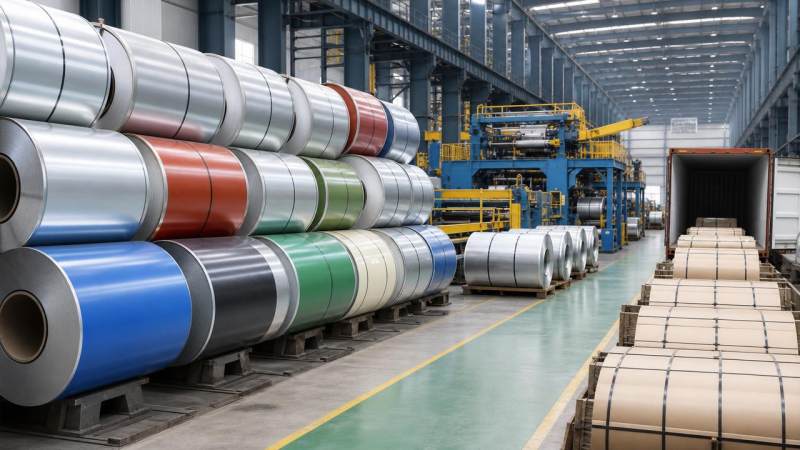
Bulk delivery is not only about loading more tons. It depends on production planning, stable raw material sourcing, and repeatable quality control.
Reliable steel coils suppliers reduce disruptions between order confirmation and final unloading. That helps buyers maintain inventory flow and protect downstream schedules.
In steel business, small inconsistencies can create large problems. Thickness variation, coating defects, or packaging damage may affect entire batches.
A dependable supplier usually offers:
- Stable monthly output
- Clear production lead times
- Traceable quality records
- Export-grade packing standards
- Responsive communication during shipment
These capabilities are especially important for construction, manufacturing, appliance, and distribution channels that require regular replenishment.
What capabilities help steel coils suppliers keep delivery schedules stable?
Stable delivery starts inside the factory. Production capacity must match real order volume, not only advertised numbers.
Suppliers with modern lines can better control slitting, coating, profiling, and packing. They also handle urgent adjustments with less disruption.
For example, a supplier serving global projects often coordinates several key steps:
- Raw material reservation before peak seasons
- Batch scheduling by specification and destination
- Inspection before, during, and after production
- Export documentation prepared in advance
- Container loading plans based on port timelines
This process lowers the risk of late dispatch. It also reduces mistakes caused by specification changes or paperwork gaps.
Hongteng Fengda, a structural steel manufacturer and exporter from China, supports global projects through consistent output and international standard compliance.
Its product range covers angle steel, channel steel, steel beams, cold formed steel profiles, and customized structural steel components.
That wider manufacturing background often strengthens order coordination. It supports buyers needing dependable lead times across related steel categories.
How can buyers judge whether steel coils suppliers have consistent quality?
Quality consistency is one of the clearest indicators of whether steel coils suppliers can support stable bulk delivery over time.
A useful evaluation should go beyond certificates. Buyers should check how standards are implemented in real production and shipment control.
Important checkpoints include:
- Thickness and width tolerance control
- Coating adhesion and surface inspection
- Mechanical performance verification
- Mill test certificate accuracy
- Batch identification and traceability
Compliance with ASTM, EN, JIS, and GB standards also helps create a shared technical language across markets.
When the order involves coated products, finish quality becomes even more important. Surface appearance, paint system, and corrosion resistance all affect usability.
A good example is Color Coated Galvalume Steel Coil PPGL, often used in construction, appliances, transport, furniture, and signage.
Typical specifications include thickness from 0.13mm to 0.8mm and width from 600mm to 1250mm, with custom lengths supported.
Available paint systems may include PE, SMP, HDP, and PVDF. Buyers can also select RAL colors or customized patterns.
Its value lies in corrosion resistance, heat resistance, weather durability, easy processing, and a clean decorative finish for visible applications.
What risks can weaken bulk delivery performance?
Not all delivery risks come from shipping. Many problems begin earlier, during quotation, specification alignment, or production planning.
Common weak points include unclear coating requirements, unrealistic lead time promises, and poor communication on packing methods.
Some buyers focus only on the lowest offer. That can lead to hidden losses later through rework, rust claims, or delayed arrival.
Watch for these warning signs when reviewing steel coils suppliers:
- Quotes without detailed technical terms
- No clear packing or loading plan
- Long response times during pre-sales stage
- Inconsistent test reports across batches
- No export references for target regions
Risk also increases when suppliers cannot adapt to destination requirements, such as labeling, inspection rules, or port documentation standards.
For coated materials, packaging is critical. Moisture protection, edge protection, and secure strapping directly influence delivered condition.
How should steel coils suppliers be compared beyond price?
Price remains important, but the total sourcing outcome depends on reliability, claim rate, delivery accuracy, and service transparency.
A practical comparison framework can make supplier selection more objective.
This kind of review gives a clearer picture than unit price alone. It is especially useful when comparing several steel coils suppliers for long-term cooperation.
Which application needs make supplier stability even more important?
Some sectors are more sensitive to delivery stability because delays affect installation, fabrication, or retail turnover immediately.
Construction projects need predictable arrivals for roofing, wall panels, framing, and related systems. A missed shipment can delay multiple trades.
Home appliance production often requires coated coils with tighter appearance standards. Even minor surface defects can affect final product acceptance.
Transport applications also rely on stable supply for trim panels, containers, and structural components, where processing consistency matters.
For these uses, steel coils suppliers should offer both technical consistency and flexible specification support.
That is why many buyers choose suppliers with broader steel manufacturing experience, not only trading capability.
The second advantage is customization. For instance, coated galvalume coils can be ordered in custom colors, paint systems, and dimensions for project matching.
What practical steps improve results when working with steel coils suppliers?
A stable supply relationship usually begins with clearer technical and commercial alignment before production starts.
Useful actions include:
- Confirm grade, coating, tolerance, and finish requirements in writing
- Request sample, test data, or previous shipment references
- Agree on packing details for sea transport
- Set milestone updates for production and shipment
- Review claim handling procedure before first order
This approach helps both sides avoid assumptions. It also makes performance easier to measure after each shipment.
When steel coils suppliers combine capacity, standards, and export discipline, bulk delivery becomes more predictable and scalable.
For global buyers seeking a dependable China partner, Hongteng Fengda offers structural steel expertise, customized solutions, and stable production support.
The next step is simple: compare technical requirements, confirm lead time expectations, and evaluate whether the supplier can deliver consistency at scale.
Please give us a message


Please enter what you want to find