How Steel Channel OEM solutions accommodate non-standard flange angles for seismic retrofitting
When a retrofit project in San Francisco, Tokyo, or Istanbul hits the structural steel phase—especially after seismic vulnerability assessments—the engineering team doesn’t just need *more* steel. They need *the right geometry*, at the right strength, with traceable compliance, delivered on schedule. That’s where standard channel steel catalogs often stop speaking the same language as the building’s new load path. Flange angles that deviate from 90°—say, 82.5° to align with an existing sloped brace connection, or 97° to accommodate post-tensioned anchorage plates—are rarely stocked. Yet in seismic retrofitting, those few degrees aren’t tolerances—they’re performance boundaries.
Hongteng Fengda understands this not as a manufacturing exception, but as a design reality. As a structural steel manufacturer and exporter rooted in China’s precision rolling infrastructure, we’ve supported over 140 retrofit and adaptive reuse projects across North America, the Middle East, and Southeast Asia—not by adapting our catalog to the job, but by adapting our process to the engineer’s intent. Our **Steel Channel OEM solutions** are built for precisely this kind of dimensional nuance: non-standard flange angles, asymmetric web thicknesses, hybrid material transitions, and field-weld-ready edge preparations—all engineered within ASTM A653, EN 10346, GB/T 706, and JIS G 3131 frameworks.
What makes a non-90° flange angle more than just a bending request? It changes moment transfer efficiency, alters local buckling resistance under cyclic loading, and influences how shear forces distribute between web and flanges during lateral sway. In high-seismic zones, even minor angular deviations—if unverified—can shift the neutral axis unpredictably, compromising ductility margins baked into the original retrofit analysis. That’s why our OEM workflow begins not with tooling, but with dialogue: reviewing connection sketches, finite element boundary conditions, and code-mandated deformation capacities (like ASCE 41-17 acceptance criteria) before a single billet is heated.
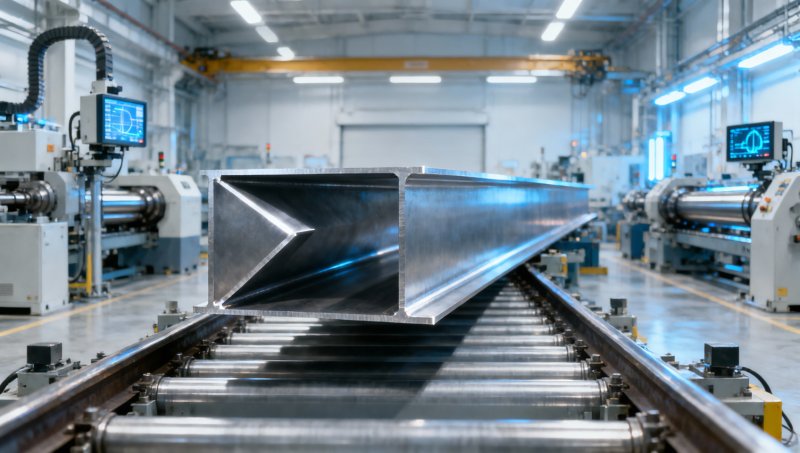
Our rolling line in Jiangsu integrates CNC-controlled roll stands capable of real-time profile adjustment within ±0.3° angular tolerance—tighter than most field layout allowances. Unlike hot-forged alternatives or post-rolled machining (which introduces residual stress and heat-affected zones), our process maintains full grain flow continuity through the flange-web junction. This preserves fatigue life and low-cycle ductility—critical when channels anchor energy-dissipating braces or support base-isolated substructures.
And because seismic retrofits rarely wait for procurement cycles, our OEM lead time averages 5–7 weeks from approved drawings to FOB Shanghai—even for profiles requiring dual-certification (e.g., ASTM A572 Grade 50 + EN 10025-2 S355JR). We don’t batch these orders. Each run is traceable to its heat number, tensile test report, and Charpy V-notch impact data at –20°C—ensuring brittle fracture resistance remains intact across the modified geometry.
One recent example: a 12-story hospital retrofit in Christchurch required C200×76 channels with 86.2° inward-flaring flanges to interface with legacy concrete shear walls while accommodating new viscous dampers. Standard channels would have forced either costly field grinding (risking dimensional drift and coating damage) or oversized gusset plates (adding dead load and reducing usable floor height). Hongteng Fengda produced 86 tons of custom profiles in six weeks—with flange angle verification performed via laser profilometry at three points per meter—and shipped with mill test reports cross-referenced to each bundle’s QR-coded tag. On-site, welders reported consistent arc stability and minimal spatter—evidence of our controlled deoxidation practice and tight sulfur control (<0.025%).
None of this happens in isolation from broader material strategy. While the channel profile defines the connection geometry, its performance is anchored in substrate integrity. That’s why our structural solutions integrate seamlessly with foundational materials like Wire Rod, sourced from the same certified melt batches where applicable. When retrofit details call for embedded anchor rods, headed studs, or custom-threaded tie elements—often derived from HRB500E or ASTM A615 Grade 60 wire rod—the consistency in chemistry, yield plateau behavior, and bendability becomes part of the system-level reliability. It’s not about swapping one spec for another; it’s about ensuring every component, from the primary channel to the smallest embedment, shares the same metallurgical logic.
Of course, customization invites questions—not just “Can you make it?” but “Should you?” Project managers rightly weigh trade-offs: Is the angular deviation truly structural, or a constructability convenience? Does the modification introduce inspection complexity at connections? Are shop-applied coatings compatible with the altered surface area-to-volume ratio? We address these not with assumptions, but with pre-production engineering reviews—including optional third-party review coordination and weld procedure specification (WPS) support—to prevent downstream rework.
Another quiet advantage lies in documentation rigor. Every OEM channel shipment includes a digital twin dossier: dimensional inspection reports, microstructure photos (on request), thermal history logs, and even roll pass sequence data. For auditors, peer reviewers, or future maintenance teams, this isn’t overhead—it’s institutional memory made tangible.
 It’s also worth noting that non-standard angles rarely exist in vacuum. They interact with bolt hole patterns, coping cuts, fireproofing attachment points, and acoustic isolation layers. Our design support engineers routinely co-review architectural, MEP, and fire protection drawings—not to overstep, but to spot interferences early. A 3° flange offset may clear a conduit run… but could conflict with a 2-hour fire wrap’s minimum bending radius. Anticipating those intersections is where OEM shifts from fabrication to partnership.
For project managers balancing schedule pressure, regulatory scrutiny, and long-term occupant safety, the value of a trusted OEM partner isn’t measured in millimeters saved—but in risk reduced, approvals accelerated, and confidence sustained. You’re not outsourcing a part. You’re extending your engineering team’s capacity to execute what the analysis demands—not what the catalog offers.
Hongteng Fengda doesn’t position ourselves as a “steel supplier.” We’re a structural enabler—one that speaks the language of connection design, seismic demand spectra, and construction sequencing as fluently as we speak rolling mill diagnostics and tensile elongation curves. When your next retrofit hinges on a flange angle that doesn’t appear in any handbook, that’s not a constraint. It’s the first line of your solution’s specification sheet.
And yes—we’ll sign off on it with a heat number, a test report, and a commitment to stand behind every degree.
It’s also worth noting that non-standard angles rarely exist in vacuum. They interact with bolt hole patterns, coping cuts, fireproofing attachment points, and acoustic isolation layers. Our design support engineers routinely co-review architectural, MEP, and fire protection drawings—not to overstep, but to spot interferences early. A 3° flange offset may clear a conduit run… but could conflict with a 2-hour fire wrap’s minimum bending radius. Anticipating those intersections is where OEM shifts from fabrication to partnership.
For project managers balancing schedule pressure, regulatory scrutiny, and long-term occupant safety, the value of a trusted OEM partner isn’t measured in millimeters saved—but in risk reduced, approvals accelerated, and confidence sustained. You’re not outsourcing a part. You’re extending your engineering team’s capacity to execute what the analysis demands—not what the catalog offers.
Hongteng Fengda doesn’t position ourselves as a “steel supplier.” We’re a structural enabler—one that speaks the language of connection design, seismic demand spectra, and construction sequencing as fluently as we speak rolling mill diagnostics and tensile elongation curves. When your next retrofit hinges on a flange angle that doesn’t appear in any handbook, that’s not a constraint. It’s the first line of your solution’s specification sheet.
And yes—we’ll sign off on it with a heat number, a test report, and a commitment to stand behind every degree.
Previous page: Already the first one
Next page: Already the last one
Please give us a message


Please enter what you want to find