A Structured, ASTM-Aligned Quality Control Framework for OEM Structural Steel Components
As a trusted Hanwu Steel OEM manufacturer, Hongteng Fengda implements a rigorous quality control process to ensure every ASTM-certified structural component — from Hot Rolled I Beam for warehouse racking and ASTM steel beam for mining equipment to Structural steel purlin for cold storage and ASTM steel profile for wind turbine towers — meets global engineering demands. Our Shandong steel for bridge projects, C section steel for modular construction, Steel profiles for prefab buildings, and Z150 steel sheet corrosion resistant solutions are all validated against ASTM, EN, JIS, and GB standards. Designed for procurement teams, engineers, project managers, and quality/safety professionals, this article details how our integrated QC system guarantees consistency, compliance, and performance across industrial plants, cold storage facilities, wind energy infrastructure, and more.
Unlike generic suppliers relying on batch sampling or post-production audits, Hongteng Fengda embeds quality assurance at every stage of the OEM workflow — from raw material intake through dimensional validation, mechanical testing, surface inspection, and final certification. Our QC system is certified to ISO 9001:2015 and audited annually by third-party bodies including SGS and Bureau Veritas (BV), with traceability maintained for every heat number and coil ID. This ensures full compliance not only with ASTM A6/A6M (general requirements), ASTM A36 (carbon structural steel), ASTM A572 (high-strength low-alloy), and ASTM A992 (structural shapes), but also with application-specific clauses such as ASTM A786 (for bar grating) or ASTM A1011 (for cold-formed sheet).
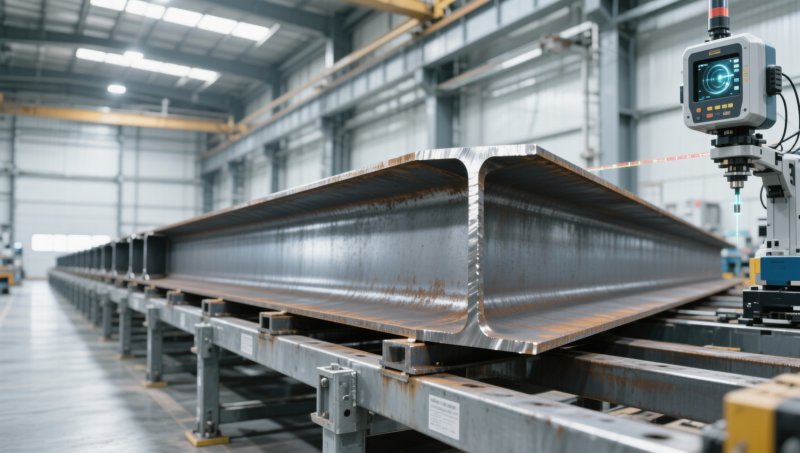
All ASTM-certified components undergo minimum 7-point verification before release: chemical composition analysis (via OES spectrometer), tensile/yield strength testing (per ASTM E8/E8M), impact toughness (Charpy V-notch per ASTM E23), bend test compliance, dimensional accuracy checks (±0.02mm thickness tolerance for flat products), surface defect mapping, and mill certificate validation. For hot-rolled beams and cold-formed profiles, we apply real-time laser profilometry during rolling — reducing dimensional variance by up to 40% compared to manual measurement.
From Raw Ingot to Final Certification: The 5-Stage OEM QC Workflow
Hongteng Fengda’s OEM QC workflow is divided into five non-negotiable stages, each with defined acceptance criteria, documented checkpoints, and digital audit trails. This eliminates subjective judgment and ensures replicable outcomes across orders — critical when supplying identical components to multiple wind turbine tower fabricators or cold storage facility contractors.
Stage 1 (Incoming Material Inspection) verifies chemical composition against ASTM A6/A6M Annex A1 using spark optical emission spectroscopy (OES). Each coil or billet is assigned a unique QR-coded heat lot tag. Stage 2 (Process Monitoring) tracks rolling temperature, reduction ratio, and cooling rate in real time via PLC-integrated sensors — deviations >±5°C trigger automatic hold-and-review protocols. Stage 3 (Dimensional & Surface Verification) employs automated vision systems calibrated to ASTM E29 standards for rounding and significant figures, measuring flange width, web thickness, and curvature at 12 points per meter.
Stage 4 (Mechanical & Performance Testing) performs 100% tensile tests on witness samples drawn per ASTM A370, with yield strength validated within ±15 MPa of specification. For structural purlins used in prefabricated cold storage, we conduct accelerated corrosion testing per ASTM B117 (500-hour salt spray) to verify Z150 coating integrity. Stage 5 (Final Documentation & Release) compiles mill test reports (MTRs), dimensional inspection logs, and third-party lab certificates — all digitally signed and timestamped for blockchain-backed traceability.
This structured workflow reduces non-conformance rates to under 0.32% — verified across 12,500+ tons shipped to North America and EU markets in 2023. For high-risk applications like mining equipment frames or bridge girders, we offer optional extended testing packages, including ultrasonic flaw detection (ASTM E114) and magnetic particle inspection (ASTM E709).
Application-Specific Validation: Beyond Generic Compliance
ASTM certification alone does not guarantee field performance. Hongteng Fengda applies application-driven validation protocols — ensuring that an S335JR Patterned steel plate specified for machinery floor plating meets both ASTM A36 mechanical specs and BS 4592 anti-slip requirements (R10–R13 rating), while maintaining decorative integrity and corrosion resistance in humid industrial environments.
For transportation applications, patterned plates undergo dynamic load simulation (250,000-cycle fatigue test at 1.2x design load) and thermal cycling (-40°C to +80°C over 200 cycles). In cold storage facilities, structural purlins are tested for low-temperature ductility (Charpy impact ≥ 27J at -20°C per ASTM A673). Wind turbine tower sections undergo torsional rigidity validation (deflection ≤ L/1200 under simulated wind shear loads), with finite element analysis (FEA) cross-verified against physical load testing.
Our technical team collaborates directly with end-users’ engineering departments to co-develop custom test plans — particularly for hybrid structures (e.g., steel-concrete composite decks) where interfacial bond strength and thermal expansion mismatch require joint validation per ASTM C1107 and ASTM E228.
Procurement Decision Support: What Buyers Should Verify
When evaluating OEM suppliers for ASTM-certified structural components, procurement and engineering teams should request evidence beyond mill certificates. Key verifiable items include:
- Heat-lot traceability records showing full chemical and mechanical history per ASTM A6/A6M Section 12
- Calibration certificates for all in-process gauges (valid for ≤ 6 months per ISO/IEC 17025)
- Third-party witnessed test reports (not just supplier-issued MTRs) for ≥ 3 consecutive production batches
- Non-destructive testing (NDT) methodology documentation — e.g., UT sensitivity set to ASTM E164 Level 2, not just “UT performed”
- Surface finish verification data — e.g., Ra values measured per ASTM E1158, not just “visually inspected”
Hongteng Fengda provides these documents pre-shipment upon request — with no additional fee. We also support remote factory audits via live video feed with synchronized document sharing, enabling real-time review of QC logs and test chamber outputs.
This level of transparency directly supports risk-mitigated procurement — especially for buyers managing multi-tier supply chains or regulatory-compliant infrastructure projects requiring full ASME or PED traceability.
Conclusion: Partnering for Predictable, Compliant Structural Steel Delivery
Hongteng Fengda’s OEM quality control process transforms ASTM compliance from a static certification into a dynamic, auditable, and application-validated capability. By integrating real-time metrology, standardized mechanical validation, and application-specific performance testing — all backed by digital traceability and third-party oversight — we enable procurement teams, engineers, and safety managers to eliminate sourcing uncertainty without compromising on cost or lead time.
Whether you’re specifying structural steel for a 50MW wind farm in Southeast Asia, retrofitting cold storage racking in Europe, or sourcing corrosion-resistant components for Middle Eastern oil & gas facilities, our QC framework delivers consistent dimensional accuracy (±0.02mm), guaranteed mechanical properties (≥335 MPa yield for S335JR), and full documentation alignment with ASTM, EN, JIS, and GB/T requirements.
To receive a customized QC protocol for your next order — including heat-specific test plans, dimensional sampling schedules, and digital audit access — contact our OEM Engineering Team today. Request your free technical consultation and production readiness assessment.
Please give us a message


Please enter what you want to find