Ensuring safe and compliant electrical galvanised conduit installation is non-negotiable for structural integrity and long-term reliability—especially when using high-quality steel KA angle, galvanized iron angle, or right angle metal plate as support frameworks. This checklist guides information seekers, site engineers, safety auditors, project managers, and distributors through 7 critical steps—from selecting the right galvanized metal conduit and conduit pipe galvanized to verifying grounding, bending radius, and ASTM/EN-compliant fastening. Backed by Hongteng Fengda’s expertise as a China-based structural steel manufacturer, it bridges real-world application with international standards (ASTM, EN, GB) for galvanized electrical pipe, galvanized plumbing, and galvanized tube pipe in global construction projects.
Why This Checklist Matters for Structural Steel Projects
Electrical galvanised conduit isn’t just about routing wires—it’s a load-bearing, corrosion-resistant, fire-rated component integrated into structural steel frameworks. When paired with steel KA angle or galvanized iron angle supports, conduit systems become part of the building’s passive fire protection and mechanical resilience strategy. For project managers overseeing multi-million-dollar infrastructure across North America or the Middle East, skipping even one verification step risks rework, audit failure, or worst-case—electrical fault propagation due to improper bonding or undersized supports.
Hongteng Fengda routinely supplies galvanized metal conduit support structures—including custom-fabricated right angle metal plates and cold-formed steel brackets—to EPC contractors who demand traceable compliance. Our manufacturing adherence to ASTM A123 (hot-dip galvanizing), EN ISO 1461, and GB/T 13912 ensures that every steel KA angle used as conduit hanger meets minimum 610 g/m² zinc coating—critical where conduit runs intersect humid, saline, or chemically aggressive zones.
7 Critical Steps for Electrical Galvanised Conduit Safety Audits
Each step below aligns with IEC 61537, NFPA 70 (NEC Article 344), and EN 61386-21. Real-world deviations—like substituting electro-galvanized fasteners for hot-dip galvanized ones—trigger cascading failures during third-party safety audits.
- Verify conduit material grade & galvanizing method: Confirm “galvanized electrical pipe” is ASTM A53 Type E or EN 10255 Grade S235, with hot-dip galvanizing—not electroplated—verified via lab test report (zinc thickness ≥ 55 µm).
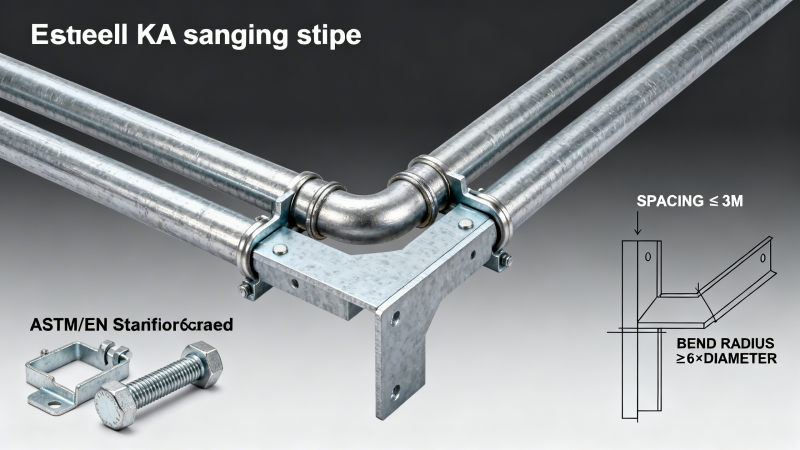
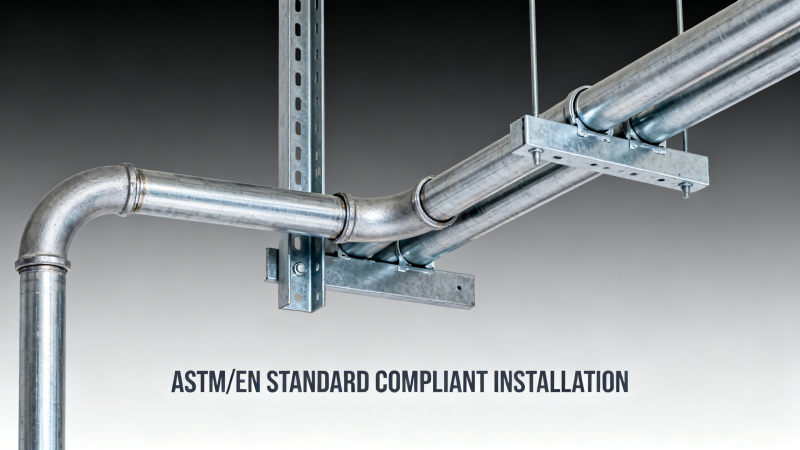
- Validate support spacing & anchoring: Use steel KA angle or right angle metal plate supports at ≤ 3 m intervals (per NEC 344.30). Anchor into structural steel beams—not drywall or concrete block—using ASTM F1554 Grade 105 bolts.
- Inspect bending radius & deformation: Minimum bend radius must be ≥ 6× conduit OD. Cold-bent conduit must show no cracking or zinc flaking—especially near weld seams on galvanized tube pipe.
- Confirm grounding continuity: Bond all conduit sections with listed grounding clamps (UL 467). Resistance between any two points must be ≤ 0.1 Ω—measured with a low-resistance ohmmeter, not visual inspection alone.
- Check fastener compatibility: Avoid stainless steel screws with galvanized conduit—they accelerate galvanic corrosion. Specify hot-dip galvanized bolts with matching coating weight (e.g., 275 g/m² per ISO 1461).
- Validate fire-stopping integration: Where conduit penetrates fire-rated walls/floors, verify intumescent collars are rated for galvanized metal conduit—and installed per UL W-L-1002 or EN 1366-3.
- Audit documentation traceability: Require mill test reports (MTRs) for both conduit pipe galvanized and supporting steel KA angle—linked to heat numbers and galvanizing batch IDs.
Technical Performance Comparison: Galvanized vs. Non-Galvanized Support Systems
Support longevity directly impacts conduit system lifecycle. Below compares common support materials used alongside galvanized electrical pipe in harsh environments:
Standards & Certification Alignment
Compliance isn’t optional—it’s contractual. Hongteng Fengda’s galvanized metal conduit support components carry dual-certification: GB/T 706 for structural angle steel + ASTM A123 for galvanizing. That means every steel KA angle shipped to EU clients includes EN 10210-1 conformity statements, while North American orders include ASTM A653/A653M mill certs for galvanized sheet used in custom right angle metal plate fabrication.
We also supply Hot dipped Galvanized Steel Wire Rope for temporary rigging and conduit hoisting—certified to ABS, ISO 9001, and GB/T 20116-2008—with zinc coating groups selected per corrosion severity (e.g., thick group: 260 g/m² for offshore photovoltaic farms).
Why Choose Hongteng Fengda for Your Conduit Support Needs?
As a structural steel manufacturer and exporter from China, Hongteng Fengda doesn’t just sell steel KA angle—we engineer conduit-ready solutions. Our cold-formed steel profiles integrate pre-punched holes aligned to NEC conduit spacing tables. Every galvanized iron angle undergoes salt-spray testing (ASTM B117, 1,000 hrs) before shipment. And unlike commodity suppliers, we offer OEM labeling, bilingual MTRs, and real-time production tracking for distributors managing regional stock across Southeast Asia or the GCC.
For project managers juggling tight deadlines and strict QA gates, partnering with us means fewer RFIs, zero galvanizing rework, and full traceability—from raw billet heat number to final zinc thickness report. Contact our engineering team today to request conduit support CAD details, galvanized metal pipe mounting templates, or customized right angle metal plate samples.
- galvanized tube pipe
- galvanized plumbing
- galvanized electrical pipe
- electrical galvanised conduit
- conduit pipe galvanized
- galvanized metal conduit
- right angle metal plate
- galvanized iron angle
- steel ka angle
- hot-dip galvanized
- structural steel
- steel beams
- structural steel beams
- Structural Steel
- Structural Steel Beams
- Steel Beams
- Galvanized
- Steel Beam
Related recommendations
 The Ultimate Procurement Hub: How a Full-Spectrum Steel Portfolio Empowers Global Industrial SuccessIt covers a wide range of steel products, including steel plates, steel coils, profiles, and steel gratings, to meet diverse needs.
 The Vertical Integration Advantage: Why Full-Process Production is the Gold Standard for Global Steel SourcingIt possesses complete production technologies and equipment for coking, sintering, steelmaking, and rolling, forming a systematic production system.
 The Global Steel Pulse: Bridging Continents with Precision Engineering and Unrivaled Supply Chain ExcellenceOur products sell well throughout China and are exported to North America, Europe, the Middle East, and other parts of the world, covering a wide market.
 Velocity of Value: How Precision Processing and Rapid-Response Logistics Redefine the Global Steel Supply ChainEquipped with advanced leveling equipment and relying on a robust logistics system, we can respond to customer needs at any time.
Please give us a message


Please enter what you want to find