Designing exhaust systems for high-temperature environments requires materials that withstand extreme thermal stress and corrosion. For project managers and engineering leaders, selecting the right ss tube is critical to ensuring system longevity and operational safety. Premium stainless steel options offer exceptional durability, making them the ideal choice for demanding industrial applications. This guide explores key factors in designing efficient exhaust systems using high-performance ss tube solutions, helping you optimize thermal performance, control material costs, and ensure compliance with strict international engineering standards.
Understanding Thermal Stress and Material Limits in Exhaust Design
When exhaust gases exit industrial engines, boilers, or processing units, they carry intense heat and corrosive byproducts. The primary failure points in these systems are rarely due to mechanical overload; instead, they stem from thermal fatigue and chemical degradation. A standard carbon steel pipe might handle the initial pressure, but it will rapidly oxidize and warp under continuous thermal cycling.
This is where a high-quality ss tube becomes indispensable. Stainless steel maintains its structural integrity at elevated temperatures, but not all grades behave the same. The coefficient of thermal expansion is a critical parameter. For instance, austenitic stainless steels generally have higher expansion rates than carbon steels. If your exhaust routing includes long straight runs without adequate expansion joints, the resulting stress can tear welds or distort supports. Engineering the layout to accommodate a thermal expansion coefficient of around 17.2 is just as important as the material selection itself. Ignoring this dynamic often leads to catastrophic failures at the weld seams during the first few heating cycles.
Selecting the Right Grade: Balancing Performance and Cost
Project managers often face the dilemma of specifying the highest possible alloy versus staying within budget. While grades like 316 or specialized high-nickel alloys offer superior resistance to specific chlorides, they come at a significant premium. For many high-temperature exhaust applications where extreme chloride exposure is not the primary concern, 304-grade stainless steel provides an optimal balance of performance and economic viability.
The foundation of a reliable exhaust tube lies in its raw material. Sourcing premium 304 Stainless Steel Coil ensures that the fabricated tubes possess the necessary metallurgical properties. Material with a tensile strength of ≥ 520 MPa and a yield strength of ≥ 275 MPa provides the mechanical robustness needed to withstand internal pressure and external vibrations. Furthermore, an elongation rate of ≥55-60% indicates excellent formability, which is crucial when the ss tube needs to be bent into complex routing configurations without cracking. With a hardness of ≤183HB (or ≤ 100 HRB), the material remains machinable and weldable on-site if modifications are required.
From a thermal perspective, 304 stainless steel exhibits high temperature resistance, capable of withstanding intermittent conditions up to 1000-1200 degrees. Its thermal conductivity of 16.2 W/m·K means it transfers heat predictably, allowing engineers to design accurate insulation and heat shielding requirements. Additionally, with a density of 7.93 g/cm³ and an elastic modulus of 193 GPa, the structural weight and deflection calculations must account for these specific physical properties to ensure support brackets are adequately sized.
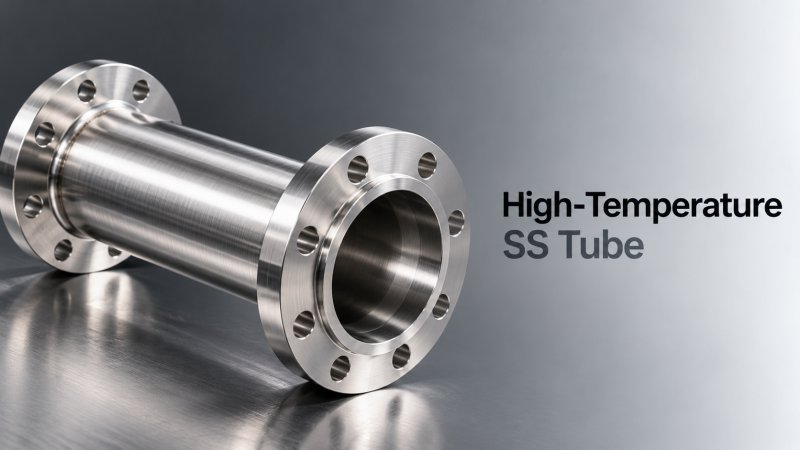
Engineering Considerations for Tubing Dimensions and Fabrication
The physical dimensions of the ss tube directly impact the exhaust system's backpressure and structural weight. Thinner walls reduce weight and material costs but may succumb to vibration-induced fatigue or external impact damage. Conversely, overly thick walls add unnecessary weight and complicate the welding process. Typical thicknesses for industrial exhaust tubing range from 2.5mm to 10.0mm, depending on the diameter and the specific pressure requirements. Lengths can vary from 2000mm up to 6000mm or more, with widths in coil form ranging from 610mm to 2000mm before slitting and forming.
When specifying these dimensions, it is vital to consider the manufacturing capabilities of your supplier. A reliable structural steel manufacturer and exporter, such as Hongteng Fengda, provides customized structural steel components and cold formed steel profiles that adhere to strict tolerances. Their ability to supply both standard specifications and OEM solutions means that project leaders can source complex exhaust brackets, flanges, and support structures from a single, accountable partner. This consolidation simplifies logistics and ensures dimensional compatibility across the entire assembly.
Compliance with international standards is non-negotiable in global projects. Whether your project requires adherence to ASTM, EN, JIS, or GB standards, the fabrication process must be traceable and verifiable. Modern manufacturing facilities with strict quality control ensure that every weld and bend meets these rigorous criteria, reducing the risk of on-site rework or system failure.
Mitigating Corrosion and Extending System Lifespan
High temperature is only half the battle in exhaust system design. As the gases cool, particularly during shutdown cycles, condensation occurs. This condensation often mixes with sulfur and other combustion byproducts to form highly corrosive acids. If the ss tube lacks adequate corrosion resistance, pitting and intergranular corrosion will rapidly compromise the system.
This is where the specific alloy composition of 304 stainless steel proves its value. It offers excellent corrosion resistance and good intergranular corrosion resistance, which is critical for welded exhaust joints. It demonstrates strong corrosion resistance in nitric acid with a concentration of less than or equal to 65% at boiling temperature, and maintains good resistance to alkali solutions and most organic and inorganic acids. For project managers, this translates to reduced maintenance intervals and a longer overall lifecycle for the exhaust infrastructure, ultimately lowering the total cost of ownership.
While surface finishes like BA, 2B, NO.1, NO.4, 4K, HL, and 8K are typically relevant for architectural or visible components, the internal surface quality of the tube is what matters most for exhaust flow. A smoother internal finish reduces turbulence, minimizes particulate buildup, and prevents localized corrosion traps.
Sourcing Strategy and Quality Assurance for Global Projects
Even the best engineering design can fail if the supply chain is unreliable. Delays in material delivery or inconsistencies in material certification can halt construction and inflate project costs. When sourcing ss tube and related structural components for international projects, partnering with an established entity is crucial.
Hongteng Fengda, as a professional structural steel manufacturer and exporter based in China, supports global buyers across North America, Europe, the Middle East, and Southeast Asia. By specializing in angle steel, channel steel, steel beams, and customized structural steel components, they help partners reduce sourcing risks and control costs. Their stable production capacity and dependable lead times ensure that project schedules remain intact. Furthermore, their commitment to delivering value through quality, reliability, and professional service aligns with the stringent demands of modern engineering projects. Certifications from ISO, SGS, and BV provide the necessary documentation for international compliance and quality assurance.
When evaluating suppliers, look beyond the initial price per ton. Consider their ability to provide comprehensive mill test certificates, their track record with international standards, and their willingness to engage in technical discussions regarding your specific application. A supplier that understands the nuances of high-temperature exhaust design will be a strategic partner, helping you navigate the complexities of global procurement.
Final Thoughts on Exhaust System Optimization
Designing an exhaust system using high-temperature ss tube requires a holistic approach. It involves balancing thermal dynamics, selecting the appropriate alloy grade like 304 for its optimal strength and corrosion profile, specifying precise dimensions, and securing a reliable supply chain. By focusing on these core engineering and procurement principles, project managers can deliver robust, compliant, and cost-effective exhaust solutions that perform reliably under extreme industrial conditions. Before finalizing your material specifications, always cross-reference the operational parameters with the specific environmental conditions of your project site to ensure long-term viability and operational safety.
Please give us a message


Please enter what you want to find