When sourcing custom steel tubing, unexpected delays often come from factors beyond simple production speed. Raw material supply, tooling, machining, testing, coating, packaging, and export logistics all shape the final timeline.
Understanding what causes custom steel tubing lead times to slip helps reduce sourcing risks. It also supports better planning for inventory, project delivery, and customer commitments across global steel supply chains.
Why a structured review matters before ordering custom steel tubing
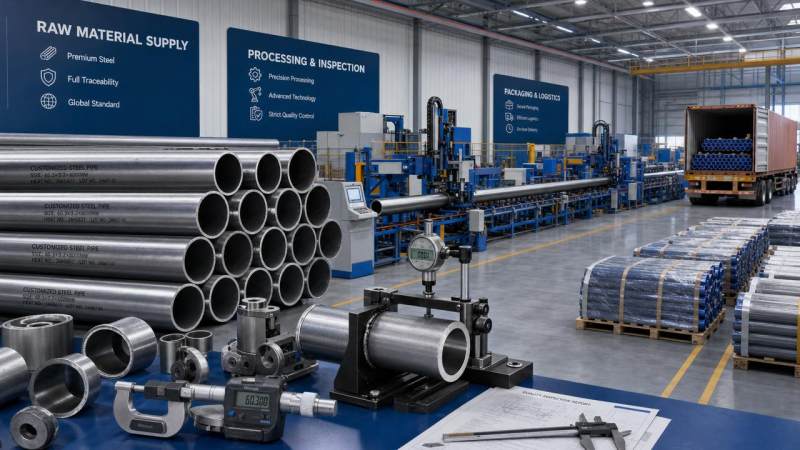
Custom steel tubing is not a simple stock product. Dimensions, steel grade, wall thickness, tolerances, forming method, and finishing requirements can quickly change the production path.
A structured review helps identify likely bottlenecks before order confirmation. That means fewer surprises during fabrication, inspection, document approval, container booking, and customs clearance.
For global steel projects, stable lead times depend on planning accuracy as much as factory capability. A clear checklist makes custom steel tubing sourcing more predictable and easier to control.
Core factors that delay custom steel tubing orders
- Check whether the required steel grade is available locally or needs mill scheduling, because special chemistries and nonstandard specifications often add several days or weeks.
- Confirm if new tooling, rollers, dies, or fixtures are needed, since custom profiles and unusual dimensions usually extend setup time before full production starts.
- Review drawing completeness early, because missing tolerances, unclear weld details, or conflicting dimensions can stop engineering approval and delay fabrication release.
- Verify order quantity against production efficiency, as very small runs may wait for combined scheduling while very large runs may exceed immediate machine capacity.
- Ask about forming and cutting complexity, since laser cutting, drilling, bending, slotting, and end processing each add handling steps and more inspection points.
- Confirm coating or surface treatment requirements, because galvanizing, painting, pickling, or special corrosion protection often depend on outside processing schedules.
- Check testing and certification needs, since mechanical tests, chemical analysis, dimensional reports, and third-party inspections can delay shipment approval if arranged late.
- Review packaging and export standards, because custom bundles, labels, seaworthy packing, and destination-specific marking rules may require additional preparation time.
- Monitor port and shipping conditions, as container shortages, vessel space limits, customs checks, and route disruptions can affect delivery after production is complete.
- Confirm communication speed on approvals, because delayed responses to samples, drawings, or inspection documents often become hidden causes of longer custom steel tubing lead times.
What usually happens inside production
1. Raw material availability
Many custom steel tubing delays begin at the material stage. Mills may have limited stock for specific grades, wall thicknesses, or widths needed for forming and processing.
If the order needs imported coils or plate, lead time becomes less flexible. Mill rolling schedules and inland transport can affect the entire production sequence.
2. Engineering and tooling preparation
Nonstandard dimensions often require technical review before manufacturing starts. Factories must confirm bend radius, section stability, welding feasibility, and tolerance control.
When custom rollers or dies are needed, lead time extends immediately. Trial forming may also be required to ensure the tubing shape matches drawings and application needs.
3. Capacity and sequencing
Even experienced suppliers work within machine schedules. If production lines are already committed, custom steel tubing orders may queue behind confirmed jobs.
This issue becomes more visible during peak construction seasons. Export orders, domestic demand, and maintenance shutdowns can all influence available capacity.
4. Quality control and release
Dimensional inspection is critical for custom steel tubing. Tight tolerances require more measuring, more records, and sometimes corrective rework before products can ship.
Additional documentation also matters. Mill test certificates, EN or ASTM references, and third-party witness reports can slow release if requested after production ends.
Additional considerations across different steel applications
Construction and structural use
Structural projects often require strict dimensional consistency and traceability. Hole positions, cut lengths, and fit-up accuracy may affect assembly speed on site.
If the order includes matching plate components, supply coordination becomes more important. For related applications, Carbon Sheet Steel may support construction, shipbuilding, petroleum, and machinery projects.
Industrial and machinery applications
Industrial uses often demand tighter tolerances, extra machining, or special end preparation. Each added process increases handling time and raises the chance of queue delays.
Projects involving pressure, heat, or wear conditions may also require controlled materials. Supporting items such as plate in Q245R, Q345R, or 15CrMoR can require separate review and scheduling.
Export and cross-border supply
For overseas shipments, lead time does not end at factory completion. Export packing, fumigation rules, booking windows, and customs documents can create new delays.
Reliable suppliers usually plan around ASTM, EN, JIS, and GB requirements. That reduces document corrections and supports faster release for international steel deliveries.
Commonly overlooked risks that extend custom steel tubing lead times
Late drawing changes
Small revisions can force a complete process reset. Changing wall thickness, length, hole details, or coating after approval may affect tooling, purchasing, and inspection plans.
Overly optimistic transit assumptions
Production completion is not arrival time. Inland trucking, port congestion, transshipment, and destination clearance can add unexpected days to custom steel tubing delivery.
Incomplete technical specifications
Missing standards, unclear tolerances, or undefined surface requirements often trigger repeated clarification. Every back-and-forth exchange slows order release and factory scheduling.
Ignoring secondary processes
Buyers sometimes focus on tube production only. In reality, galvanizing, coating, marking, and export packaging can become the longest stage of the entire order.
Practical steps to reduce delays
- Send complete drawings, grade requirements, tolerances, surface finish, and packing instructions at the quotation stage.
- Ask for a detailed lead-time breakdown covering raw material, forming, processing, inspection, packing, and shipping.
- Confirm whether the order uses standard material stock or requires a new mill rolling schedule.
- Check if custom tooling is needed and request sample timing when dimensions are highly specialized.
- Lock technical approvals early to avoid production disruption caused by repeated drawing updates.
- Reserve realistic shipping time, especially for peak seasons and long-haul export routes.
- Use suppliers with stable capacity, quality control systems, and international documentation experience.
FAQ on custom steel tubing delays
How much longer does custom steel tubing take than standard stock?
It depends on grade, dimensions, and processing. Simple custom cuts may add little time, while new tooling, coatings, or testing can extend lead times significantly.
Does small quantity always mean faster delivery?
Not always. Small orders can wait longer if they are less efficient to schedule or require the same setup effort as larger production runs.
Can documentation affect custom steel tubing shipment timing?
Yes. Missing certificates, inspection reports, or export documents can delay release even after finished goods are already packed and ready.
Final takeaways for better lead-time control
Most custom steel tubing delays come from predictable issues. Material supply, tooling, engineering review, production load, inspection, and shipping are the main pressure points.
The best way to reduce risk is to verify each stage before placing the order. Clear specifications, realistic schedules, and responsive communication make delivery more reliable.
For steel sourcing projects, choose partners with stable production capacity, strict quality control, and export experience. That approach improves consistency, lowers uncertainty, and supports on-time project execution.
Please give us a message


Please enter what you want to find