When sourcing structural steel, procurement teams often face a key question: do custom steel profiles or standard sizes deliver better overall value? Understanding the cost impact of design flexibility, production efficiency, and supply reliability is essential. With growing demand for Steel profiles custom fabrication services, buyers need a practical way to compare total cost, lead time, and project performance before making the right purchasing decision.
How should buyers compare custom profiles and standard sizes?
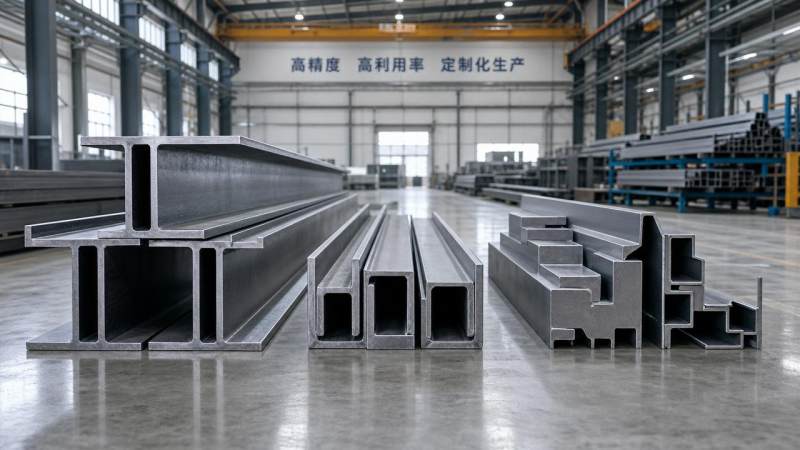
For procurement teams, the right choice is rarely about unit price alone. In steel purchasing, total value depends on material utilization, fabrication complexity, tolerance requirements, logistics efficiency, compliance demands, and schedule risk.
Standard sizes usually look cheaper at first glance because mills can produce them in larger runs. However, many projects create hidden costs after delivery, especially when buyers need secondary cutting, welding, drilling, slotting, or rework at the jobsite.
This is why Steel profiles custom fabrication services are increasingly evaluated not as a premium option, but as a cost-control tool. In the right application, custom fabrication can reduce waste, shorten installation time, improve fit-up, and lower downstream labor expense.
- Choose standard sizes when designs are simple, dimensions are common, and fast market availability matters more than exact processing.
- Choose custom profiles when the project requires specific geometry, assembly compatibility, or fewer fabrication steps after arrival.
- Compare not just ex-works price, but delivered cost, scrap rate, handling effort, installation hours, and risk of production mismatch.
Where do the real costs appear in steel procurement?
Many buyers focus on ton price because it is easy to compare quotations. Yet in structural steel, the more important number is often cost per completed installed function. A cheaper beam or profile can become expensive if it creates waste, delays, or repeated handling.
The table below helps procurement teams compare the major cost drivers between standard sizes and Steel profiles custom fabrication services in practical purchasing situations.
The best savings often come from reducing downstream work rather than chasing the lowest base price. Buyers handling labor-sensitive or schedule-critical projects should model total installed cost before selecting standard sections by default.
Which project situations favor Steel profiles custom fabrication services?
Custom fabrication is not necessary for every order. It becomes more valuable when project geometry, corrosion exposure, load path requirements, or assembly methods cannot be served efficiently with standard stock.
Projects with complex fit-up requirements
Industrial structures, machinery bases, bridge components, and modular building systems often need profiles that fit exact connection points. In such cases, custom sections can reduce alignment issues and minimize corrective work during installation.
Projects with repetitive volume and stable drawings
When the same shape is required across many units, the setup cost of Steel profiles custom fabrication services can be distributed over a larger quantity. The result may be lower average cost than repeated processing of standard sections.
Projects with corrosion and service-life concerns
If the application requires galvanized or coated sections for outdoor, marine-adjacent, agricultural, or industrial exposure, buyers should evaluate both profile design and protective finish together. A well-matched fabricated profile can reduce joints and exposed cut edges.
- Construction frames that require dimensional consistency across multiple bays.
- Cold formed components for industrial sheds, supports, and utility structures.
- Mechanical and transport applications where assembly precision affects downstream cost.
How can inserted product options support broader sourcing plans?
Procurement often involves more than one steel item in the same project. Buyers comparing custom profiles and standard sizes may also need corrosion-resistant tube products for fluid transport, support frames, or general fabrication packages supplied by one source.
A practical example is Galv Steel Tube, available in DX52D and suitable for construction industry, light industry, automobile industry, agriculture, material storage and transportation, and general low-pressure pipelines for water, gas, and oil.
Its common supply range includes length from 1-12m or as required, width from 0.6m-3m or as required, and thickness from 0.1mm-300mm or as required, with thickness tolerance of ±0.15mm. Coating information may include top coats with primer and color layers depending on application needs.
For buyers, this matters because combining custom structural components with galvanized tube procurement can simplify vendor coordination. It also helps align quality documentation under standards such as ASTM, EN, JIS, GB, AISI, and DIN where project specifications demand recognized references.
What should procurement teams check before requesting a quote?
Quotations become more accurate and easier to compare when the buyer provides a complete technical package. This is especially important for Steel profiles custom fabrication services, where omissions in tolerances or end-use requirements can change both cost and delivery time.
Use the checklist below to improve supplier response quality and reduce revision cycles during the RFQ stage.
A disciplined RFQ process helps buyers compare suppliers on equal technical terms. It also reduces the risk of a low quote turning into a higher landed cost after specification clarifications.
How do standards, consistency, and export capability affect savings?
For international buyers, savings are not secure unless product quality and documentation remain consistent across shipments. Structural components that must meet ASTM, EN, JIS, or GB references require stable process control, traceable production, and reliable packing for export handling.
Hongteng Fengda operates as a structural steel manufacturer and exporter from China, supplying angle steel, channel steel, steel beams, cold formed steel profiles, and customized structural steel components. For procurement teams, that combination matters because sourcing can be aligned across both standard specification products and OEM-oriented requirements.
Why supplier capability changes the cost equation
A supplier with modern manufacturing facilities and strict quality control can help reduce sourcing risk in several ways: fewer dimensional deviations, more predictable lead times, clearer technical communication, and smoother compliance review during export documentation.
- Stable production capacity supports repeat orders without constant redesign of the supply plan.
- Experience across North America, Europe, the Middle East, and Southeast Asia improves understanding of varied project expectations.
- Combined standard and custom supply helps buyers reduce the number of vendors in one project package.
What mistakes make custom fabrication look more expensive than it is?
Some procurement teams reject Steel profiles custom fabrication services too early because they compare only the first quoted price. That approach misses the broader economics of fabrication, transport, assembly, and warranty-related corrections.
Common purchasing mistakes
- Comparing ton price without estimating cutting loss, welding time, and field labor for standard sections.
- Requesting very tight tolerances on non-critical dimensions, which raises fabrication cost with little project benefit.
- Ignoring packaging and shipping configuration, even though profile length and bundle method affect freight utilization.
- Treating one-off prototypes and repeat production as the same cost model.
A better method is to separate setup cost, recurring production cost, and downstream installation savings. Once buyers do this, custom fabrication often becomes easier to justify for medium-volume or precision-driven projects.
FAQ for buyers evaluating custom and standard steel profiles
How do I know whether standard sizes are enough for my project?
Start with three questions: Will standard sections create major scrap after cutting? Will site crews need extra welding or drilling? Are dimensional mismatches likely to delay assembly? If the answer is yes to any of these, Steel profiles custom fabrication services deserve a cost review.
Are custom profiles only suitable for large orders?
Not always. Large and repeat orders usually improve economics because setup is spread over more units. Still, even smaller orders can justify custom fabrication when installation labor is expensive, downtime risk is high, or standard products require too much secondary processing.
What lead time factors should I confirm before placing the order?
Confirm drawing approval timeline, raw material availability, tooling requirements, production queue, surface treatment schedule, inspection steps, and shipping window. Buyers should also ask whether the supplier can support phased delivery when project sequencing matters.
What documents are usually important for export procurement?
Typical requirements may include material specification reference, dimensional inspection records, packing details, and any agreed compliance documents linked to ASTM, EN, JIS, or GB standards. The exact package depends on project and destination market requirements.
Why choose us for standard and custom structural steel sourcing?
For procurement teams, the goal is not simply buying steel. It is securing the right steel solution with manageable cost, consistent quality, and dependable delivery. Hongteng Fengda supports that objective by supplying both standard structural products and customized steel components for global construction, industrial, and manufacturing projects.
If you are comparing standard sections with Steel profiles custom fabrication services, we can help you review drawings, confirm applicable standards, discuss corrosion protection options, and assess which route is more practical for your budget and timeline.
- Ask us to check profile feasibility, dimensions, and production suitability before formal ordering.
- Request support on product selection for angle steel, channel steel, steel beams, cold formed profiles, tubes, and customized components.
- Confirm lead time expectations, batch planning, and export packing details for your destination market.
- Discuss certification references, sample support, coating requirements, and quotation structure based on your technical files.
If your team is preparing a new RFQ, send the drawing, grade requirement, quantity, and delivery target. We can help you compare standard stock against a custom solution in commercial and technical terms, so your final decision is based on total project value rather than unit price alone.
Please give us a message


Please enter what you want to find