Choosing a reliable angle stainless steel supplier is essential for buyers seeking stable quality, competitive pricing, and long-term project support. Whether you source steel angle for construction, angle iron for trailer fabrication, or work with a stainless steel pipe supplier and stainless steel square bar supplier, the right partner can reduce risk, improve delivery consistency, and support sustainable business growth.
Why does supplier selection matter more in long-term stainless angle procurement?
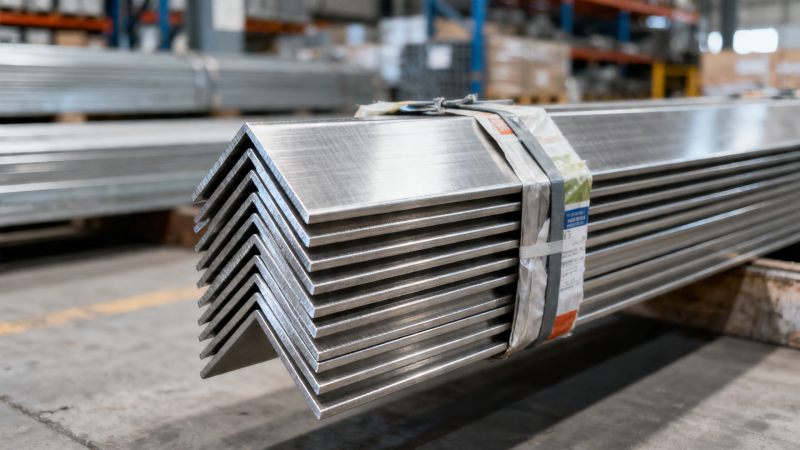
In the steel industry, product quality is only one part of the purchasing decision. For long-term supply, buyers must also evaluate production stability, dimensional consistency, documentation control, packing quality, and on-time shipment. A low quote may look attractive in the first order, but if the supplier cannot keep tolerances, maintain material traceability, or support urgent replenishment within 2–4 weeks, the total project cost often rises.
Angle stainless steel is used in construction frames, support structures, fabrication workshops, transport equipment, utility systems, and OEM assemblies. In these applications, repeated procurement is common. That means project managers, procurement teams, technical reviewers, and quality staff need a supplier that performs consistently over 6 months, 12 months, or even multiple annual contracts. Long-term value depends on fewer delivery disruptions, less rework, and smoother communication across each shipment batch.
For distributors and industrial buyers, the supplier is not just a factory. It is a risk-control partner. If a supplier understands ASTM, EN, JIS, and GB standards, provides standard and OEM structural steel solutions, and can align production plans with project schedules, the buyer gains more than material. The buyer gains predictability, which is critical for cash flow planning, installation schedules, and customer commitments.
Hongteng Fengda, as a structural steel manufacturer and exporter from China, serves buyers across North America, Europe, the Middle East, and Southeast Asia. This matters because export experience usually improves packaging methods, document accuracy, and communication efficiency. In global sourcing, those details often determine whether goods move smoothly or create avoidable delays at customs, warehousing, or site delivery.
The 4 core risks buyers try to avoid
- Batch inconsistency: one shipment meets requirements, the next shows differences in dimensions, finish, or chemical composition.
- Schedule pressure: promised lead times of 15–20 days expand to 30 days or more without early notice.
- Compliance gaps: incomplete mill test certificates, unclear grade identification, or poor alignment with project specifications.
- Cost leakage: low ex-works price but higher losses from damage, claims, replacement orders, and delayed installation.
How should buyers evaluate an angle stainless steel supplier step by step?
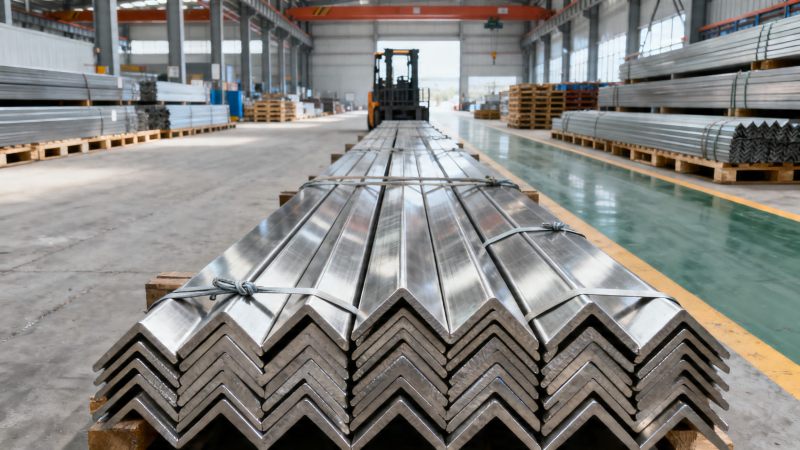
A practical evaluation process should combine technical review, commercial review, and delivery capability review. Many sourcing failures happen because the decision is made from price alone. For stainless angle and related structural steel products, buyers should review at least 5 key areas: material standard, processing capability, inspection control, export support, and supply continuity. This applies to contractors, fabricators, distributors, and enterprise procurement teams alike.
When evaluating a supplier, ask how they handle standard sizes and customized production. Long-term projects often require mixed orders rather than a single item. A supplier that can support angle steel, channel steel, steel beams, cold formed profiles, and customized components reduces sourcing fragmentation. That lowers communication time, supplier coordination effort, and the chance of mismatch between connected steel parts.
Quality control should be visible, not verbal. A dependable supplier should explain incoming material checks, in-process control points, finished product inspection, and packing verification. Even if exact internal procedures differ by factory, buyers should expect at least 3 stages of control: raw material confirmation, dimensional inspection during production, and final release inspection before loading. This is especially important for repeated monthly or quarterly purchase plans.
Commercially, the best supplier is not always the cheapest. Finance approvers and business evaluators usually need a clearer picture: unit price, tooling or customization cost, packaging method, shipping term, and likely reorder efficiency. If a supplier responds quickly, clarifies tolerances, and flags technical risks before production, that often prevents hidden cost later.
A practical supplier assessment checklist
The table below helps purchasing teams compare suppliers using real decision criteria instead of only quote totals. It is especially useful when comparing 2–3 shortlisted factories for long-term stainless angle supply.
This comparison shows why experienced buyers score suppliers across multiple dimensions. A supplier with moderate pricing but stronger process control often creates lower total procurement cost than a supplier with the lowest initial quote but weaker execution.
A 5-step decision process for technical and procurement teams
- Confirm application requirements, including grade, size range, finish condition, quantity level, and use environment.
- Request supplier documents, such as standard references, sample photos, packing details, and inspection format.
- Compare at least 3 dimensions together: price, lead time, and batch consistency support.
- Test with a pilot order or mixed-size order before signing a longer supply arrangement.
- Review actual performance after the first 1–2 shipments, then set reorder rules and communication routines.
What technical and service details separate a short-term vendor from a long-term steel partner?
Long-term cooperation depends on repeatability. For angle stainless steel, buyers should focus on dimensional stability, surface condition, material identification, and packaging suitable for long-distance transport. For structural steel projects, another important factor is whether the supplier can coordinate multiple products under one sourcing plan. This is where a broader structural steel manufacturer may have an advantage over a trader limited to one category.
Hongteng Fengda supplies angle steel, channel steel, steel beams, cold formed steel profiles, and customized structural steel components. For project managers and distributors, this can simplify procurement. Instead of splitting orders among 3 or 4 vendors, buyers may centralize sourcing, reduce follow-up time, and improve compatibility between parts. This is especially useful for projects with rolling schedules, phased installation, or region-based shipment plans.
The same principle applies to auxiliary metal products used in construction, packaging, fabrication support, and industrial operations. For example, buyers handling broader supply packages may also need wire-based materials for site use, fencing, packaging, or processing. In that context, Metal Coil Wire can be inserted into a combined procurement discussion when wire diameter, coating range, and packaging method must match operational needs.
This product is available in Q195 and Q235 low carbon steel, with wire diameter from 0.25 mm to 5.0 mm, zinc coating thickness from 8 to 25 g/m2, and tensile strength from 350 to 550 Mpa. Typical applications include construction, wire mesh, packaging, handicrafts, breeding, barrier isolation, and daily industrial use. For buyers managing both structural steel and related site materials, combining such purchases through one responsive exporter can improve coordination and reduce administrative workload.
Technical and operational indicators worth reviewing
The table below summarizes the supplier capabilities that often matter most after the first order, when the focus shifts from trial purchase to stable supply execution.
For long-term buyers, these service factors can be as important as the material itself. A supplier that supports mixed products, documentation, and schedule communication usually performs better in real project conditions than a factory that only ships standard items without broader coordination.
Common warning signs during supplier screening
- Quotations that lack grade, size tolerance, packing description, and delivery term details.
- No clear answer on standards such as ASTM, EN, JIS, or GB when buyers request alignment.
- Frequent lead time changes before order confirmation, often indicating weak production planning.
- Inability to support both standard products and moderate customization within practical production windows.
How can buyers balance price, compliance, and delivery without increasing sourcing risk?
Procurement rarely happens under ideal conditions. Budgets are limited, approval cycles can take 7–14 days, and delivery windows are often fixed by project milestones. In this environment, the best purchasing strategy is to compare total value rather than chasing a single low number. For angle stainless steel and related structural steel products, buyers should measure cost in 3 layers: material price, execution cost, and failure cost.
Material price is the visible part. Execution cost includes packaging, inland transport coordination, loading efficiency, document handling, and time spent by procurement teams. Failure cost appears later: installation delay, site idle labor, claims, returns, or emergency local purchases at a premium price. A supplier with stable production and dependable lead times often reduces the second and third layers, which matters greatly in long-term contracts.
Compliance should also be reviewed in a practical way. Buyers do not always need every possible certification, but they do need alignment with project standards, clear material documentation, and product control suitable for destination market expectations. For international projects, ASTM, EN, JIS, and GB references are often part of the technical discussion. An experienced exporter can help buyers map product requirements before production starts, reducing approval problems later.
Lead time planning is another key factor. In many steel supply situations, normal production and shipment preparation can fall within 2–6 weeks depending on specification, quantity, and customization level. The right supplier does not just give a date. It explains production sequencing, milestone updates, and risks that may affect the timeline. That transparency helps project managers and finance teams make better decisions.
A simple cost-control framework for buyers
- Use annual or quarterly volume forecasts when possible. Even a range-based forecast can improve production planning and reorder speed.
- Separate standard items from customized items in the quotation review. This makes cost drivers easier to see.
- Ask for packaging and document details early, especially for sea shipment and distributor inventory handling.
- Measure supplier performance after each shipment using 4 indicators: quality, lead time, response speed, and issue resolution.
FAQ for buyers comparing angle stainless steel suppliers
How many suppliers should we compare before making a long-term decision?
In most cases, comparing 2–3 qualified suppliers is enough. More than that can slow the decision without adding much value. The key is to compare the same specification set, the same delivery term, and the same documentation requirements. A broad quote comparison with inconsistent assumptions often leads to the wrong conclusion.
What is more important: factory capability or trading flexibility?
For long-term supply, factory-backed capability is usually more important because it supports production control, stable scheduling, and technical clarification. Trading flexibility can be useful for urgent spot needs, but repeat procurement benefits more from direct manufacturing coordination, especially when projects involve mixed structural steel products and OEM requirements.
What documents should we request before the first order?
At minimum, request the quotation with clear specification details, applicable standards, packaging description, delivery term, and material documentation format. For technical review, buyers may also ask for sample photos, inspection references, and clarification on whether the supplier supports ASTM, EN, JIS, or GB-based project requirements.
Is a trial order necessary?
For many buyers, yes. A first order with manageable quantity is a practical way to verify communication quality, production accuracy, packing protection, and shipment execution. After 1–2 successful deliveries, it becomes much easier to decide whether the supplier can support a quarterly, semiannual, or annual sourcing plan.
Why choose a structural steel partner with export experience and broader product support?
Long-term sourcing works best when the supplier understands both steel production and international project execution. Hongteng Fengda provides structural steel products and customized solutions for global construction, industrial, and manufacturing projects. That combination matters because many buyers need more than one product line, more than one shipment stage, and more than one level of technical review before final approval.
With experience in angle steel, channel steel, steel beams, cold formed steel profiles, and customized structural steel components, the company can support standard procurement and OEM-based supply plans. For buyers in North America, Europe, the Middle East, and Southeast Asia, export familiarity helps improve response rhythm, shipment coordination, and packaging suitability for long-distance delivery.
If you are evaluating an angle stainless steel supplier for long-term cooperation, the most useful next step is a requirement review rather than a generic inquiry. Share your target grade, size range, application scenario, estimated order frequency, destination market, and any ASTM, EN, JIS, or GB reference. That allows a more accurate discussion of product selection, production planning, lead time, and quality control points.
You can also ask for support on parameter confirmation, product matching across multiple structural steel items, customization based on drawings, sample arrangements, packaging method, delivery schedule, and quotation comparison. A clear technical and commercial discussion at the beginning usually saves time, reduces sourcing risk, and builds a more reliable long-term supply relationship.
What you can discuss with us now
- Angle stainless steel specification confirmation for construction, fabrication, trailer, or industrial support use.
- Comparison of standard products and OEM structural steel components under one procurement plan.
- Expected lead time ranges, shipment planning, and packaging details for export orders.
- Documentation alignment, including common standards and inspection expectations for project review.
- Sample support, quotation communication, and long-term supply planning for repeated orders.
Please give us a message


Please enter what you want to find