This after-sales checklist guides operations, maintenance, procurement and project teams through practical steps to inspect and secure welded joints on stainless seamless pipe and 304 pipe (ss 304 pipe) to prevent leaks and costly downtime. It covers weld quality, pressure testing, corrosion control, surface protection and correct interfacing with adjacent materials—whether pipe stainless joins angle stainless steel, steel rod, profile components or attachments using electrogalvanized wire and galvanized steel channel. Use this checklist to standardize inspections, ensure traceability and reduce risk across buying, installation and after-sales workflows.
In complex construction and industrial installations where stainless seamless pipe and 304 pipe are specified, stakeholders from procurement to post-sales maintenance share common concerns: weld integrity under pressure, compatibility with adjacent components such as angle stainless steel and Profile elements, and the risk introduced by fastening or grounding materials like electrogalvanized wire or galvanized steel channel. This introduction outlines the typical failure modes (lack of fusion, undercut, porosity, stress corrosion cracking), key acceptance criteria, and the roles each team must play to contain risk. Operations need clear inspection checklists and access to NDT records; procurement must verify material certificates for stainless seamless pipe and ss 304 pipe against standards such as ASTM A312 or equivalent; installers and project managers must maintain controlled welding parameters and ensure proper interfacing when fastening with Wire Products or using Steel Rod attachments. After-sales teams require traceable documentation of pressure testing, surface treatment and post-weld chemical cleaning to expedite root cause analysis if leaks occur. In short, this checklist is written to be actionable: it identifies what to check, who should check it, and what acceptance criteria to record for long-term warranty and reliability management.
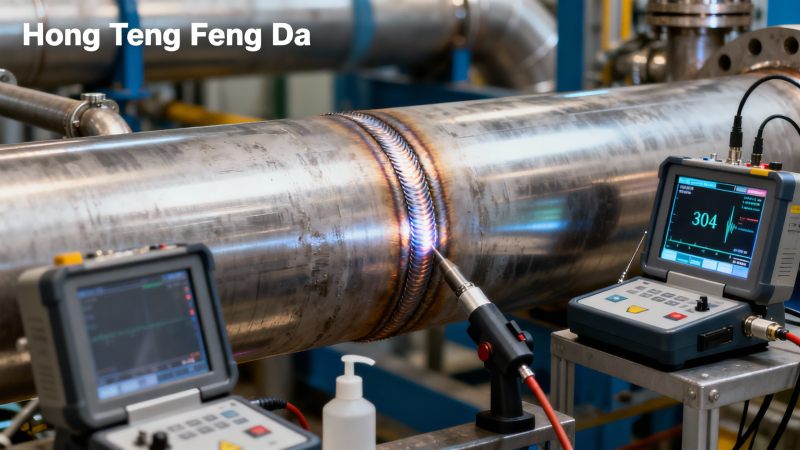
Weld Quality and Visual / NDT Inspection Protocols for Stainless Joints
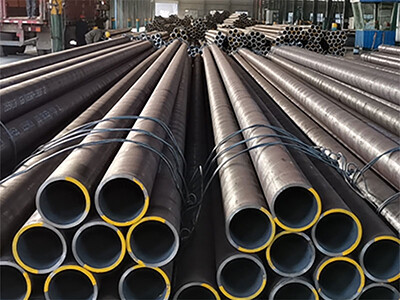
A robust after-sales inspection process begins with weld quality verification. Visual inspection combined with non-destructive testing provides the first line of defense against weld-related leaks on stainless seamless pipe and 304 pipe. For each welded joint, record the following items and acceptance criteria:
- Weld procedure and welder qualification: confirm procedure specification (WPS) and welder qualifications match material type (304/316 or specified Duplex) and thickness.
- Visual checks: uniform weld profile, correct bead width, absence of visible undercut, overlap, cracks, or excessive convexity; edges should be flush where pipe stainless intersects Profile, angle stainless steel, or bracket elements.
- NDT selection: for critical pressure piping use ultrasonic testing (UT) or radiographic testing (RT). For surface-breaking defects use liquid penetrant testing (LPT) on 304 pipe welds and magnetic particle is not applicable to austenitic stainless — note this when inspecting near Steel Rod or electrogalvanized wire contacts.
- Acceptance levels: follow applicable industry or project standards (e.g., ASME B31.3 for process piping, ASTM A312 for stainless pipe material verification). Major defects require weld repair and re-test; documented minor defects may be repaired locally under a controlled repair WPS and requalified NDT.
- Root pass and penetration: check for full penetration on butt welds of stainless seamless pipe. Lack of fusion at the root is a common leak origin; where full penetration is required, verify with UT or root-side inspection if accessible.
Pressure Testing, Leak Detection and Acceptance Criteria
Pressure testing is the definitive step to validate welded joints on pipe stainless systems. The after-sales checklist must include a clear testing strategy: hydrostatic testing for structural verification and pneumatic or helium sniff testing for leak localization on complex assemblies. Recommended practices:
- Design pressure verification: confirm the maximum allowable working pressure (MAWP) for the installed 304 pipe or stainless seamless pipe per project documents and material certificates. For hydrostatic tests, industry practice is often 1.3x to 1.5x MAWP depending on the specification; refer to the contract standard (ASME B31.3 or project-specific standard) for the exact multiplier.
- Test medium and safety: prefer water hydrostatic testing for larger systems — ensure all drains and vents are open and pressure application is gradual. For small low-pressure systems, tracer gas (helium/air with calibrated sniffer) allows sensitive leak detection without overloading joints.
- Holding time and acceptance: hold the test pressure for the specified duration (commonly 30–60 minutes) and inspect for pressure decay and any visible seepage at welds and joints. Use calibrated gauges and document baseline and final pressures. Any pressure drop beyond allowable limits requires isolation and stepwise local re-inspection of welds, including targeted NDT.
- Use of leak detection fluids and ultrasonic detectors: apply approved soap-based detection fluids at fittings where visual inspection is limited. Ultrasonic leak detectors are valuable for low-volume gas leaks, especially where electrogalvanized wire or galvanized steel channel fastenings create micro-gaps at interfaces.
Document all test procedures, calibrations and results in a traceable register. Include the technician name, date, equipment ID and reference to the material certificate for the tested pipe. For after-sales support agreements, retain all records for warranty periods and use them to prioritize preventive maintenance. A robust pressure-testing routine reduces the likelihood of latent leaks that are costly to repair once systems are commissioned.
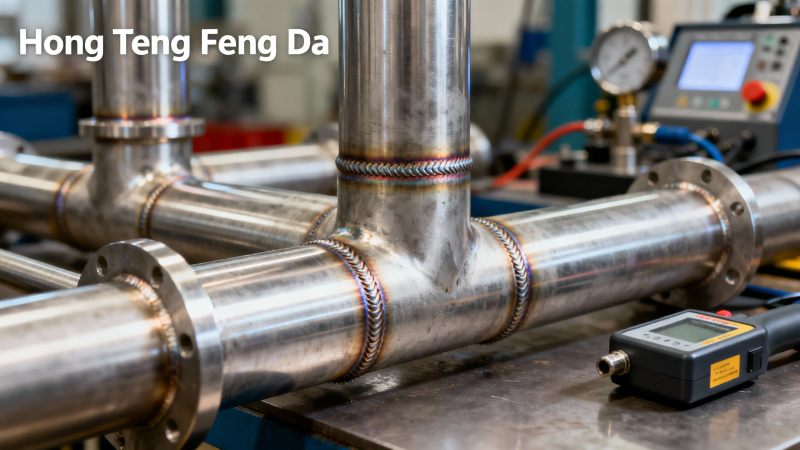
Corrosion Control, Surface Protection and Correct Material Interface
Preventing leaks extends beyond weld quality to include corrosion control and correct interfacing of stainless materials with dissimilar metals. Stainless seamless pipe and ss 304 pipe perform well in many environments, but improper contact with electrogalvanized wire, galvanized steel channel, or carbon profiles can create galvanic cells or trap corrosives. Key checklist items:
- Surface cleaning and passivation: after welding, remove heat tint via chemical cleaning or mechanical methods and apply passivation treatments suited to 304 material. Record the passivation compound, concentration and contact time. For critical environments (chloride exposure) consider subsequent neutralizing and verification of surface condition by contact measurements or visual standards.
- Dissimilar metal isolation: where pipe stainless connects to angle stainless steel, Steel Rod, or Profile elements made from carbon steel or galvanized components, ensure dielectric isolation using sleeves, gaskets, or polymeric tape to prevent galvanic corrosion. Fasteners such as electrogalvanized wire may provide a corrosion path; evaluate whether stainless fasteners or coated alternatives are necessary.
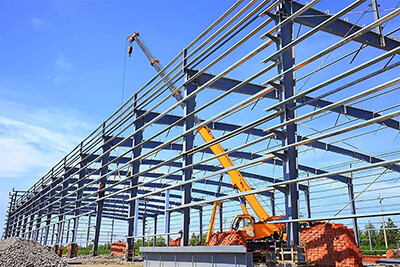
- Coating and channel selection: when supporting pipes on structural elements such as galvanized channels, select channel finishes consistent with corrosion expectations. Hot-dip galvanized or hot-blown galvanized channel steel perform differently; check coating thickness and compatibility. For structural supports, use high-strength designs (models Q195, Q235, Q345B) and consider stainless clamping pads to separate surfaces.
- Material traceability and specs: require certificates for each component (e.g., 201, 202, 304, 316 grades) and verify tolerances (thickness 1.5mm–25mm; length options 6–12m as needed). For example, when selecting a support such as Channel Steel Supplier, confirm height and thickness tolerances to prevent localized stress on pipe clamps. Use specified standards (ISO, CE, SGS) to maintain compliance and long-term reliability.
Traceability, Documentation and After-sales Workflows
Traceable records and clear handover workflows are essential to prevent and rapidly resolve leaks. For each welded joint on stainless seamless pipe and 304 pipe, ensure the following documentation is created, retained and made available to operations and maintenance teams:
- Material certificates: mill test reports for pipe stainless material (e.g., ASTM A312 for seamless stainless pipe) and certificates for related components (Wire Products, galvanized steel channel, Profile, Steel Rod) with batch numbers and heat numbers.
- Welding records: WPS, PQR and welder qualification certificates, plus as-welded photos, welding parameters (current, voltage, travel speed) and filler metal traceability. When using stabilized or low-carbon fillers, note the filler specification explicitly in the record.
- NDT and pressure test logs: include date, inspector name, testing method (UT, RT, LPT), calibration records for equipment, and final acceptance signatures. Attach annotated drawings that identify tested joints and test outcomes for easier future reference.
- Repair and corrective actions register: when defects are found and repaired, include root cause analysis, repair WPS, post-repair NDT results and who approved the repair. This register supports warranty claims and continuous improvement programs.
- After-sales inspection schedule and responsibilities: define periodic checks (visual monthly, NDT annually or based on risk), and specify responsibilities for procurement (component replacement sourcing), project managers (integration of design changes) and maintenance teams (on-site corrective action).
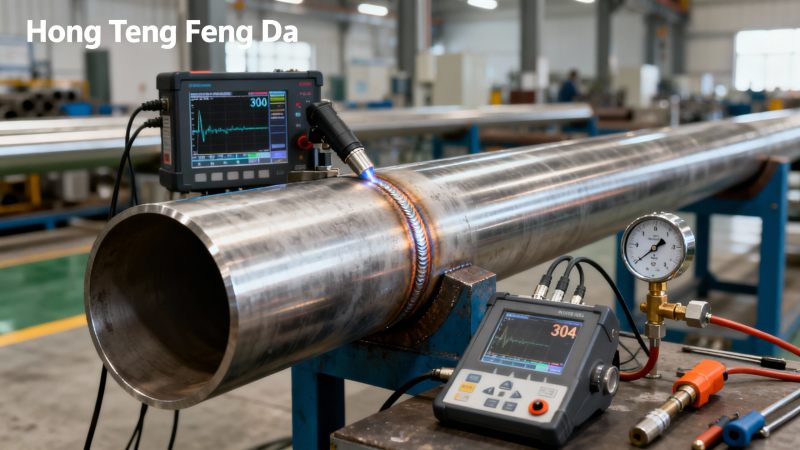
Summary and Recommended Next Steps
Consistent application of a structured after-sales checklist for welded joints on stainless seamless pipe and 304 pipe reduces leak risk and lifecycle costs. Key takeaways: verify weld quality with appropriate NDT, apply contract-compliant pressure testing protocols, manage corrosion risks at material interfaces (especially where electrogalvanized wire or galvanized steel channel are present), and maintain rigorous traceability of materials and tests. For projects that require structural supports and reliable supply, select products with documented specifications (thickness range 1.5mm–25mm, lengths 6–12m, heights 80–160mm) and certifications (ISO, CE, SGS) to match design requirements and environmental exposure. Emphasize procurement of correct grades (201, 202, 304, 316) and confirm supplier capability for timely delivery and export experience when projects span domestic and international markets.
Shandong Hongteng Fengda Metal Materials Co., Ltd. offers comprehensive material options and global logistics experience to support specification, supply and after-sales service across construction, steel structure and manufacturing applications. For tailored advice on integrating stainless systems with channel supports or to obtain certified material documentation for specific models (Q195, Q235, Q345B, Duplex), contact our technical sales team. Immediate steps: review your weld record template, adopt the pressure-testing multipliers specified in project standards, and schedule a joint audit between procurement and maintenance to reduce the chance of latent leaks.
To request a copy of the checklist template, arrange an inspection, or learn more about materials and supply options, including certified Channel Steel Supplier products, please contact our after-sales team now — immediate technical support and quotations are available to keep your project on schedule. Act now to secure reliable supply and reduce downstream leak risks.
- channel steel supplier
- channel steel
- galvanized wire
- seamless pipe
- steel supplier
- hot-dip galvanized
- galvanized steel
- Galvanized Channel Steel
- galvanized channel steel
- stainless pipe
- ss pipe
- stainless seamless pipe
- ss 304 pipe
- 304 pipe
- pipe stainless
- angle stainless steel
- Steel Rod
- Profile
- Wire Products
- galvanized steel channel
- electrogalvanized wire
Related recommendations
 The Ultimate Procurement Hub: How a Full-Spectrum Steel Portfolio Empowers Global Industrial SuccessIt covers a wide range of steel products, including steel plates, steel coils, profiles, and steel gratings, to meet diverse needs.
 The Vertical Integration Advantage: Why Full-Process Production is the Gold Standard for Global Steel SourcingIt possesses complete production technologies and equipment for coking, sintering, steelmaking, and rolling, forming a systematic production system.
 The Global Steel Pulse: Bridging Continents with Precision Engineering and Unrivaled Supply Chain ExcellenceOur products sell well throughout China and are exported to North America, Europe, the Middle East, and other parts of the world, covering a wide market.
 Velocity of Value: How Precision Processing and Rapid-Response Logistics Redefine the Global Steel Supply ChainEquipped with advanced leveling equipment and relying on a robust logistics system, we can respond to customer needs at any time.
Please give us a message


Please enter what you want to find