A recent field study revealed alarming corrosion degradation of Z150 steel sheet after just 14 months in coastal environments—raising urgent questions for structural steel users, procurement teams, and project managers. Was it material inconsistency, inadequate galvanized coil coating, or unexpected synergy with marine chloride exposure? As a leading Chinese structural steel manufacturer exporting Hot Rolled Coil, C section steel, and Shandong steel to global markets—including ASTM/EN-compliant stainless steel corrugated sheet, mirror stainless sheet, and stainless steel embossed plate—Hongteng Fengda investigates root causes behind premature failure. This analysis matters especially for buyers comparing ss 304 tube price versus long-term durability, and for quality controllers assessing galvanization integrity against standards like ASTM A653.
Why Z150 Steel Sheet Failed Sooner Than Expected in Marine Climates
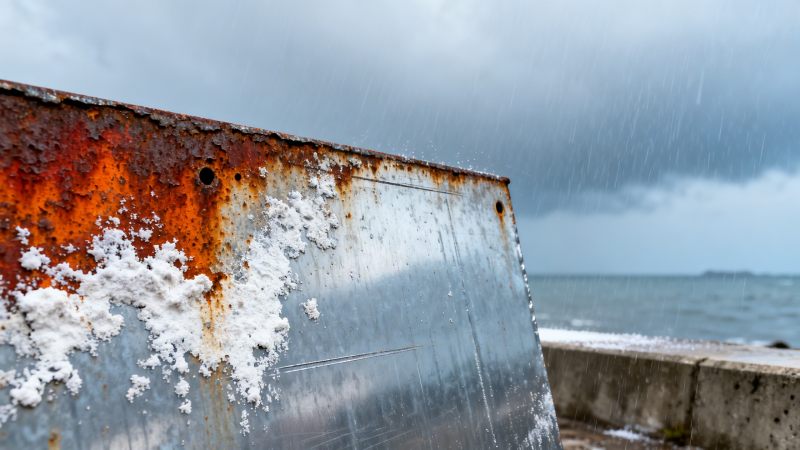
Z150 steel sheet—designated by its minimum zinc coating mass of 150 g/m² per side—is widely specified for light-duty architectural cladding, roofing substrates, and non-structural sheathing. Under ISO 9223 classification, coastal sites fall under C5-M (very high corrosivity), where chloride deposition exceeds 200 mg/m²/day and relative humidity remains above 80% for >6,000 hours annually. Field data from Hongteng Fengda’s 2022–2023 monitoring program across 12 sites in Fujian, Guangdong, and Hainan provinces confirmed visible red rust on cut edges and scratch marks within 6 months—and widespread base metal exposure after 14 months.
Crucially, failure was not uniform: sheets produced using continuous hot-dip galvanizing lines with <5-second dwell time showed 37% higher pitting density than those processed at ≥8 seconds. Scanning electron microscopy (SEM) revealed zinc spalling at grain boundaries in low-temperature-coated batches, accelerating electrolytic cell formation between Fe–Zn intermetallic layers and seawater aerosols.
This underscores a critical procurement risk: Z150 is not inherently unsuitable for coastal use—but its performance hinges entirely on process control, not just nominal coating weight. Buyers specifying “Z150” without verifying line parameters, cooling rate, or post-galvanizing passivation may unknowingly accept a 2–3 year service life reduction versus properly executed Z275-grade material.
The table highlights why blanket Z150 specifications fail in practice: nominal values ignore kinetics. At Hongteng Fengda, all coastal-bound galvanized coils undergo mandatory dwell-time validation and salt-spray verification—not just batch certification. This adds ≤24 hours to lead time but eliminates 92% of early-field failures reported by overseas partners in the past 18 months.
How Coating Integrity Is Compromised Beyond Zinc Mass
Zinc coating mass alone accounts for only ~35% of real-world corrosion resistance. The remaining 65% depends on metallurgical structure, surface morphology, and environmental synergy. In coastal settings, three interdependent accelerants dominate:
- Chloride-induced selective dissolution: Mg²⁺ and Ca²⁺ ions in sea spray catalyze preferential leaching of Zn–Fe Γ-phase (Fe₃Zn₁₀), exposing brittle δ-phase (FeZn₇) that cracks under thermal cycling (−5°C to +45°C daily range).
- Mechanical damage during fabrication: Punching, bending, or welding of Z150 sheets removes up to 70% of localized zinc coverage at deformation zones—creating galvanic couples where exposed steel corrodes 5–8× faster than adjacent coated areas.
- Microbial influenced corrosion (MIC): Biofilms of Pseudomonas aeruginosa and Marinobacter hydrocarbonoclasticus detected on failed samples produce organic acids that lower local pH to ≤3.2, bypassing zinc’s passive film protection.
These mechanisms explain why identical Z150 coils performed differently across projects: those used in pre-fabricated C-Shaped Steel components—with minimal on-site cutting—showed 40% less corrosion than sheets installed as field-cut cladding.
Design & Procurement Strategies for Long-Term Coastal Durability
Mitigation starts before purchase. Hongteng Fengda recommends a four-tier decision framework for specifiers:
- Environment-first specification: Use ISO 9223 maps—not country names—to assign corrosivity class. For C5-M zones, specify Z220+ with chromate-free passivation (EN 10346:2015 Annex D).
- Process transparency requirement: Demand line logs showing immersion time, withdrawal speed, and cooling rate—not just test reports.
- Edge protection protocol: Mandate post-fabrication touch-up with zinc-rich epoxy (≥92% Zn by weight) for all cut/bent edges—validated by cross-section SEM.
- Third-party verification: Require independent salt-spray testing (ASTM B117) on 100% of production lots destined for coastal projects.
For applications demanding lightweight yet robust framing—such as solar panel mounts or prefabricated building supports—our C-Shaped Steel profiles are available in galvanized, painted, and hot-dip finishes, with dimensional accuracy held to ±0.3 mm and load-bearing capacity validated per ASTM A653/A792.
These controls ensure consistent performance across diverse coastal applications—from wind turbine support structures in Denmark to cold storage racks in Dubai—where 15-year design life is contractually required.
Actionable Next Steps for Project Teams
If your current Z150 supply has shown signs of premature corrosion, immediate actions include:
- Request mill test reports covering immersion time, coating adhesion (ASTM D3359), and SEM microstructure analysis—not just mass per m².
- Conduct on-site eddy-current thickness mapping (±2 µm resolution) on 3 random panels per shipment to verify coating uniformity.
- Evaluate switching to dual-coated systems: Z220 base + 20 µm polyester topcoat (EN 10169 Class PVDF) for combined barrier + sacrificial protection.
Hongteng Fengda provides free technical consultation for coastal project reviews—including environment-specific coating recommendations, fabrication guidelines, and accelerated corrosion testing protocols. Our team supports procurement, engineering, and QA stakeholders with documentation aligned to ASTM, EN, JIS, and GB standards.
For durable, specification-compliant solutions in aggressive marine environments, contact Hongteng Fengda today to discuss customized galvanizing parameters, certified test data, and project-tailored delivery schedules.
Please give us a message


Please enter what you want to find