When specifying Z150 steel sheet for pressure vessels, engineers and procurement professionals must precisely correlate hydrostatic testing pressure with base metal thickness and weld joint efficiency—critical factors impacting safety, compliance, and lifecycle performance. As a trusted structural steel manufacturer & exporter from China, Hongteng Fengda supplies high-integrity Z150 steel sheet alongside other mission-critical products like Hot Rolled I Beam for crane rails, Hanwu Steel for offshore platforms, and ASTM steel beam for power plants—all certified to ASTM, EN, JIS, and GB standards. This article unpacks the technical relationship driving design validation and regulatory approval.
How Hydrostatic Test Pressure Is Calculated for Z150 Steel Vessels
Hydrostatic test pressure (Ptest) for pressure vessels made from Z150 steel is not arbitrary—it follows ASME BPVC Section VIII Division 1, EN 13445, or GB/T 150.1–2011 formulas that explicitly link test pressure to base metal thickness (t), allowable stress (S), design pressure (P), and weld joint efficiency (E). The standard formula is: Ptest = 1.3 × P × (Stest/Sdesign) / E, where Stest is the material’s allowable stress at test temperature (typically ambient), and E reflects weld quality—ranging from 0.65 (single-sided, no RT) to 1.0 (full-penetration, 100% radiographic testing).
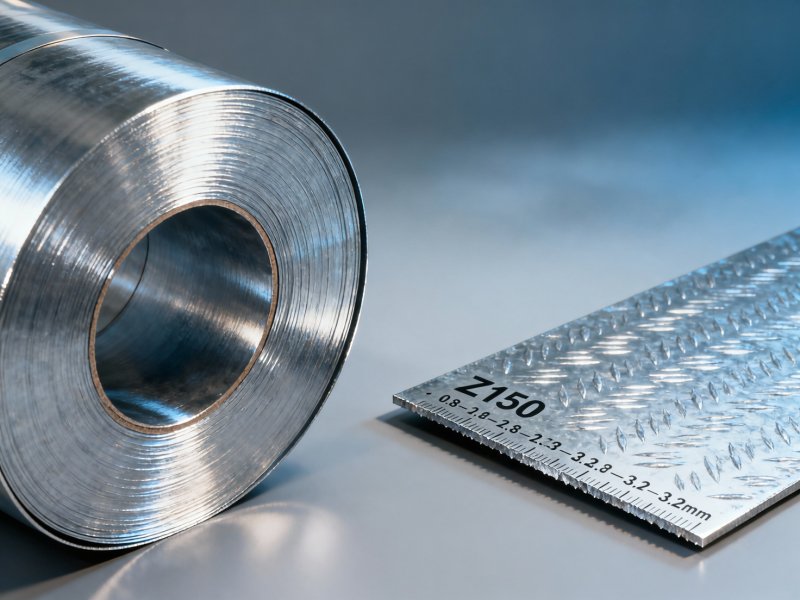
For Z150—a cold-rolled, zinc-coated structural steel with minimum yield strength of 150 MPa—the base metal thickness directly affects both burst resistance and buckling stability under test load. At t < 3 mm, localized deformation risk increases by up to 40% if E < 0.85; above 6 mm, thermal stresses during welding become more dominant than thickness-driven pressure response. That’s why ASME mandates minimum thickness verification before test approval—and why Hongteng Fengda performs ultrasonic thickness mapping on every Z150 coil batch prior to shipment.
Weld joint efficiency isn’t just about welder skill—it’s a system-level metric involving groove geometry, filler metal matching, preheat control, and NDT coverage. For example, a vessel with 4.5 mm Z150 wall thickness welded using GMAW with 98% argon shielding achieves E = 0.92 when RT passes, but drops to E = 0.78 if only VT + PT is applied. That 0.14 reduction inflates required test pressure by 18%, increasing leak detection sensitivity—and operational risk—if misjudged during procurement.
Z150 vs. Alternative Grades: When to Choose Which
Z150 offers optimal cost-performance balance for low-to-medium pressure applications (≤ 1.6 MPa design pressure), especially where galvanic corrosion resistance and weight savings matter—e.g., compressed air receivers, steam condensate tanks, or modular HVAC housings. But it’s not universally suitable. Compared to Q345R (EN 10028-3 P355NH), Z150 has lower tensile strength (≥270 MPa vs. ≥490 MPa) and reduced notch toughness below –20°C. Meanwhile, 316L Stainless Steel Plate excels in aggressive chemical environments but carries 2.3× higher material cost and requires specialized welding procedures.
The table highlights a key procurement trade-off: Z150 delivers fastest turnaround and lowest landed cost per ton for non-critical service, while Q345R suits high-stress, elevated-temperature vessels needing long-term creep resistance. 316L Stainless Steel Plate remains indispensable where chloride-induced stress corrosion cracking (SCC) is a concern—especially in food processing, pharmaceutical, or marine applications requiring ISO 20815 or FDA-compliant surfaces.
Procurement Checklist: 5 Critical Verification Points Before Ordering Z150
Selecting Z150 for pressure vessel fabrication demands rigorous supplier vetting—not just mill certifications, but process traceability. Based on 12+ years supporting OEMs across Southeast Asia and the Middle East, Hongteng Fengda recommends verifying these five items before PO release:
- Mill test report (MTR) showing actual tensile/yield values—not just “meets min spec”—with batch-specific chemistry (Zn coating mass ≥150 g/m² per ISO 1461).
- Weld procedure specification (WPS) compatibility documentation confirming Z150’s suitability with your selected filler (e.g., ER70S-6 for GMAW).
- Thickness tolerance compliance: ±0.08 mm for t ≤ 2.0 mm; ±0.12 mm for t > 2.0 mm (per EN 10147).
- Surface condition certification: No visible blisters, scratches, or zinc spangle inconsistencies affecting weld root fusion.
- Traceable heat number marking on each coil—enabling full recall capability if post-weld NDT reveals unexpected porosity clusters.
Failure to validate even one item can trigger rework costs averaging USD 420–680 per vessel—plus 3–5 working days delay. Hongteng Fengda includes all five verifications in our standard QA package, with digital MTR access via secure portal within 24 hours of dispatch.
Why Partner with Hongteng Fengda for Z150 and Structural Steel Supply
Global buyers choose Hongteng Fengda not just for competitive pricing—but for integrated risk mitigation across the supply chain. We operate two ISO 9001-certified rolling mills with real-time thickness monitoring (±0.03 mm accuracy), in-house hydrostatic test benches (up to 12 MPa capacity), and dedicated metallurgical labs performing Charpy V-notch tests at –40°C. Unlike general steel traders, we co-develop custom Z150 variants—for instance, adding 0.015% Nb for improved strain aging resistance in cyclic thermal service.
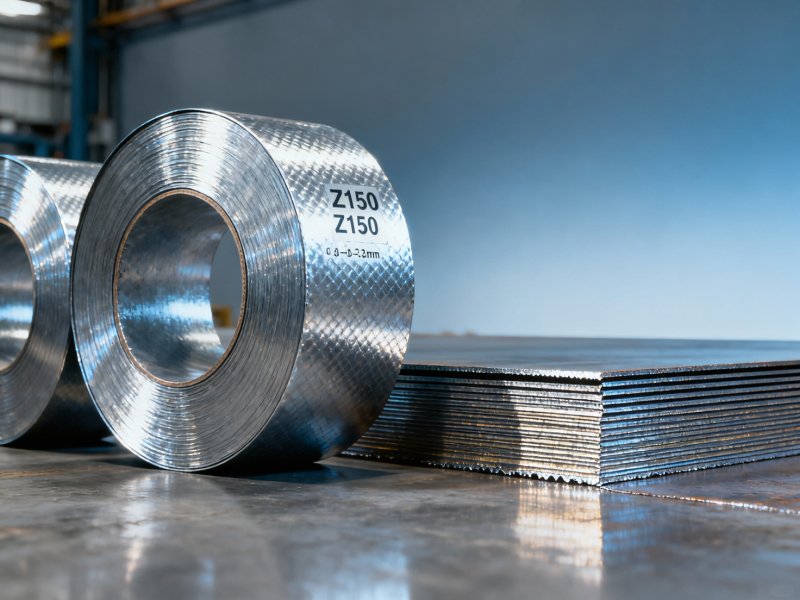
Our export-ready support includes: pre-shipment dimensional audits (certified by BV or SGS), bilingual documentation (English/Arabic/Spanish), and flexible Incoterms—FOB Qingdao, CIF Jebel Ali, or DAP Warsaw. Average lead time for standard Z150 coils (0.8–3.2 mm × 1219–1500 mm × 6000 mm) is 7–10 working days from order confirmation. For urgent projects, we maintain 2,800+ MT of hot-rolled substrate inventory to accelerate cold-rolling cycles.
Ready to validate Z150 specifications for your next pressure vessel project? Contact our technical sales team for: (1) free weldability assessment report, (2) sample coil request (up to 30 kg), (3) ASTM/EN/GB compliance cross-reference matrix, or (4) delivery schedule alignment with your fabrication timeline. Let’s ensure your vessel meets ASME Code—and your budget—without compromise.
Please give us a message


Please enter what you want to find