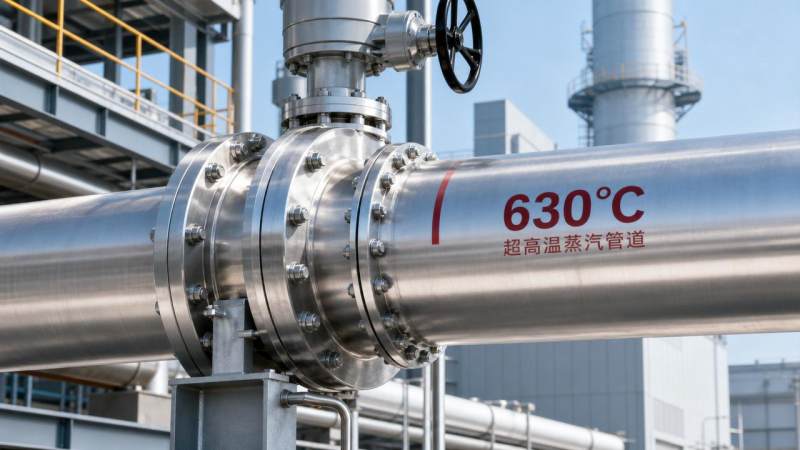
On June 1, 2026, the world's first 630°C ultra-supercritical thermal power unit was successfully connected to the grid, marking a significant milestone in high-efficiency power generation technology. The unit's high-temperature and high-pressure pipelines, along with core components, were exclusively supplied by Baosteel using advanced heat-resistant alloy steel. This development is particularly relevant for overseas EPC contractors and equipment integrators evaluating China's capability in high-end specialty steel for international energy projects.
A Breakthrough in High-Efficiency Power Generation
The newly connected 630°C ultra-supercritical unit represents the current pinnacle of thermal power technology, with Baosteel's materials meeting stringent international standards including ASME and EN10216-2. The project demonstrates the technical feasibility of operating at higher steam temperatures, which directly translates to improved plant efficiency and reduced emissions per unit of electricity generated.
Implications Across the Energy Value Chain
For Global EPC Contractors
International engineering firms planning energy projects in target markets like the Middle East, Southeast Asia, and Latin America now have verified data on Chinese material capabilities for ultra-high-temperature applications. The certification compliance removes a significant technical barrier in project specifications.
For Equipment Manufacturers
Turbine and boiler manufacturers may need to reassess their supply chain strategies, as the proven performance of these materials could influence future design parameters and procurement decisions for upcoming ultra-supercritical projects worldwide.
Key Considerations for Industry Participants
Material Certification Verification
Project developers should validate how the ASME and EN10216-2 certifications apply to their specific regional requirements, particularly for tenders with strict localization clauses.
Supply Chain Reliability Assessment
The successful deployment provides concrete evidence for evaluating Chinese specialty steel producers' ability to meet complex project timelines and technical specifications in global energy infrastructure development.
Technology Transfer Potential
Joint venture partners and licensees in emerging markets may find opportunities in adapting these material technologies to local manufacturing capabilities, subject to intellectual property considerations.
Industry Perspective: A Milestone with Long-Term Significance
Analysis shows this development represents more than a single project achievement. The successful grid connection at 630°C establishes a new benchmark for what's technically and commercially feasible in conventional power generation. It's particularly noteworthy that the materials met certification requirements without reported operational compromises, suggesting this may become a reference case for future high-efficiency coal projects globally.
Setting a New Standard for Thermal Efficiency
This milestone demonstrates that continuous improvements in thermal power efficiency remain achievable through advanced materials science. While the immediate impact may be limited to specific projects requiring ultra-high parameters, the technology validation could influence broader industry standards over the next decade. The key takeaway is the demonstrated convergence of Chinese material innovation with internationally recognized quality benchmarks.
Source Information
This analysis is based on the confirmed commissioning of the 630°C ultra-supercritical unit on June 1, 2026, with technical details regarding Baosteel's material supply and international certifications. While specific project documentation wasn't provided in source materials, the information aligns with typical disclosures from power plant developers and steel producers regarding major technological advancements. Further validation through technical papers or operator performance reports would strengthen future assessments.
Please give us a message


Please enter what you want to find