For quality control and safety teams, defects in Wire Products can quickly become costly failures if they are not identified early. In steel manufacturing and supply, faster and more reliable inspection methods help reduce risk, improve compliance, and protect project performance. This article explains the key quality checks that catch defects sooner and support consistent, standards-based results across demanding industrial and construction applications.
Understanding early defect detection in Wire Products
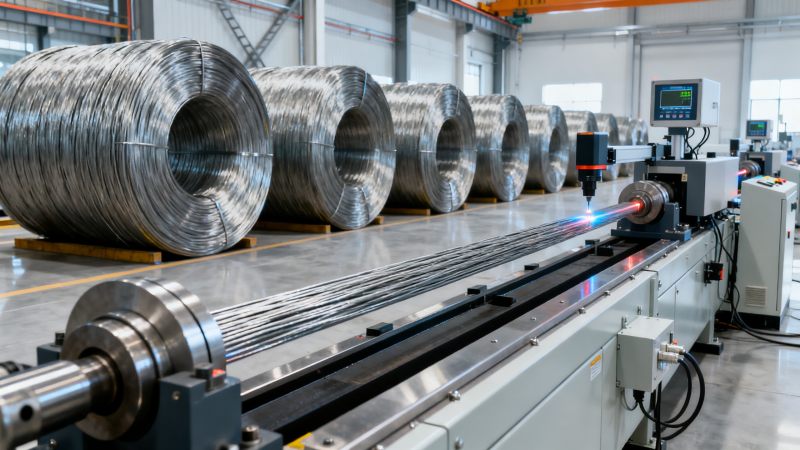
Wire Products are used in reinforcement, fastening, fencing, cable support, industrial fabrication, and structural assemblies where dimensional consistency and material integrity directly affect safety and service life. In the steel sector, early defect detection means finding problems before downstream processing, shipment, installation, or load-bearing use. The earlier a defect is caught, the lower the cost of correction and the smaller the impact on schedule, compliance, and reputation.
Typical defects in Wire Products include surface cracks, scale, corrosion spots, coating gaps, diameter variation, edge damage, poor straightness, tensile inconsistency, brittle fracture behavior, and weld discontinuities where welded wire forms are involved. Some flaws are visible, but many only appear under testing or after the material enters fabrication. That is why effective quality checks combine visual review, measurement, mechanical testing, and traceable process control rather than relying on one inspection point alone.
For structural steel exporters and processors, quality checks should also align with recognized standards such as ASTM, EN, JIS, and GB. Standard-based inspection creates a common technical language across markets and helps reduce disputes related to tolerance, coating performance, strength, and finish. In practical terms, strong inspection planning turns Wire Products from a sourcing risk into a predictable industrial input.
Current quality concerns shaping steel wire inspection
Market expectations for Wire Products have become stricter because end-use environments are more demanding and project timelines are less forgiving. Construction, transportation, light manufacturing, and infrastructure applications all require steel components that perform consistently under load, weather exposure, and fabrication stress. This has pushed quality teams to focus on inspections that reveal defects sooner, not only final checks before delivery.
These concerns are especially relevant when Wire Products are supplied across multiple regions, where documentation, tolerance control, and repeatability often matter as much as the physical goods themselves. Stable quality performance depends on inspection points built into receiving, production, finishing, packing, and pre-shipment stages.
Quality checks that catch defects sooner
The most effective inspection systems for Wire Products are layered. Each check targets a different failure mode, and together they reduce the chance that a defect moves forward unnoticed.
1. Raw material verification
Defect prevention starts before drawing, rolling, or galvanizing. Reviewing mill certificates, chemistry, and incoming billet or rod condition helps identify inconsistency in carbon content, alloy balance, and surface quality. If the raw material is already unstable, later inspection will only discover the result, not prevent it.
2. Inline dimensional monitoring
Continuous measurement of diameter, ovality, straightness, and length catches drift during production. Compared with end-of-line sampling alone, inline monitoring gives immediate feedback and allows machine adjustment before a whole lot falls outside specification. For Wire Products used in structural assemblies, this is critical because even small tolerance variation can affect fit-up and load distribution.
3. Surface and coating inspection
Visual checks remain essential, but they should be systematic. Operators should inspect for scratches, seams, pits, rust, zinc voids, discoloration, and handling damage under controlled lighting. For galvanized Wire Products, coating thickness gauges and adhesion tests can reveal weak corrosion protection well before field exposure makes the issue expensive.
4. Mechanical property testing
Tensile strength, yield behavior, elongation, bend performance, and hardness checks are key to identifying hidden weakness. These tests are especially important for Wire Products expected to endure tension, repeated forming, or outdoor service. Sampling frequency should reflect risk level, end use, and customer specification rather than using one fixed rule for every product grade.
5. Non-destructive testing for hidden flaws
Eddy current, ultrasonic, and magnetic particle testing help detect internal or near-surface discontinuities that visual inspection cannot reliably find. These methods are valuable when defects are likely to appear after drawing, welding, or thermal processing. For high-specification Wire Products, non-destructive testing often provides the confidence needed for export projects and regulated applications.
The same early-check discipline used for Wire Products is also relevant across structural steel supply. In midstream fabrication and framing applications, dimensional accuracy, corrosion protection, and mechanical consistency remain equally important. For example, Channel Steel Supplier solutions are widely used in construction, automobile manufacture, steel structure construction purlin systems, wall beams, lightweight roofs, brackets, mechanical columns, and light manufacturing arms. Available grades such as Q195, Q235B, Q345B, Duplex, 304, and 316, with thickness from 1.5mm to 25mm, height from 80mm to 160mm, and tolerance control including thickness of +/-0.02mm, show how precise specification management supports earlier defect recognition across related steel products.
Why early inspection adds business value
Catching defects early in Wire Products does more than improve technical quality. It strengthens delivery performance, reduces rework, lowers scrap rates, and protects customer trust. In export-oriented steel supply, one unresolved defect can trigger shipment delays, replacement freight, installation problems, or project claims that far exceed the cost of inspection.
Early inspection also improves process learning. When defect data is linked to machine settings, coil source, coating line conditions, or operator shifts, recurring quality problems become easier to isolate. That shortens corrective action cycles and makes future batches more stable. Over time, Wire Products quality control becomes less reactive and more predictive.
- Lower risk of non-conforming shipments
- Better compliance with ASTM, EN, JIS, and GB requirements
- Reduced processing waste and downstream rejection
- More consistent corrosion resistance and strength performance
- Stronger documentation for audits and technical review
Typical defect risks by application scenario
Not all Wire Products face the same quality priorities. Inspection should reflect where and how the material will be used.
Practical guidance for stronger Wire Products quality control
A reliable inspection program for Wire Products should be designed around prevention, speed, and traceability. Several practical steps make a measurable difference:
- Define acceptance criteria clearly for dimension, coating, strength, and appearance before production starts.
- Match test methods to product risk instead of overusing final visual inspection.
- Calibrate gauges and testing machines on schedule to avoid false pass or false reject results.
- Record defect trends by batch, line, and raw material source to support root cause analysis.
- Protect finished Wire Products during storage and loading so handling damage does not erase upstream quality gains.
- Maintain consistent documentation for certificates, inspection reports, and traceable production records.
When these practices are integrated into normal operations, quality checks stop being a final barrier and become a production control tool. That shift is essential for steel products serving global construction and industrial projects, where quality stability is often judged over multiple shipments rather than one order.
Next steps for improving defect detection
Wire Products quality checks are most effective when they identify problems at the earliest practical stage, connect findings to process control, and align with international standards. A structured system built around raw material review, inline measurement, coating verification, mechanical testing, and non-destructive inspection can catch defects sooner and reduce costly failures later.
For steel supply programs that require dependable quality across Wire Products and structural sections, the most useful next step is to review current inspection points against actual failure risks, then tighten tolerance tracking, sampling logic, and batch traceability. Stronger early detection supports safer performance, more predictable delivery, and better long-term value across demanding project environments.
Please give us a message


Please enter what you want to find