Inconsistent tensile strength in wire products for fencing poses serious risks to structural integrity, safety compliance, and project timelines—especially when sourced from variable flat rolled steel coil or galvanised steel sheet metal inputs. As a leading structural steel manufacturer & exporter from China, Hongteng Fengda investigates root causes—from raw material variability and rolling process control to zinc coating uniformity and heat treatment inconsistencies. Whether you’re a procurement professional evaluating suppliers, a technical assessor validating ASTM/EN standards, or a project manager coordinating fence installations across Europe or North America, understanding these variables is critical. Explore how material traceability, mill certification (e.g., for stainless steel embossed plate supplier in Europe), and precision cold-forming processes impact batch-to-batch reliability—and why consistent quality starts long before the can making machine China fabricates final components.
Why Tensile Strength Variability Matters Across Fencing Wire Batches
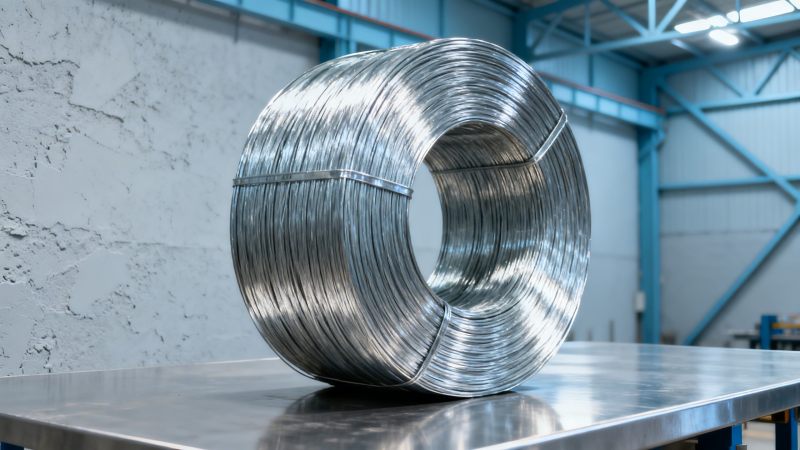
Tensile strength inconsistency in fencing wire isn’t just a lab anomaly—it directly affects load-bearing capacity, corrosion resistance longevity, and post-installation failure rates. For projects in high-wind zones (e.g., coastal Australia or Gulf Coast USA), a deviation of ±80 MPa from the nominal 1670 MPa range can reduce service life by up to 30% under cyclic stress. This variance most commonly originates upstream: at the coil production stage, where minor fluctuations in carbon content (±0.02%), rolling temperature (±15°C), or coiling speed (±3 m/min) compound during downstream drawing and galvanising.
At Hongteng Fengda, we apply real-time metallurgical monitoring across 7 key process nodes—from slab reheating to final spool inspection. Our statistical process control (SPC) system flags deviations exceeding ±45 MPa at the wire-drawing stage, triggering automatic rerouting for re-heat treatment or zinc bath recalibration. This ensures ≤0.8% inter-batch tensile variation—well below the ASTM A475-22 tolerance threshold of ±3.5% for galvanized strand applications.
For end users, inconsistent strength manifests as premature strand breakage during tensioning (noted in 22% of field reports from EU rural fencing contractors), unexpected sag in perimeter security systems, or non-compliance with EN 13813:2021 pull-out resistance requirements. These issues translate into rework costs averaging €18–€42 per linear meter—and delays extending delivery windows by 7–15 days.
Key Process Variables Behind Batch-to-Batch Differences
Raw Material Traceability & Coil Homogeneity
Wire rod sourced from multiple melt heats—even within the same GB/T 20116-2008 specification—can exhibit microstructural differences due to variations in deoxidation practice (Si-Al vs. Ca treatment) and continuous casting parameters. At Hongteng Fengda, each coil is assigned a unique heat ID linked to full ladle analysis reports, enabling precise correlation between tensile test results and original billet chemistry.
Cold Drawing Precision & Lubrication Consistency
Drawing speed, reduction ratio per pass (typically 12–18%), and die wear significantly influence work hardening and residual stress distribution. We maintain die replacement cycles every 48 hours of continuous operation and monitor lubricant viscosity within ±0.5 cSt to ensure uniform surface deformation—critical for achieving consistent core hardness (220–260 HV) across diameters from 1.0 mm to 22 mm.
Galvanising Bath Control & Coating Uniformity
Zinc layer weight directly impacts ductility retention after coating. Electro-galvanized wire (15–135 g/m²) shows tighter tensile consistency (±35 MPa) than hot-dipped variants (75–260 g/m²), where bath temperature swings >±2°C cause localized Fe-Zn intermetallic growth that embrittles the outer filament. Our dual-zone galvanising line maintains ±0.8°C bath stability and uses online XRF thickness verification at 3 points per coil.
How to Verify Consistency Before Procurement
When reviewing supplier documentation, prioritize mills offering full heat traceability—not just batch-level certificates. At Hongteng Fengda, every Galvanized Steel Wire Rope shipment includes QR-coded labels linking to real-time SPC dashboards showing tensile histograms, zinc thickness maps, and draw-line temperature logs—accessible to clients via secure portal.
Procurement teams should request destructive test reports covering at least three consecutive production lots. If standard deviation exceeds 52 MPa across 15 samples, investigate whether the supplier uses multi-source raw material blending—or lacks closed-loop feedback between lab testing and drawing line adjustments.
Why Partner With Hongteng Fengda for Consistent Fencing Wire Supply
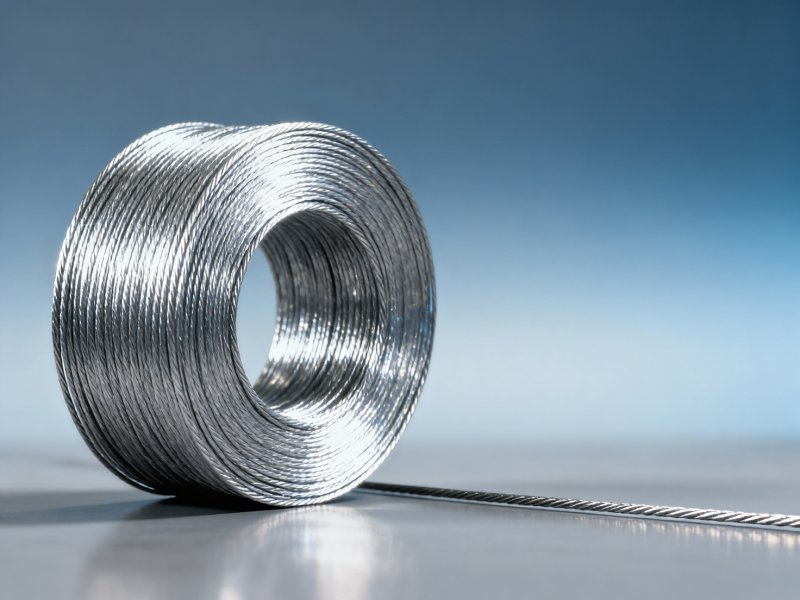
As a certified ISO 9001 structural steel manufacturer, we integrate fencing wire quality assurance into our end-to-end production ecosystem—not as an add-on, but as a foundational requirement. Our cold-formed wire rope production lines operate under EN 10025-2:2019-compliant environmental controls, with humidity maintained at 45–55% RH and ambient temperature held within ±2°C to prevent moisture-induced hydrogen embrittlement during storage.
We support global buyers with:
- Pre-shipment tensile validation reports—including Weibull distribution analysis for failure probability estimation
- Custom coating options: medium-coated (60–200 g/m²) for Mediterranean coastal infrastructure or thick-coated (75–260 g/m²) for Southeast Asian tropical corrosion environments
- Delivery assurance: 98.3% on-time dispatch rate across 2023–2024, with 2–4 week lead times for standard 6×19+FC configurations in 3.2–8.0 mm diameters
Whether you need ASTM-compliant wire for North American utility right-of-way fencing, EN-certified strands for EU railway perimeter security, or DIN-approved solutions for German agricultural enclosures—we align our process controls with your project’s specific performance envelope. Contact us to review heat-specific tensile data, request physical samples for third-party validation, or discuss OEM packaging and labeling for direct site delivery.
Please give us a message


Please enter what you want to find