For panel applications, material selection directly affects durability, fabrication efficiency, surface consistency, and lifecycle cost. A pre-painted galvanized steel coil combines corrosion-resistant zinc coating with a factory-applied color finish, helping technical evaluators reduce coating variability, improve production efficiency, and meet performance requirements for construction, industrial, and manufacturing projects. Understanding its structure, advantages, and suitability for different environments is essential when comparing panel materials and specifying reliable steel solutions.
Why a Checklist Matters When Selecting Pre-Painted Galvanized Steel Coil
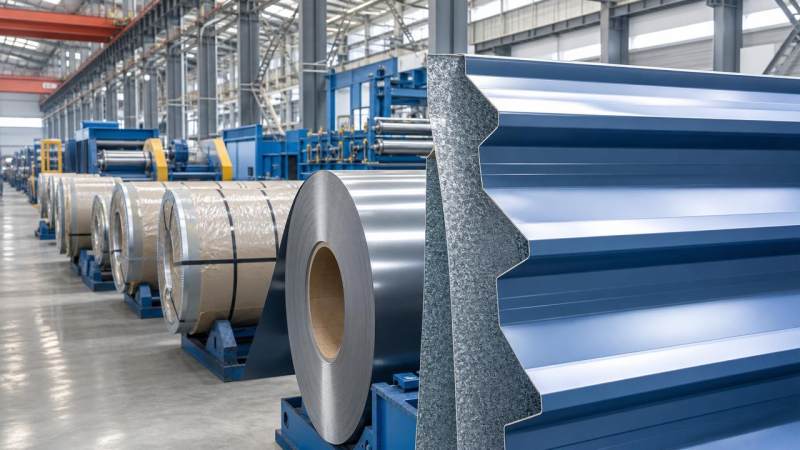
Panels are often judged by appearance first, but long-term performance depends on many hidden details.
A pre-painted galvanized steel coil is not only a colored metal sheet. It is a layered system.
The base steel, zinc coating, pretreatment, primer, and topcoat all influence forming, corrosion resistance, and service life.
A checklist helps compare suppliers, coatings, and specifications using measurable criteria instead of surface appearance alone.
It also reduces risks during roll forming, cutting, punching, bending, installation, and outdoor exposure.
For projects requiring consistent color and predictable production, pre-painted galvanized steel coil offers strong operational value.
Core Checklist for Evaluating Pre-Painted Galvanized Steel Coil
Use the following checklist before confirming specifications, samples, contracts, or production drawings.
- Confirm the base steel grade, yield strength, and elongation to ensure the panel can be formed without cracking or excessive springback.
- Check zinc coating mass, because corrosion resistance of pre-painted galvanized steel coil depends strongly on galvanized layer protection.
- Review paint system type, including polyester, SMP, HDP, or PVDF, according to weather exposure and durability expectations.
- Verify primer compatibility with the topcoat, substrate, and pretreatment process to prevent peeling, blistering, or adhesion failure.
- Specify color tolerance, gloss range, and surface texture before production to keep finished panels visually consistent.
- Match coil thickness and tolerance with forming equipment, panel profile depth, fastener design, and structural span requirements.
- Evaluate bend performance through T-bend testing, especially when panels require tight profiles, edge folding, or decorative shaping.
- Request salt spray, humidity, impact, and adhesion data when pre-painted galvanized steel coil will face aggressive environments.
- Confirm protective film requirements if fabrication, transportation, or installation may scratch the painted surface.
- Check packaging, coil ID, coil weight, edge protection, and moisture control to reduce deformation and transit damage.
Key Structure to Understand
A typical pre-painted galvanized steel coil includes cold-rolled or hot-dip galvanized substrate, chemical pretreatment, primer, and finish coating.
The zinc layer protects the steel by barrier protection and sacrificial action when small scratches occur.
The paint layer improves color stability, weather resistance, and decorative value for visible panel surfaces.
This combined structure explains why pre-painted galvanized steel coil is widely used in roofing, wall cladding, doors, ceilings, and equipment panels.
Application Scenarios and Specification Priorities
Roofing and Wall Panels
Roofing and wall systems require weather resistance, color retention, and stable mechanical properties.
For these uses, pre-painted galvanized steel coil should be selected with suitable zinc coating and outdoor-grade paint.
PVDF or high-durability polyester may be preferred where ultraviolet radiation, rain, or temperature variation is significant.
Profile design also matters. Deep corrugation needs good formability and controlled coating flexibility.
Interior Decorative Panels
Interior panels usually prioritize color consistency, flatness, clean surface quality, and easy maintenance.
In these environments, pre-painted galvanized steel coil can reduce secondary painting and improve fabrication efficiency.
Lower corrosion exposure may allow economical coating options, but scratch resistance and stain resistance remain important.
Industrial Enclosures and Equipment Panels
Industrial panels often face oil mist, handling damage, vibration, and frequent cleaning.
A pre-painted galvanized steel coil used here should balance hardness, flexibility, chemical resistance, and adhesion.
When panels require punching, slotting, or sharp bending, coating performance after fabrication must be verified.
Supporting Steel Components
Panel systems often work with structural frames, anti-skid platforms, walkways, and machinery bases.
For floor and equipment areas, SM400A Patterned steel plate can support anti-skid and load-bearing needs.
Available grades include SM400A, SM400B, Q235B, A36, S235, SS400, and related structural materials.
Common thickness is 2-8mm, with lengths from 2m to 12m and widths from 600mm to 1800mm.
This helps combine coated panel aesthetics with practical steel performance in construction, transportation, machinery, and shipbuilding projects.
Performance Factors That Influence Panel Life
Corrosion Resistance
Corrosion resistance is one of the main reasons to use pre-painted galvanized steel coil for panels.
The galvanized coating protects exposed edges and minor scratches better than painted cold-rolled steel.
However, zinc coating mass should match the site environment, not only the product price.
Formability
Panels are commonly roll formed, pressed, folded, or cut before installation.
If the coating is too brittle, cracking may appear at bends and profile corners.
A qualified pre-painted galvanized steel coil should keep coating adhesion after forming operations.
Surface Consistency
Factory coating provides controlled color, gloss, thickness, curing, and surface cleanliness.
This consistency is difficult to achieve when panels are painted after fabrication.
For visible buildings or modular products, pre-painted galvanized steel coil helps reduce batch variation.
Production Efficiency
Using pre-coated material removes many painting, drying, and surface preparation steps.
This can shorten panel production cycles and reduce volatile coating work inside fabrication plants.
For repeat orders, pre-painted galvanized steel coil also supports stable color codes and predictable scheduling.
Comparison Checklist: Pre-Painted Coil Versus Alternative Materials
This comparison shows why pre-painted galvanized steel coil is often chosen for balanced performance and cost control.
It is especially practical when panels require both decorative appearance and reliable steel substrate strength.
Common Overlooked Risks Before Ordering
Ignoring the Installation Environment
Indoor, rural, coastal, industrial, and chemical environments require different coating systems.
Using the same pre-painted galvanized steel coil everywhere may cause premature fading, corrosion, or coating failure.
Selecting by Color Only
Color is important, but coating chemistry and film thickness decide long-term performance.
A similar shade may perform differently if the paint resin, primer, or zinc layer is changed.
Overlooking Edge Corrosion
Cut edges, punched holes, and fastener points are common weak areas for panels.
Pre-painted galvanized steel coil performs better when edge design, drainage, and sealant details are considered early.
Skipping Trial Forming
Laboratory data is useful, but actual equipment settings can reveal different forming results.
Trial production helps confirm bending radius, coating adhesion, profile accuracy, and surface protection.
Practical Execution Guide for Reliable Procurement
A clear execution process improves communication and reduces specification gaps.
- Define the panel application, service environment, design life, forming method, and visible surface requirements before requesting quotations.
- Specify steel grade, thickness, tolerance, zinc coating mass, paint type, topcoat thickness, backcoat, color, and gloss.
- Request test documents, coating performance data, production standards, and previous export references for similar panel applications.
- Approve color samples under consistent lighting and keep signed reference samples for future batch comparison.
- Run trial forming before mass production, especially for deep profiles, tight bends, or high-speed roll forming lines.
- Confirm packing method, moisture protection, loading plan, coil orientation, and shipping marks to protect the finished surface.
For international projects, standards such as ASTM, EN, JIS, and GB should be stated clearly.
Mill certificates, inspection reports, and third-party testing can support acceptance and reduce disputes.
Hongteng Fengda supplies structural steel products and customized solutions for construction, industrial, and manufacturing projects worldwide.
Stable production, quality control, and export experience help align steel supply with project schedules and technical expectations.
Decision Points Before Final Specification
Before choosing pre-painted galvanized steel coil, confirm whether the panel is decorative, protective, structural, or multifunctional.
Then connect each requirement to measurable technical parameters.
- Use higher-performance paint systems when panels face strong sunlight, humidity, pollution, or long outdoor exposure.
- Choose appropriate zinc coating mass when corrosion risk is higher or maintenance access is limited.
- Control coil thickness tolerance when panel flatness, locking seams, or automated assembly depends on dimensional accuracy.
- Add protective film when surfaces are visible, highly decorative, or handled several times before installation.
- Confirm batch consistency when multiple buildings, production lots, or replacement panels must match in appearance.
A technically complete specification usually costs less than correcting coating failure, color mismatch, or production stoppage later.
Summary and Next Step
Pre-painted galvanized steel coil is widely used for panels because it combines steel strength, zinc protection, and factory-controlled color finishing.
Its value appears in corrosion resistance, visual consistency, fabrication speed, and predictable lifecycle performance.
The best results come from matching substrate, zinc coating, paint system, thickness, forming method, and environment.
Use the checklist to prepare drawings, compare offers, review samples, and verify production readiness.
For reliable steel sourcing, align technical specifications with tested materials, clear documentation, and consistent supplier execution.
When panel performance, appearance, and delivery stability matter, pre-painted galvanized steel coil remains a practical and cost-effective choice.
Please give us a message


Please enter what you want to find