Why tensile grade is becoming a critical decision point for Galvanized Steel Wire Rope
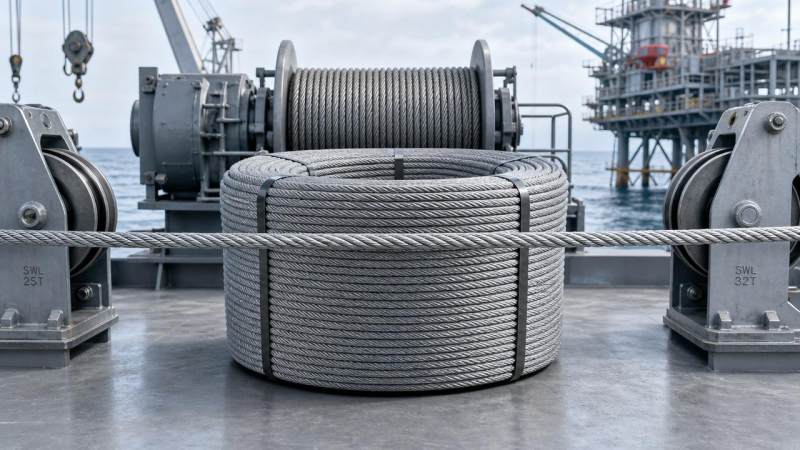
When specifying Galvanized Steel Wire Rope for lifting, structural support, or industrial applications, tensile grade is not just a technical detail.
It directly affects strength, flexibility, fatigue performance, and service life across changing project demands.
In today’s steel market, selection standards are rising.
Safety expectations, international compliance, and lifecycle cost control now shape how Galvanized Steel Wire Rope is evaluated.
That shift makes tensile grade a front-line factor rather than a secondary specification.
For structural and industrial steel applications, wrong grade selection can create overdesign, early failure, or hidden operational risk.
As a structural steel manufacturer and exporter from China, Hongteng Fengda sees growing demand for steel solutions matched to exact performance conditions.
That same discipline applies when choosing Galvanized Steel Wire Rope for global projects.
The market signal is clear: application requirements for wire rope are no longer static
Across construction, marine support, material handling, and infrastructure maintenance, operating conditions are becoming more demanding.
Loads cycle more frequently, service intervals are tighter, and exposure to weather is more severe.
Because of this, buyers are comparing not only diameter and coating, but also rope grade, breaking force, and fatigue behavior.
Galvanized Steel Wire Rope once selected mainly by habit is now assessed by engineering performance.
This trend reflects a broader shift in steel sourcing.
Projects increasingly favor materials that reduce uncertainty over long operating periods.
In wire rope, tensile grade becomes the bridge between specification sheets and real field reliability.
Why this shift is accelerating
Tensile grade affects more than strength alone
A common misconception is that a higher tensile grade always means a better Galvanized Steel Wire Rope.
In reality, grade changes several connected properties.
It influences load capacity, bending response, abrasion resistance, and how the rope behaves under repeated cycles.
Key performance relationships
- Higher tensile grade can increase breaking strength within the same rope diameter.
- Higher grade may reduce ductility if rope construction is not properly matched.
- Flexibility requirements can outweigh pure strength in sheave-based systems.
- Fatigue resistance depends on both wire strength and rope design, not grade alone.
- Galvanizing protects against corrosion, but grade still determines mechanical reserve during service.
This is why specification decisions should not isolate tensile grade from construction type, lay pattern, diameter, and end use.
For example, a rope used in static guying behaves differently from one used in repetitive hoisting.
The best Galvanized Steel Wire Rope is the one with balanced properties for its actual duty cycle.
Selection logic is moving toward system matching, not isolated specifications
Steel buyers now evaluate ropes as part of a larger material system.
That approach mirrors trends across structural steel and stainless products.
In some projects, related components require similar discipline in mechanical property selection.
A useful comparison is 202 Stainless Steel Coil, often chosen for balanced strength, ductility, and corrosion performance.
Its tensile strength reaches at least 520 MPa, with yield strength of at least 275 MPa.
It also offers elongation of 55% to 60%, plus good toughness in high and low temperatures.
Used in chemical equipment, food industry parts, vehicles, springs, and conveyor systems, it shows how steel selection increasingly centers on performance balance.
The same principle applies to Galvanized Steel Wire Rope.
Strength must be evaluated together with flexibility, durability, environment, and compliance requirements.
The practical impact across applications is becoming easier to measure
Tensile grade decisions now affect budgeting, maintenance planning, and operational stability more directly than before.
That is especially visible in steel-intensive sectors where downtime has a high cost.
Where grade selection changes outcomes
- Lifting systems: grade influences safe working load margin and inspection intervals.
- Bracing and support: grade affects resistance to sustained stress and long-term deformation risk.
- Marine and outdoor use: corrosion protection helps, but mechanical reserve still matters under dynamic loading.
- Industrial handling: repeated bending around drums or pulleys makes flexibility and fatigue strength essential.
- Infrastructure maintenance: proper grade improves service predictability and reduces emergency replacement.
In many cases, the lowest purchase price does not produce the lowest operating cost.
A mismatched Galvanized Steel Wire Rope may pass initial checks but perform poorly under real service conditions.
That difference becomes visible through shortened life, unstable handling, or unexpected inspection findings.
What should be reviewed before confirming a tensile grade
A better decision starts with clear operating data.
Instead of asking only for a stronger rope, review the working context in full.
- Actual load range, including peak and shock loading conditions.
- Frequency of bending, winding, or cyclic movement.
- Corrosion exposure, humidity, salt, and outdoor weather conditions.
- Required service life and maintenance schedule.
- Applicable standards, certification, and inspection expectations.
- Compatibility with fittings, sheaves, drums, and anchoring details.
These checkpoints help identify whether a higher, standard, or application-specific tensile grade is appropriate.
They also reduce the risk of selecting Galvanized Steel Wire Rope based on incomplete assumptions.
A simple evaluation framework
The next phase of steel sourcing will reward precise performance alignment
The direction of the market is clear.
Steel products are no longer judged only by availability and price.
They are judged by how accurately they fit service conditions, standards, and total ownership goals.
For Galvanized Steel Wire Rope, tensile grade sits at the center of that evaluation.
It affects safety, usable life, maintenance rhythm, and cost predictability.
Projects that treat grade selection as a strategic technical choice will usually achieve more stable performance.
Projects that ignore it may face hidden inefficiencies later.
If a specification is still open, compare rope grade against actual load behavior, environment, and fatigue demands before final approval.
That step often leads to a more reliable Galvanized Steel Wire Rope decision and better long-term steel project results.
Please give us a message


Please enter what you want to find