In harsh mining environments, choosing the right steel rail for mining applications directly affects safety, equipment performance, and long-term operating costs.
From heavy loads and constant impact to abrasive conditions, reliable rail systems are essential for smooth material transport and reduced downtime.
Understanding why steel rail matters helps improve productivity, durability, and overall mine efficiency.
For steel-intensive projects, a dependable structural steel partner also matters.
Hongteng Fengda, a structural steel manufacturer and exporter from China, supplies reliable steel products and customized solutions for global industrial needs.
Its production supports international standards such as ASTM, EN, JIS, and GB, helping reduce sourcing risks and maintain stable delivery.
What makes steel rail for mining applications so important?
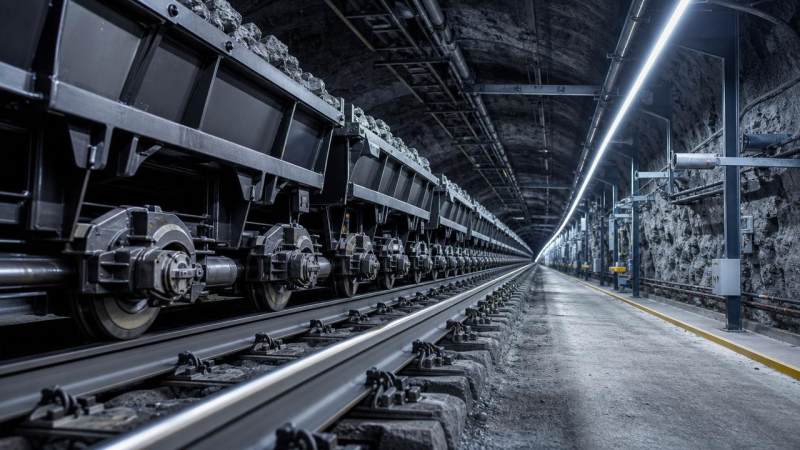
Mining rail systems operate under conditions that quickly expose weak materials or poor design choices.
A suitable steel rail for mining applications must carry concentrated wheel loads, absorb repeated impact, and resist wear from dust, moisture, and debris.
If rail quality is inconsistent, the result may include derailment risks, track deformation, and equipment damage.
That is why rail selection is not only a materials question.
It is also a safety and maintenance decision.
In underground mines, narrow tunnels limit maintenance access.
In open-pit operations, exposure to weather and mud creates additional corrosion and alignment challenges.
In both cases, dependable rail strength supports continuous hauling and fewer interruptions.
Which mining conditions place the highest demands on rail performance?
Not every site stresses rails in the same way.
Understanding operating conditions helps identify the best steel rail for mining applications.
Common high-stress factors
- Heavy axle loads from ore cars and transport equipment
- Frequent start-stop motion causing localized fatigue
- Curved tracks increasing wheel flange wear
- Abrasive particles accelerating surface damage
- Water, chemicals, and humidity increasing corrosion risk
- Uneven subgrade support creating stress concentration
These factors often work together rather than separately.
For example, a wet tunnel with sharp curves and overloaded carts can shorten rail life dramatically.
This is why mines should match rail grade, section profile, and support design to actual operating conditions.
How do you evaluate the right steel rail for mining applications?
The best choice balances load capacity, wear resistance, installation needs, and lifecycle value.
Focusing only on initial price often creates higher replacement and maintenance costs later.
Key evaluation points
- Rail section size should match wheel load and traffic volume.
- Steel chemistry and heat treatment should support hardness and toughness.
- Dimensional accuracy affects track alignment and installation quality.
- Compliance with recognized standards improves consistency and traceability.
- Supply stability matters for maintenance planning and expansion projects.
It also helps to review the surrounding steel components.
Base plates, support frames, transport equipment parts, and reinforcement structures influence rail system durability.
In mining and drilling rig structures, wear-resistant and structural-grade steel plates can support related assemblies.
One example is Carbon Steel Sheet Plate, used in manufacturing plants, construction, engineering machinery, and mining equipment.
Its Q345A(16Mn) grade supports components for excavators, loaders, bulldozers, cranes, mining trucks, and coal mine hydraulic supports.
With hot-rolled supply and broad thickness options from 6mm to 700mm, it fits demanding structural applications.
Compliance with GB, JIS, DIN, ASTM, and EN-related standards also improves specification confidence.
What problems happen when rail quality or selection is wrong?
Poor rail decisions rarely fail in one obvious moment.
More often, they create a chain of small issues that escalate over time.
Typical consequences
- Premature head wear and surface cracking
- Track gauge variation and alignment loss
- Higher wheel and axle maintenance costs
- More unplanned shutdowns for replacement
- Reduced hauling efficiency and lower output
- Increased accident exposure in critical areas
A low-cost rail may appear attractive during procurement.
However, if it wears quickly, the total cost per operating hour can become much higher.
That is why lifecycle analysis is essential for steel rail for mining applications.
How can maintenance planning extend rail service life?
Even high-quality rails need proper maintenance to deliver expected value.
A preventive approach reduces emergency repairs and supports safer transport.
Practical maintenance steps
- Inspect rail head wear at fixed intervals.
- Check fasteners, joints, and support conditions regularly.
- Remove accumulated debris and standing water.
- Monitor curve sections and loading points more often.
- Replace damaged parts before cracks propagate.
Good maintenance also creates better data for future selection.
When failure patterns are recorded, rail upgrades become more accurate and cost-effective.
What should you compare before choosing a supplier?
Supplier evaluation should go beyond unit price.
For steel rail for mining applications, consistency and delivery reliability are often as important as material performance.
A supplier with broad structural steel experience can also support related components in the same project scope.
That improves coordination across construction, industrial, and mining systems.
FAQ: quick answers about steel rail for mining applications
Steel rail matters because mining conditions punish weak design, low-grade material, and inconsistent supply.
The right steel rail for mining applications improves safety, reduces downtime, and protects equipment across the full operating cycle.
A better result comes from evaluating loads, environment, maintenance access, and supplier capability together.
When rail systems are supported by quality structural steel products and reliable export service, mining projects gain stronger long-term performance.
The next practical step is to review operating conditions, compare standards, and confirm whether current rail and related steel components match real site demands.
Please give us a message


Please enter what you want to find