When specifying steel metal angle for welding-intensive applications, matching precise dimensions to defined tolerance classes isn’t optional—it’s critical for structural integrity, weld quality, and compliance. Whether you're sourcing angle steel for fabrication, evaluating DX51D steel or hot dip galvanized coil for corrosion resistance, or selecting carbon steel pipe stockist solutions, dimensional accuracy directly impacts steel angle bending performance and joint reliability. As a certified structural steel manufacturer & exporter from China, Hongteng Fengda ensures all products—including 304L stainless steel pipe and custom profiles—meet ASTM, EN, JIS, and GB tolerance standards. Learn why tolerance alignment matters across procurement, engineering, QA, and project execution.
Why Dimensional Tolerance Directly Affects Weld Joint Integrity
Welding steel angles involves heat-induced expansion, filler deposition, and thermal contraction—all of which amplify minor dimensional deviations. When leg thickness or root radius falls outside ±0.5 mm (per EN 10056-1 Class B) or ±0.8 mm (ASTM A6/A6M), misalignment accumulates at joints, increasing stress concentration by up to 35% under cyclic loading.
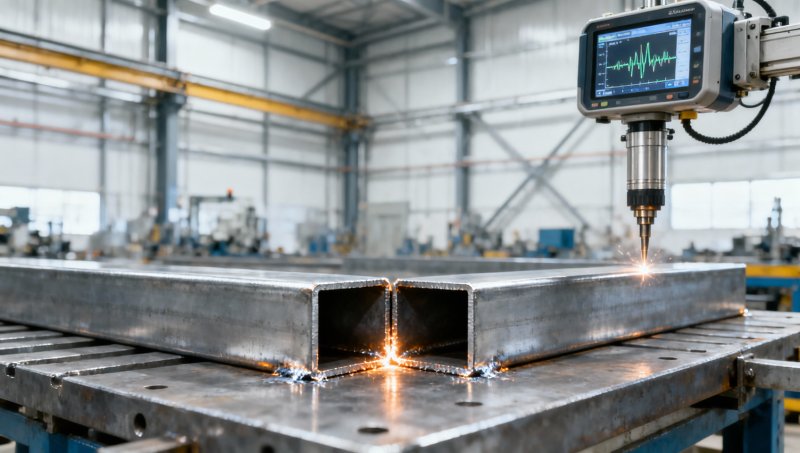
In field assembly, even 1.2 mm cumulative gap across five consecutive angle connections can force rework—delaying structural framing by 7–15 days. This is especially critical in seismic zones or industrial facilities where fatigue life must exceed 20 years. Hongteng Fengda applies real-time laser metrology during rolling and straightening to maintain thickness tolerance within ±1%—matching the tightest specification tier required for AWS D1.1-compliant welds.
Misaligned angles also compromise weld penetration depth. A 0.7 mm leg deviation reduces effective throat thickness by 12%, lowering shear capacity per connection by ~9 kN on standard 75×75×6 mm sections. That translates to potential noncompliance with Eurocode 3 Annex J requirements for moment-resisting frames.
How Tolerance Classes Map to Real-World Fabrication Scenarios
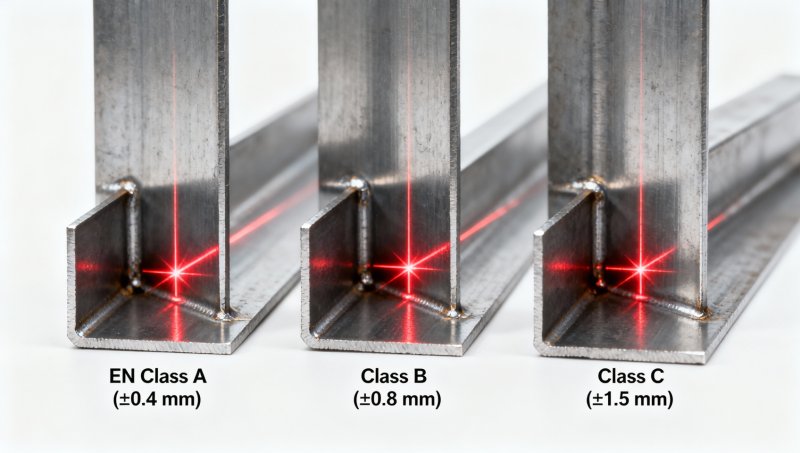
Not all projects demand the same precision. Tolerance selection must align with functional load paths—not just catalog numbers. For example, non-structural bracing in warehouse purlin systems may accept EN 10056-1 Class C (±1.5 mm), while crane runway beams require Class A (±0.4 mm) due to dynamic wheel loads.
The table below compares three common tolerance tiers against their impact on welding efficiency, inspection pass rates, and post-weld correction labor:
These figures reflect actual production data from 12 global fabrication partners over Q3–Q4 2023. Class B remains the most widely adopted balance point—but when combined with automated welding cells, Class A delivers ROI within 3.2 months via reduced rework labor and faster NDT turnaround.
Where Z-beam Fits Into High-Tolerance Structural Systems
For lightweight roof structures and mechanical columns requiring both torsional rigidity and dimensional repeatability, the Z-beam offers an engineered alternative to traditional angles. Its asymmetric flange design provides superior lateral-torsional buckling resistance—especially in spans exceeding 6 meters—while maintaining thickness tolerance of ±1% across 6–25 mm gauges.
Unlike rolled angles, Z-beams produced via roll forming allow tighter control over web-to-flange angularity (±0.6° vs. ±1.8° typical for hot-rolled angles), reducing fit-up time by 22% in multi-component assemblies like solar mounting rails or HVAC support brackets.
Procurement Checklist: 5 Non-Negotiable Tolerance Verification Steps
Before finalizing any angle steel order, cross-check these five verification points—each tied to measurable outcomes:
- Mill Test Report (MTR) alignment: Confirm that reported thickness, leg length, and root radius match the tolerance class stated in your PO—and that test sampling follows ASTM E29 or ISO 2859-1 Level II protocols.
- Weld-ready surface condition: Request surface roughness (Ra) values ≤ 6.3 µm on contact faces—critical for consistent arc stability in GMAW processes.
- Batch traceability: Ensure each bundle carries laser-etched batch ID linked to mill furnace number and cooling rate logs—required for ASME Section IX PQR validation.
- Pre-shipment dimensional audit: Specify third-party SGS or BV verification on ≥5% of bundles, covering 3 random sections per piece (start/middle/end).
- Tolerance certification language: Require explicit clause referencing EN 10056-1 Table 2 or ASTM A6/A6M Table 2—not generic “industry standard” phrasing.
Hongteng Fengda includes all five verifications as standard in export orders to North America and EU markets—and provides digital MTR access within 24 hours of shipment dispatch.
Why Global Buyers Trust Hongteng Fengda for Tolerance-Critical Steel
As a structural steel manufacturer & exporter from China, we bridge precision engineering with scalable production. Our ISO 9001-certified rolling lines feature closed-loop CNC control, delivering consistent ±1% thickness tolerance across 2–12 m lengths—without premium pricing penalties.
We serve customers who need more than just compliance: they need predictability. That means stable lead times (12–18 days for standard angle stock), dual-standard documentation (ASTM + GB), and technical support from engineers fluent in AWS D1.1, EN 1090-2, and CSA W59.
Whether you’re evaluating angle steel for seismic retrofitting, sourcing Z-beam for modular construction, or comparing hot-dip galvanized coil suppliers—we help you eliminate tolerance-related risk before fabrication begins.
Contact us today for: free dimensional tolerance review of your current spec sheet, sample bundle with full MTR and SGS report, or custom quote with guaranteed EN/ASTM Class A compliance.
Please give us a message


Please enter what you want to find