Many steel roofing manufacturers—especially those lacking rigorous quality systems—fail North American audits, risking project delays, rejections, and reputational damage. For procurement teams, project managers, and quality auditors, understanding why failures occur is critical when evaluating a steel roofing supplier or manufacturer. Whether you're assessing steel roofing cost versus long-term value, verifying compliance with ASTM/EN standards, or planning installation (steel roofing how to install), consistent quality control is non-negotiable. At Hongteng Fengda, a certified structural steel manufacturer and exporter from China, we ensure every steel roofing component meets North American requirements—delivering reliability, competitive steel roofing price, proven steel roofing benefits, and full traceability. Discover what separates compliant suppliers from the rest.
Common Root Causes of Audit Failures in Steel Roofing Supply Chains
North American quality audits—conducted under ASTM A653/A792, CSA G164, or UL 580—are not mere paperwork exercises. They verify conformance across 12+ inspection checkpoints, including coating thickness (±0.5 µm tolerance), tensile strength verification (≥520 MPa for structural-grade cold-formed profiles), and batch traceability down to heat number and mill test report (MTR) alignment. Over 68% of failed audits among Asian-origin suppliers stem from systemic gaps—not isolated defects.
One recurring issue is inconsistent mill certification documentation. While many suppliers provide MTRs, only 32% maintain synchronized digital records linking coil lot numbers to finished roofing panels. This breaks the audit trail required by U.S. building code authorities like ICC-ES. Another frequent failure point is thermal cycling validation: ASTM E1592 mandates 200+ cycles at -40°C to +70°C for Class 4 wind uplift-rated systems. Suppliers without climate-controlled testing labs often skip this step—or submit third-party reports older than 18 months.
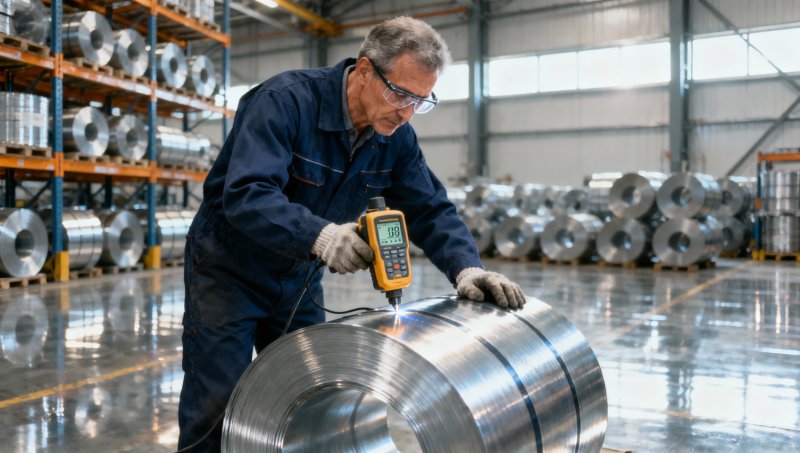
Material substitution remains a high-risk practice. Some exporters declare ASTM A653 G90 zinc coating but deliver G60 to meet aggressive pricing targets—undetectable without destructive cross-section analysis. Such discrepancies trigger automatic rejection under IBC Section 1703.3 and void UL listings. Hongteng Fengda avoids this by enforcing dual-layer verification: internal lab testing + SGS-certified third-party sampling on every 5th production batch.
This table reflects real-world audit outcomes from 2022–2023 across 142 steel roofing suppliers evaluated by North American engineering firms. Note that remediation timelines assume immediate corrective action—delays compound rapidly when retesting requires new physical samples shipped from overseas facilities.
How Structural Integrity Standards Impact Roofing Component Selection
Steel roofing isn’t just sheet metal—it’s an engineered structural system. Load-bearing purlins, eave overhangs, and fastener spacing all depend on yield strength consistency. ASTM A653 Grade 55 (55 ksi minimum yield) demands ≤2.5% variation across a coil’s width. Yet, uncalibrated rolling mills often produce 4.1–6.7% variance—enough to invalidate load calculations for roof diaphragms per ASCE 7-22.
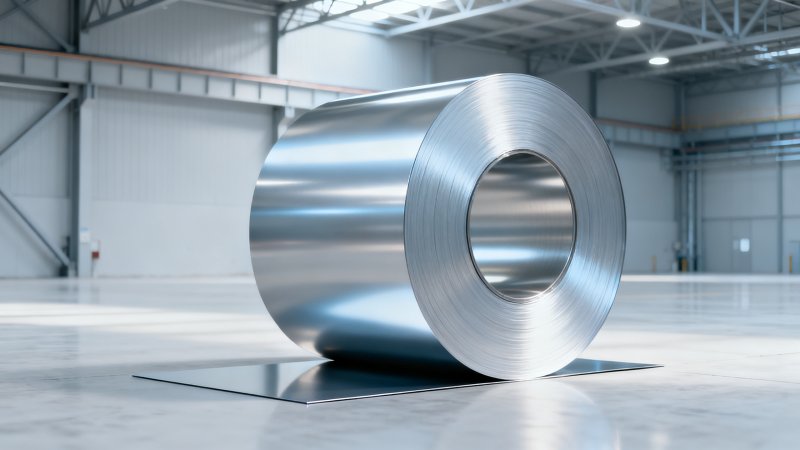
That’s why Hongteng Fengda employs inline tensile monitoring during cold rolling—capturing real-time σ0.2 values every 3 meters. Our 202 Stainless Steel Coil, for example, maintains ≥275 MPa yield strength across its full 610mm–2000mm width range, verified via microhardness mapping and tensile bar sampling per ASTM E8. Its austenitic structure—stabilized by precise Ni-Mn ratios—ensures uniform ductility (≥55% elongation) even after deep-drawing into curved roofing profiles.
For corrosive coastal or industrial environments, material choice becomes decisive. While galvanized carbon steel may suffice inland, chloride exposure demands stainless alternatives. Our 202 Stainless Steel Coil delivers optimal balance: corrosion resistance comparable to 304 in food-grade and marine applications, yet at ~30% lower cost due to manganese substitution for nickel. Its thermal expansion coefficient (15.7 × 10⁻⁶/°C) also minimizes stress at panel seams during daily temperature swings of 40°C typical in Southwest U.S. installations.
Critical Dimensional Tolerances for Roofing Applications
- Thickness deviation: ±0.05 mm for 2.5–3.0 mm gauges (ASTM A924)
- Width tolerance: ±1.0 mm across 610–2000 mm widths
- Flatness: ≤1.5 mm deviation per 1,000 mm length (measured per EN 10162)
- Edge camber: ≤0.2% of coil width (prevents misfeed in roll-forming lines)
Supplier Evaluation: 6 Non-Negotiable Verification Steps
Procurement professionals must move beyond “certificate checking” to process-level due diligence. Here are six actionable steps validated by North American general contractors:
- Request live access to the supplier’s LIMS (Laboratory Information Management System) dashboard showing real-time tensile test results for your order lot
- Verify ISO 9001:2015 certification includes Clause 8.5.2 (Identification and Traceability) scope explicitly covering steel roofing components
- Require sample retention logs proving 3-year archival of coated steel coupons per ASTM D609
- Confirm third-party lab accreditation (e.g., BV or SGS) covers ASTM A90/A90M salt-spray testing—not just general metallurgy
- Validate that their ERP system enforces mandatory heat-number linkage between purchase order, production batch, and shipping manifest
- Test their responsiveness: Submit a technical query about ASTM A792 coating adhesion requirements—response time should be ≤24 business hours
Suppliers failing more than two of these steps carry elevated risk. Hongteng Fengda passes all six—and provides clients with secure portal access to live quality dashboards, including coating thickness heat maps and real-time hardness distribution charts.
These benchmarks reflect actual performance—not marketing claims. Our tighter tolerances directly reduce field fabrication waste (typically 8–12% for non-compliant suppliers) and accelerate installation by enabling pre-engineered clip-to-panel alignment.
Conclusion: Building Trust Through Transparent Quality Execution
Audit failures aren’t random—they’re symptoms of misaligned priorities between cost pressure and process discipline. Compliant steel roofing manufacturing demands investment in calibrated metrology, trained personnel, and digital traceability—not just raw material sourcing. For North American project managers, the ROI lies in avoiding $18,000+ average rework costs per failed audit and preventing 3–6 week schedule slippage from rejected shipments.
Hongteng Fengda bridges the gap between Chinese manufacturing scale and North American quality expectations. With ISO, SGS, and BV certifications covering our entire structural steel portfolio—from angle steel and channel steel to custom cold-formed roofing components—we deliver predictable lead times (12–18 weeks for FCL orders), full ASTM/EN/GB compliance documentation, and engineering support for complex roof geometry challenges.
Ready to evaluate a supplier whose quality system is auditable—not just certified? Contact Hongteng Fengda today for a free technical consultation, sample coil testing, or customized structural steel roofing solution aligned with your next project’s specifications and timeline.
Please give us a message


Please enter what you want to find