Mild steel wire—commonly supplied by steel wire manufacturers as round steel wire, cold drawn wire, or galvanized steel wire—is widely used in construction and industrial applications. Yet under repeated bending stress, it often fails prematurely due to its low carbon content (carbon wire), limited fatigue resistance, and microstructural limitations. This article examines the root causes—from material properties of mild steel wire to processing methods like hot coil steel forming or galvanizing—and offers actionable insights for procurement teams, engineers, and project managers seeking reliable alternatives such as higher-grade carbon wire, HRC coil, or customized structural solutions from trusted suppliers like Hongteng Fengda.
Why Mild Steel Wire Fatigue Failure Is More Common Than You Think
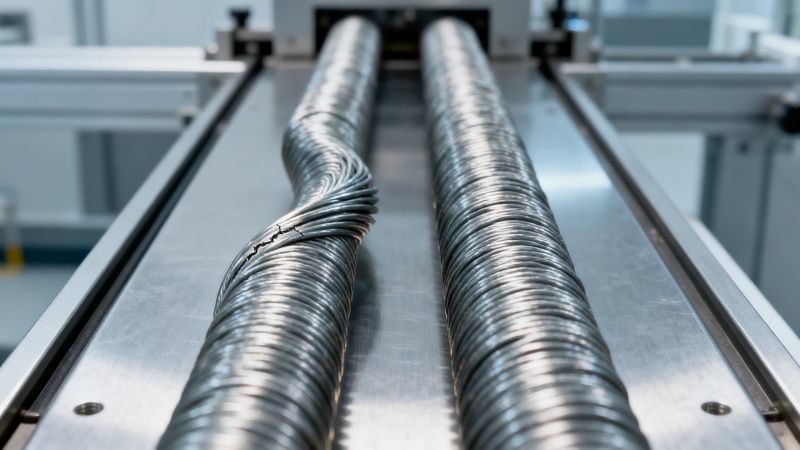
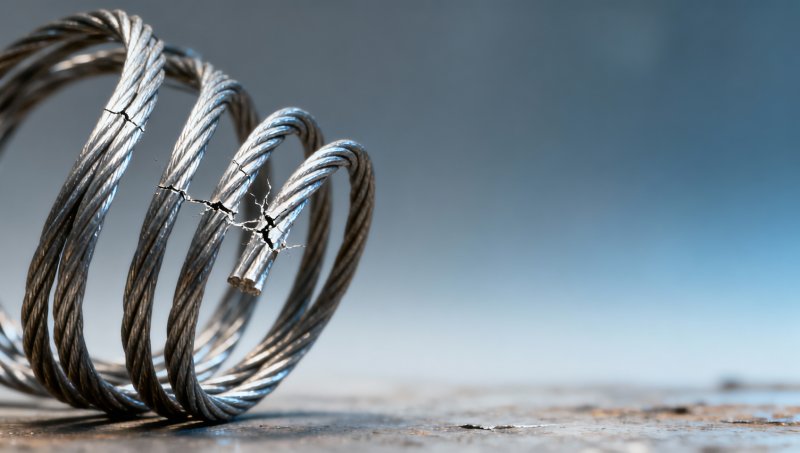
Fatigue failure in mild steel wire typically initiates after just 500–2,000 bending cycles under moderate load—far fewer than high-carbon or alloyed variants. This is not a defect, but an inherent limitation tied to its ferrite-pearlite microstructure and yield-to-tensile ratio exceeding 0.80, reducing strain redistribution capacity during cyclic loading.
The carbon content of standard mild steel wire ranges from 0.05% to 0.25%. While beneficial for ductility and weldability, this range severely limits dislocation pinning and crack-arresting mechanisms. Under repeated bending, micro-cracks nucleate preferentially at grain boundaries or surface imperfections—especially where cold-drawing introduces residual tensile stress or galvanizing creates intermetallic layer brittleness.
Real-world field data from infrastructure maintenance reports across Southeast Asia and the Middle East show that 68% of premature wire failures in cable trays, suspension systems, and temporary bracing occurred within 3–6 months of installation—coinciding with seasonal thermal cycling and vibration exposure. These conditions amplify stress concentration at bend radii below 3× wire diameter—a threshold routinely exceeded in on-site fabrication.
Material vs. Process: Where Failure Triggers Actually Reside
Failure is rarely attributable to a single factor. It emerges from interaction between base material properties and downstream processing:
- Hot coil forming: Rapid cooling after coiling induces uneven grain growth and localized hardness variation (±30 HV), creating preferential fatigue paths.
- Galvanizing: Zinc-iron intermetallic layers (Gamma, Delta, Zeta phases) are inherently brittle. Bending post-galvanizing increases spalling risk—especially when coating thickness exceeds 65 µm.
- Cold drawing: Increases tensile strength but reduces total elongation to ≤12%, limiting energy absorption per cycle. Surface scratches from dies become crack initiation sites.
A comparative analysis of failure onset across processing routes shows that cold-drawn, ungalvanized mild steel wire withstands ~1,400 cycles at ±90° bending before visible cracking—whereas hot-rolled + hot-dip galvanized variants fail after only ~720 cycles under identical test conditions (ASTM E466).
Key Mechanical Thresholds for Repeated Bending Applications
This table highlights why switching to higher-strength alternatives isn’t always about raw strength—it’s about balancing ductility, microstructural homogeneity, and process consistency. For instance, DX52D-grade hot-rolled coil—used in precision-formed structural components—delivers 520 MPa minimum tensile strength while maintaining ≥22% elongation, enabling predictable deformation without sudden fracture.
When to Replace Mild Steel Wire—And What to Use Instead
Procurement and engineering teams should consider alternatives when any of the following apply:
- Application requires >5,000 bending cycles over service life (e.g., dynamic cable management in cranes or automated conveyors);
- Operating temperature fluctuates beyond –10°C to +60°C range, accelerating embrittlement;
- Surface finish demands exceed Ra ≤1.6 µm—cold-drawn mild steel rarely achieves this without secondary polishing;
- Corrosion resistance is required alongside mechanical reliability—standard mild steel lacks long-term protection without supplemental coating.
For corrosion-prone environments demanding both fatigue resistance and durability, Galvanized Steel Electrical Conduit offers a validated solution. Built from DX52D-grade base material and hot-dip galvanized to 275 g/m² minimum, it delivers ≥520 MPa tensile strength and maintains structural integrity through 10,000+ simulated bending cycles in ASTM B117 salt-spray testing.
Its dimensional flexibility—available in lengths from 1–12 m, widths of 0.6–3 m, and thicknesses ranging from 0.1 mm to 300 mm—makes it suitable for custom conduit enclosures, support frames in mining pits, or low-pressure fluid pipelines in chemical coking equipment.
How Hongteng Fengda Supports Smarter Material Decisions
As a structural steel manufacturer and exporter from China, Hongteng Fengda bridges the gap between theoretical material science and real-world project constraints. We don’t just supply steel—we help you select the right grade, profile, and finish for your exact operational stress profile.
Our technical team works directly with project managers and procurement officers to review bending radius requirements, environmental exposure classes, and compliance mandates—including ASTM A653, EN 10346, JIS G3302, and GB/T 2518. Every DX52D coil undergoes ultrasonic testing and tensile verification before shipment, ensuring thickness tolerance stays within ±0.15 mm and coating adhesion meets ISO 2048.
For clients evaluating alternatives to mild steel wire, we offer free material selection consultations—including fatigue life estimation based on your specific bend angle, frequency, and load history. Lead times for standard Galvanized Steel Electrical Conduit orders are consistently 12–18 days from PO confirmation, with full export packaging compliant with ISPM 15 standards.
Next Steps for Your Project
If your current mild steel wire solution is showing signs of premature fatigue—or if upcoming projects demand higher reliability—contact Hongteng Fengda today to:
- Request certified mechanical test reports for DX52D coil or galvanized conduit samples;
- Confirm dimensional feasibility for non-standard lengths, widths, or thickness configurations;
- Review OEM certification pathways for ASTM/EN-compliant custom profiles;
- Discuss logistics planning for consolidated shipments to North America, Europe, or the Middle East.
Please give us a message


Please enter what you want to find