In modular construction, choosing the right lightweight steel tube isn’t just about minimizing weight—it’s about balancing structural integrity, installation efficiency, and long-term performance. At Hongteng Fengda, we engineer high strength steel tubing to meet exacting demands—whether for flexible steel wire integration, galvanized sheet for roofing support, or precise steel rod diameter and steel wire gauge requirements. Our structural steel grades comply with ASTM, EN, JIS, and GB standards, ensuring reliability across H-beam weight chart–guided designs and custom cold-formed applications. For procurement teams, engineers, and project managers worldwide, specification accuracy drives cost control, safety compliance, and build speed.
Why “Lightweight” Alone Is a Misleading Metric in Modular Steel Design
Many buyers assume that lower mass automatically equals better value in modular construction. But real-world performance hinges on dimensional precision, wall thickness consistency, yield-to-tensile ratio, and metallurgical homogeneity—not just kilogram reduction. A tube rated “lightweight” but with ±0.4mm wall thickness tolerance may fail under cyclic loading in multi-story prefabs, while one held to ±0.15mm—even at marginally higher mass—delivers predictable load paths and faster bolt-up alignment.
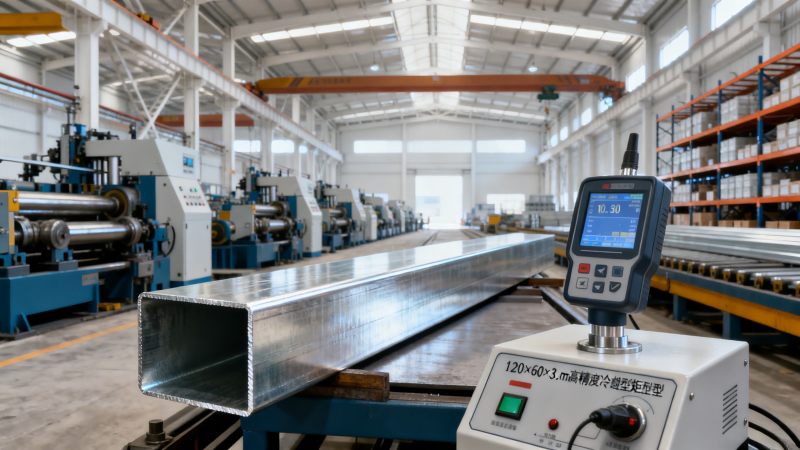
At Hongteng Fengda, every lightweight steel tube undergoes four-stage dimensional verification: laser-based OD/ID scanning, ultrasonic wall thickness mapping, straightness testing (≤1.5mm/m), and tensile sampling per ASTM A370. This ensures repeatability across batches—critical when assembling 200+ identical modules in parallel across three continents.
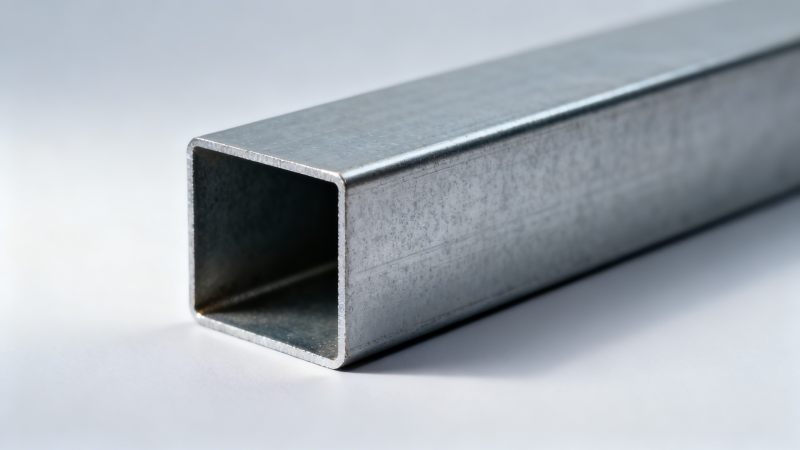
Consider this: a 120×60×3.0mm rectangular tube made to EN 10219-2 S355J2H delivers 28% higher moment resistance than an equivalent-weight S235 grade—but only if its corner radii are controlled within R ≤ 2.5×t and its yield strength remains ≥355MPa across full-length sections. That’s why specification sheets must include not just nominal dimensions, but also tolerances, test frequency, and batch traceability.
How Specification Gaps Translate into Real Project Risks
Unspecified parameters create cascading risks across stakeholder groups:
- Project Managers: 12–18% schedule slippage due to rework from misaligned connections caused by inconsistent corner radii or ovality >1.2%
- Procurement Teams: 7–15-day delays sourcing replacement stock when wall thickness falls outside ±0.2mm tolerance on 2.0mm-thick sections
- Financial Controllers: 9–14% budget overrun from field welding labor when flange flatness exceeds 0.8mm/m
- Safety Officers: Elevated incident rates where tensile elongation drops below 22%—a red flag for brittle fracture in seismic zones
Our quality assurance protocol mandates third-party witnessed testing on every 20-ton lot—including Charpy V-notch impact tests at –20°C for cold-climate projects—and full traceability via QR-coded mill test reports linked to heat numbers.
Key Specification Dimensions You Must Verify Before Order Placement
These tighter controls directly reduce on-site labor time by 22–35% during module assembly—verified across 14 prefabricated housing projects in Germany, Canada, and Saudi Arabia between Q3 2022 and Q2 2024.
Where Stainless Steel Tubing Fits Into Modular Structural Systems
While carbon steel dominates primary framing, stainless steel tubes serve mission-critical secondary roles demanding corrosion resistance, hygiene, or thermal stability. For example, our 201 Stainless steel pipe is routinely specified for HVAC duct supports in pharmaceutical cleanrooms, railing systems in coastal resorts, and process piping in water treatment plants—all environments where chloride-induced pitting or acid exposure would compromise standard carbon steel within 3–5 years.
Its technical profile—≥520MPa tensile strength, ≥40% elongation, and resistance to acids, alkaline gases, and saline solutions—makes it ideal for hybrid applications where mechanical load-bearing meets environmental durability. Unlike 304, 201 offers comparable corrosion resistance in non-marine settings at ~22% lower material cost, enabling budget-conscious specifiers to retain stainless benefits without premium pricing.
Available in round (4–200mm OD), square (10×10–100×100mm), and rectangular (10×20–50×100mm) configurations—with wall thicknesses from 0.6mm to 6.0mm and lengths from 1 to 6 meters—it integrates seamlessly into both standardized and OEM-designed modular subsystems.
What to Ask Your Supplier Before Finalizing Tube Specifications
Specification clarity starts with supplier transparency. When evaluating options, request these five verifiable deliverables before PO issuance:
- MTRs (Mill Test Reports) showing actual tensile/yield values—not just minimums—for your specific heat number
- Dimensional inspection reports covering OD, wall thickness, and straightness per EN 10219 or ASTM A500
- Certification copies for all claimed standards (ASTM, EN, GB, etc.) issued by accredited bodies like SGS or BV
- Lead time confirmation including raw material sourcing, rolling, heat treatment, and final QA stages
- Custom packaging documentation—especially for export shipments requiring ISPM 15-compliant wooden crates
Hongteng Fengda provides all five within 48 hours of inquiry—and backs them with production capacity guarantees: 12,000 MT/month for standard sections, 3,500 MT/month for custom cold-formed profiles, and 7–12 day lead times for certified 201 stainless steel pipe orders under 50 tons.
Frequently Asked Questions
How do I verify if a lightweight tube meets my project’s fire rating requirements?
Fire performance depends on section factor (A/V ratio), not weight alone. Request calculated A/V from your supplier and cross-check against EN 1993-1-2 or ASTM E119 time-temperature curves. We provide A/V tables for all standard sizes and can simulate performance for custom profiles using validated FEA models.
Can I use 201 stainless steel pipe for exterior cladding supports in humid climates?
Yes—if surface finish is No.4 or BA (bright annealed) and installation avoids direct contact with copper or carbon steel fasteners. In high-humidity zones (RH >80%), we recommend specifying passivation per ASTM A967 and confirming chloride exposure levels (<200 ppm) via site-specific atmospheric testing.
What’s the minimum order quantity for custom-sized lightweight tubes?
For EN/ASTM-compliant custom sections, MOQ is 5 tons per SKU. For OEM-profiled tubes with proprietary tooling, MOQ starts at 15 tons—but we offer shared-tooling programs for consortium buyers to reduce entry barriers.
Why Global Project Teams Choose Hongteng Fengda for Structural Steel Sourcing
We don’t just supply steel—we de-risk modular execution. From initial specification review to final shipment, our engineering team validates design intent against manufacturability, performs virtual fit checks using BIM-compatible geometry files, and issues pre-shipment dimensional reports signed by independent inspectors.
With ISO 9001-certified facilities, dual-standard compliance (GB + EN/ASTM), and dedicated logistics hubs in Shanghai, Tianjin, and Qingdao, we ensure consistent quality across 120+ countries—and maintain 98.7% on-time delivery over the past 36 months.
Ready to align your next modular project with precision-engineered steel? Contact us today for free specification review, dimensional feasibility analysis, or certified sample packs—including physical MTRs and surface finish swatches for 201 Stainless steel pipe and cold-formed structural profiles.
Please give us a message


Please enter what you want to find