Ever noticed discrepancies between published hot rolled I beam weight specs and your on-site calculations? You're not alone — variations in tolerances, mill certification methods, and international standards (ASTM/EN/GB) often explain why the actual weight of an I beam, steel girder, or channel beam differs from theoretical values. Whether you're a project manager verifying load capacity, a procurement officer comparing SGCC or carbon sheet steel quotes, or a quality controller auditing steel tubing and steel square rod deliveries, understanding these variances is critical for safety, cost control, and compliance. As a trusted structural steel manufacturer and exporter from China, Hongteng Fengda clarifies the science behind weight tolerances — and why I beam vs H beam comparisons add another layer of complexity.
Why Theoretical Weight ≠ Actual Weight: The Core Drivers
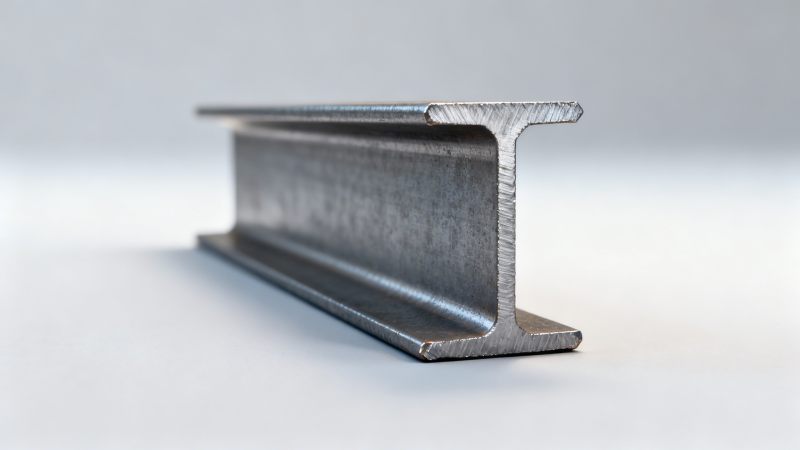
Hot rolled I beam weight specifications are calculated using nominal dimensions — standard flange width, web thickness, and depth — multiplied by steel density (7.85 g/cm³). But real-world production introduces unavoidable deviations. Mill rolling tolerances per ASTM A6/A6M allow ±0.5 mm to ±1.5 mm variation in section dimensions depending on size, directly impacting cross-sectional area and final weight.
Surface scale, edge rounding, and minor profile asymmetry further shift mass distribution. A 200×200mm I beam with ±1.2 mm tolerance on flange thickness may carry up to ±2.3% weight variance — enough to trigger recalculations in crane lifting plans or foundation load assessments. These are not defects — they’re certified manufacturing allowances.
Certification method also matters: mill test reports (MTRs) list actual measured weights per meter, while catalog data reflects idealized geometry. Buyers who rely solely on theoretical tables without reviewing MTRs risk underestimating material uplift or over-specifying handling equipment.
How Standards Shape Weight Acceptance: ASTM vs EN vs GB
Weight tolerance limits vary significantly across regional standards — a key reason why global procurement teams see inconsistent results. ASTM A6 permits ±7.5% weight tolerance for beams over 100 kg/m, while EN 10034 restricts it to ±5.0% for hot rolled structural sections. GB/T 706–2016 falls between at ±6.0%, but enforces tighter dimensional checks on flange taper and web straightness.
This divergence creates real operational friction. A U.S.-based EPC contractor quoting against ASTM-sourced beams may approve ±7.5% variance, whereas their EU client’s QA checklist rejects anything beyond ±5.0%. Misalignment here triggers rework, hold points, or even rejection at port — adding 7–15 days to project timelines.
Hongteng Fengda issues dual-certified MTRs compliant with both ASTM and EN requirements — enabling seamless acceptance across multi-regional projects. Our mill testing includes ultrasonic thickness verification and laser profilometry, ensuring reported weights reflect actual as-rolled conditions — not theoretical approximations.
Beyond I Beams: When Material Choice Impacts Weight Consistency
While I beams dominate structural framing, alternative profiles introduce additional weight variability layers. For instance, cold-formed steel (CFS) sections — used in light gauge framing — exhibit tighter dimensional tolerances (±0.3 mm) but higher yield strength variability (±15 MPa), affecting load-to-weight ratios. Similarly, DC01 Galvanized Round Steel delivers consistent diameter control (ISO h8/h9), yet galvanizing adds 3–5% mass post-fabrication — a factor critical for precision assemblies like optical fiber connectors or medical device components.
Applications demanding high corrosion resistance — such as electric power towers, marine components, or substation ancillary facilities — increasingly specify galvanized round steel due to its long anti-corrosion life and glossy, durable surface. However, buyers must account for zinc coating thickness (typically 45–65 μm) when calculating final component weight and bolt torque specs.
Our DC01 Galvanized Round Steel undergoes antimixing spectrotest validation, ultrasonic control, and out-of-roundness verification (≤½ of diameter tolerance), ensuring repeatability across batches — essential for automatic lathe processing and metal stamping parts where dimensional drift impacts tool wear and scrap rates.
Procurement Best Practices: 5 Checks Before Finalizing Your Order
To prevent weight-related delays or field adjustments, procurement and technical teams should verify the following before contract signing:
- MTR alignment: Confirm mill test reports include actual measured weight per meter — not just theoretical — and match specified standard (ASTM/EN/GB).
- Tolerance tier: Specify “precision grade” if ±4.5% weight variance is required (e.g., for dynamic load structures or seismic zones).
- Certification scope: Ensure EN-compliant orders include EN 10204 3.2 MTRs with third-party witnessed testing.
- Galvanizing add-on: For coated products like DC01 Galvanized Round Steel, request zinc coating thickness verification (in μm) and mass gain percentage in MTRs.
- Sampling protocol: Require batch sampling per ISO 377 — minimum 3 pieces per heat lot — for independent weight audit.
Hongteng Fengda supports all five checks with documented traceability, including digital MTR access, pre-shipment dimensional reports, and optional SGS/BV third-party witnessing — reducing sourcing risk and accelerating approval cycles by up to 40%.
Why Partner With Hongteng Fengda for Structural Steel Procurement?
We bridge the gap between theoretical specs and real-world performance. As a certified structural steel manufacturer and exporter from China, we deliver angle steel, channel steel, steel beams, cold formed profiles, and custom components that meet ASTM, EN, JIS, and GB standards — backed by modern rolling mills, automated inspection lines, and ISO 9001-certified quality systems.
Our value extends beyond compliance: stable production capacity ensures consistent lead times (typically 25–35 days for standard beams), OEM customization supports unique design requirements, and dedicated engineering support helps resolve weight-related queries pre-shipment — avoiding costly field corrections.
Whether you need I beam weight verification for load calculations, EN-compliant MTRs for EU tenders, or galvanized round steel with certified coating thickness for marine infrastructure, contact us today for parameter confirmation, sample support, or a customized quotation — backed by 10+ years of global delivery experience.
Please give us a message


Please enter what you want to find