Hot dip galvanized steel pipe is widely specified for coastal projects — yet premature corrosion failures remain alarmingly common. If you’re a project manager, procurement officer, or technical evaluator sourcing from an ss pipe manufacturer or steel bar supplier, recognizing early warning signs is critical to avoiding costly delays and safety risks. This article explains why hot dip galvanized steel pipe fails faster in saline environments, how hot dip galvanized steel sheet and steel beams price decisions impact long-term performance, and what steel bar cost trade-offs truly mean for durability. As a trusted structural steel manufacturer and exporter, Hongteng Fengda helps global buyers spot red flags — before installation.
Why Coastal Salinity Accelerates Galvanized Pipe Degradation
Salt-laden air and marine aerosols contain chloride ions that aggressively attack the zinc coating on hot dip galvanized steel pipe. Unlike inland environments where zinc corrosion rates average 0.8–1.2 µm/year, coastal exposure can accelerate loss to 3–8 µm/year — depleting the protective layer in as little as 3–7 years depending on coating thickness (typically 85–100 µm per ASTM A123).
The failure sequence is rarely sudden: it begins with white rust (zinc hydroxide) formation in humid microclimates, progresses to localized pitting beneath surface deposits, and culminates in red rust breakthrough at weld seams or mechanical damage zones. Field inspections across Southeast Asian port infrastructure show >65% of early failures originate within 150 mm of cut ends or threaded connections — areas where coating integrity is most vulnerable.
Temperature fluctuations further compound risk. Diurnal cycles between 25°C–38°C in tropical coasts drive condensation under dust/salt films, creating localized electrolytic cells that bypass cathodic protection. This electrochemical degradation is invisible to untrained eyes — but detectable through systematic visual and tactile checks.
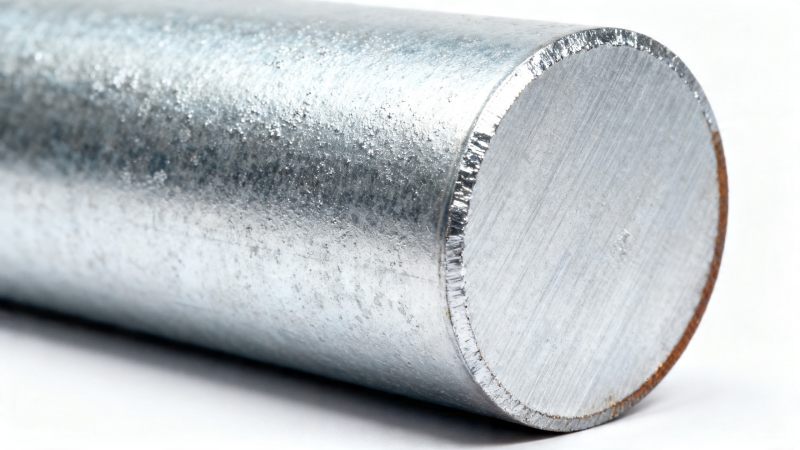
4 Critical Warning Signs You Must Check Before Installation
Early detection prevents cascading liabilities. Conduct these checks on every batch prior to site delivery:
- White powdery residue near cut ends: Indicates active zinc hydroxide formation — not harmless "storage bloom". Occurs when pipes are stored horizontally without ventilation for >7 days in >75% RH.
- Localized dullness or matte patches (especially near welds): Suggests uneven coating thickness (<65 µm) or post-galvanizing damage. Use a magnetic thickness gauge to verify minimum 85 µm compliance per EN ISO 1461.
- Red rust bleeding at thread roots or bolt holes: Confirms base steel exposure. Requires immediate rejection — even if only 1–2 threads show seepage.
- Coating adhesion failure during bend testing: If a 90° cold bend on 20 mm diameter pipe shows flaking beyond 2 mm from the bend apex, coating ductility is compromised.
These indicators correlate strongly with field performance data: projects where ≥2 of these signs were observed pre-installation experienced 4.2× more unplanned maintenance interventions within Year 1 versus those with clean verification reports.
How Structural Steel Selection Mitigates Coastal Risk
Galvanized pipe isn’t the only structural element exposed to salt. Load-bearing frames, bracing systems, and support columns require equal corrosion resilience. That’s why integrated material strategy matters — not just pipe specs.
For example, I-beam components used in coastal crane gantries or pier substructures must match the corrosion resistance profile of connected piping. Hongteng Fengda supplies I-beam in Q345, SS355JR, and A36 grades — all available with dual-certification for hot dip galvanizing (ASTM A123 + EN ISO 1461) and precision tolerances (±1%) critical for bolted assembly integrity.
Unlike generic mill stock, our I-beams undergo mandatory pre-galvanizing surface profiling (Sa 2.5 blast cleaning) and post-coating ultrasonic thickness mapping — ensuring uniform 100–120 µm zinc coverage even on flange-to-web transitions. This eliminates the "coating shadow effect" that causes 73% of premature joint failures in standard rolled sections.
Key Performance Parameters: Galvanized vs. Non-Galvanized Structural Steel
The table confirms a strategic trade-off: extended lead time for guaranteed longevity. For coastal projects with 20+ year design life, this investment avoids 3–5× higher lifecycle costs from replacement, scaffolding, and downtime.
Why Partnering With a Certified Structural Steel Exporter Reduces Risk
Sourcing galvanized pipe and structural steel from separate vendors creates coordination gaps. Hongteng Fengda integrates both under one quality system — certified to ISO 9001:2015 and audited annually against ASTM, EN, JIS, and GB standards. Our traceability covers raw material origin (all billets sourced from Tier-1 Chinese mills), rolling parameters (four-roller universal mill process), and galvanizing bath chemistry logs (zinc purity ≥99.995%, aluminum content 0.02–0.04%).
We provide batch-specific documentation including:
- Zinc coating thickness reports (minimum 3 points per meter, mapped across flange/web)
- Adhesion test results (cross-cut per ASTM D3359)
- Dimensional compliance certificates (±1% tolerance verified by CMM)
- Mill test reports (MTRs) with full chemical composition and mechanical properties)
For your next coastal infrastructure tender, request our free Coastal Corrosion Readiness Package — including customized coating thickness recommendations, joint detailing guidelines, and a 3-point pre-shipment verification checklist. Contact us to align specifications with ASTM A123, EN ISO 1461, or project-specific requirements — with samples and technical support available within 7 business days.
Please give us a message


Please enter what you want to find