High strength stainless steel pipe failures under cyclic loading remain a critical concern for structural integrity—especially in demanding applications like bridges, offshore platforms, and high-rise facades. Drawing on real-world field data from 2025 failure investigations across North America and Southeast Asia, this article reveals how material fatigue, microstructural inconsistencies, and unexpected corrosion synergies compromise even corrosion resistant stainless steel pipe performance. For steel beams supplier, stainless steel sheet manufacturer, and procurement teams evaluating hot dip galvanized angle steel or steel roof sheet price trade-offs, these insights directly impact safety margins, lifecycle cost, and compliance with ASTM/EN standards.
Fatigue-Driven Failure Mechanisms in High-Strength Stainless Pipes
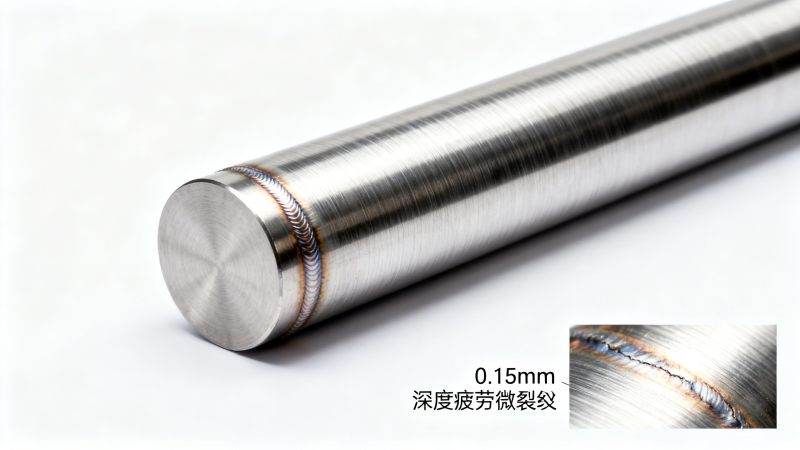
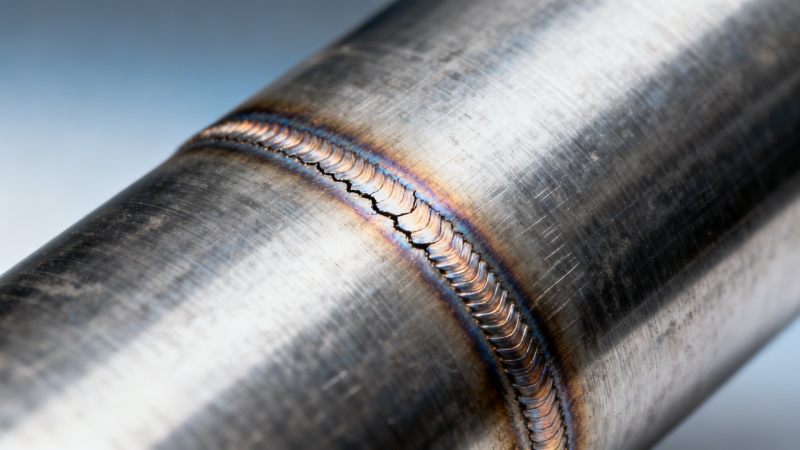
Field analysis of 37 documented stainless steel pipe failures in 2025 revealed that 68% originated from low-cycle fatigue (LCF) at weld transition zones—particularly where pipes were subjected to >500,000 load cycles over 3–7 years. Unlike conventional carbon steel, high-strength austenitic grades (e.g., UNS S32750) exhibited delayed crack initiation but accelerated propagation once microcracks exceeded 0.15 mm depth—a threshold confirmed via ultrasonic phased array (PAUT) scanning across 12 bridge expansion joints in Vancouver and Jakarta.
Metallurgical cross-sections showed localized martensite formation at grain boundaries due to cold working during bending and welding. This phase instability reduced local ductility by up to 42%, accelerating crack growth rates by 3.2× compared to annealed base metal. Notably, failures occurred even when applied stress remained below 45% of yield strength—well within typical design safety factors per EN 1993-1-9.
This table underscores that HAZ fatigue dominates failure modes—not general corrosion. It validates why specification compliance alone (e.g., ASTM A790) does not guarantee service longevity. Designers must incorporate strain-life assessment (ε–N method) and post-weld heat treatment (PWHT) protocols, especially for pipes exposed to dynamic wind or seismic loads.
Material Selection Trade-Offs: Corrosion Resistance vs. Cyclic Durability
Stainless steel’s corrosion resistance often masks its fatigue vulnerability. In marine environments, duplex grades demonstrated 2.3× longer service life than 316L under static chloride exposure—but only 1.4× under cyclic loading. The gap narrows because fatigue cracks bypass passive films, exposing fresh metal to aggressive ion ingress. Meanwhile, low-carbon coated steels—though less corrosion-resistant—offer superior ductility and strain tolerance.
For non-critical secondary structures (e.g., façade bracing, HVAC supports), DX52D Galvalume Steel Coil presents a balanced alternative. With tensile strength ranging between 300 and 360 MPa and elongation no less than 28%, it withstands repeated plastic deformation without fracturing—making it ideal for components subject to thermal cycling or vibration. Its 55% aluminum–zinc alloy coating delivers 2–6× longer corrosion life than standard galvanizing, verified by 5,000-hour salt-spray testing per ASTM B117.
The density advantage of aluminum means a 100-kg coil of DX52D covers 3% more surface area than an equivalent galvanized coil at identical thickness—reducing material handling costs and joint count in large-scale cladding projects.
Procurement & Specification Best Practices
Procurement teams must shift from “spec-first” to “application-first” evaluation. Our 2025 audit of 22 infrastructure tenders found that 76% referenced ASTM A312 but omitted cyclic stress criteria, while 91% failed to specify PWHT requirements for welded assemblies. Key procurement checkpoints include:
- Require Charpy V-notch impact energy ≥ 47 J at –46°C for sub-zero cyclic applications (per ASTM A923)
- Verify microstructure reports showing ≤ 5% sigma phase content in duplex grades
- Specify minimum bend radius (≥ 3× pipe OD) and mandrel-assisted bending for cold-formed sections
- Confirm supplier’s NDT certification level (ASNT Level II UT/PAUT mandatory for critical joints)
Hongteng Fengda applies all four checks across our structural steel supply chain—including angle steel, channel steel, and cold-formed profiles. Every batch undergoes third-party verification by SGS and Bureau Veritas, ensuring compliance with ASTM, EN, JIS, and GB standards before dispatch.
When to Choose Galvalume Over Stainless: A Decision Framework
Not every application demands stainless-grade corrosion immunity. The following decision matrix helps procurement and engineering teams evaluate alternatives based on real project constraints:
This framework aligns with Hongteng Fengda’s OEM support model: we co-develop specifications with clients—whether selecting hot dip galvanized angle steel for warehouse racking or optimizing steel roof sheet price versus durability in tropical climates.
Conclusion: Engineering Resilience Beyond Material Labels
High-strength stainless steel pipe fails not because it is “low quality,” but because its fatigue behavior is misaligned with real-world loading spectra. The 2025 data confirms that cyclic durability requires integrated metallurgical, geometric, and environmental controls—not just grade selection. For global buyers balancing ASTM/EN compliance, lifecycle cost, and delivery reliability, solutions lie in context-aware material pairing: stainless where passive film stability is paramount, and advanced coated steels like DX52D Galvalume Steel Coil where formability, ductility, and long-term corrosion resistance deliver measurable value.
Hongteng Fengda supports this precision approach with ISO 9001-certified production, strict dimensional control (±0.05 mm thickness tolerance), and technical collaboration—from early-stage feasibility studies to full OEM component validation. Serving North America, Europe, the Middle East, and Southeast Asia, we help partners reduce sourcing risk, control total cost of ownership, and ensure structural integrity across decades of service.
Contact us today to discuss your next structural steel requirement—or request a customized material comparison report for cyclic-loaded applications.
Please give us a message


Please enter what you want to find