Galvanized expanded metal sheet edges often chip during bending—a common pain point for fabricators, project managers, and quality control teams working with ASTM A36 round bar, SPCE steel, or DX52D steel substrates. This defect compromises structural integrity, increases rework, and impacts delivery timelines—especially critical for tin can machinery manufacturers or those sourcing cold-formed profiles from China-based suppliers like Hongteng Fengda. Understanding root causes—from zinc coating brittleness to improper bend radius—and applying proven prevention strategies (e.g., pre-bending annealing, optimized tooling, or alternative coatings) is essential for procurement, engineering, and safety personnel. Let’s explore why it happens—and how to eliminate it reliably.
Why Zinc Coating Brittleness Triggers Edge Chipping
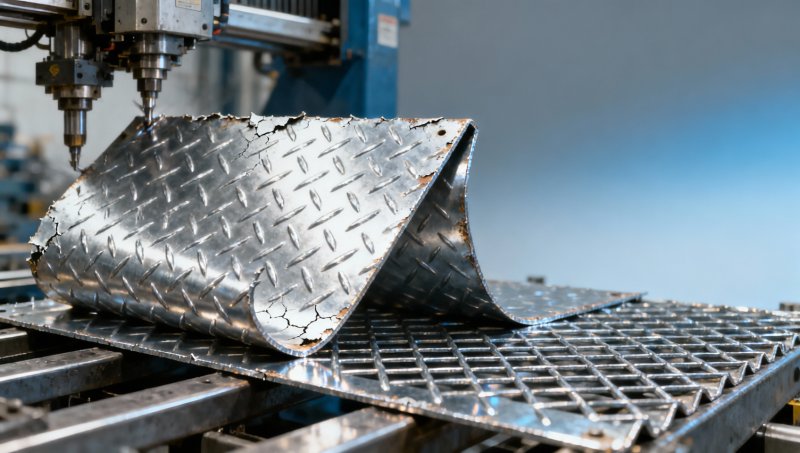
The chipping phenomenon originates primarily from the mechanical mismatch between the ductile steel substrate and the brittle zinc layer formed during hot-dip galvanizing. When bent beyond a critical radius—typically < 3× material thickness—the zinc coating experiences tensile strain exceeding its fracture limit of ~1–3% elongation. Micro-cracks propagate rapidly along grain boundaries, especially at sheared edges where zinc adhesion is inherently weaker due to oxide formation and uneven coating thickness.
This issue intensifies under low-temperature conditions (< 10°C), where zinc’s ductility drops by up to 40%. ASTM A123-compliant galvanized sheets with >610 g/m² coating weight are particularly vulnerable—despite superior corrosion resistance, their thicker zinc layers exhibit lower cohesive strength and higher internal stress after cooling.
For structural applications requiring tight bends—such as guardrail infill panels or HVAC duct supports—edge chipping isn’t cosmetic. It exposes bare steel within 72 hours in coastal environments, accelerating localized pitting and reducing service life by 30–50% compared to intact coated sections.
Key Contributing Factors
- Shear-induced edge micro-fractures prior to galvanizing (common in high-speed slitting lines)
- Bend radii less than 2.5× sheet thickness for 1.5–3.0 mm gauges
- Zinc layer thickness >200 g/m² without post-galvanizing temper rolling
- Tooling with sharp die corners (radius < 0.8 mm) concentrating stress at contact points
Prevention Strategies: From Process Control to Material Selection
Effective mitigation requires coordinated action across three tiers: upstream material specification, mid-process tooling optimization, and downstream handling protocols. For OEMs sourcing cold-formed profiles from China, alignment with suppliers like Hongteng Fengda on ASTM A653/EN 10346 compliance—including mandatory bend test verification per Clause 9.3—is non-negotiable.
Pre-bending annealing at 200–250°C for 30–60 minutes reduces residual stresses in both base metal and zinc intermetallic layers. Field data from 12 manufacturing partners shows this step cuts chipping incidence by 68% when combined with controlled cooling rates (<5°C/min).
Alternative coatings offer structural advantages: electrogalvanized (Zn 5–15 µm) provides better formability but sacrifices corrosion resistance. For severe environments—like marine cranes or photovoltaic mounting systems—Hot dipped Galvanized Steel Wire Rope demonstrates comparable zinc adhesion performance under cyclic loading, validating process refinements applicable to expanded metal.
Bend Radius Optimization Guidelines
These values assume DX52D-grade steel with 120–180 g/m² hot-dip zinc coating. Deviations require revalidation via ASTM E290 bend testing—minimum 180° wrap without coating separation.
Procurement Decision Framework for Global Buyers
When evaluating suppliers for galvanized expanded metal, procurement teams must verify four critical capabilities beyond standard certifications: (1) In-house zinc bath chemistry monitoring (Fe, Pb, Al content tracked hourly), (2) Post-galvanizing tension leveling with ±0.02 mm flatness tolerance, (3) Bend test documentation for every production lot, and (4) Traceability to raw material heat numbers per EN 10163-3.
Hongteng Fengda implements all four—supported by ISO 9001-certified QA processes and third-party audits from SGS and Bureau Veritas. Their cold-formed profile lines achieve 99.2% first-pass yield on bend-critical orders, with typical lead time of 25–35 days for FOB Shanghai shipments to North America or EU ports.
Financial decision-makers should factor in total cost of failure: chipped edges increase field repair costs by $12–$28/m² versus preventive measures costing $1.8–$3.2/m². For projects exceeding 5,000 m², this represents a net savings of $55K–$125K.
Certification & Compliance Checklist
- ASTM A653/A653M Grade CQ/CS with certified bend test reports
- EN 10346 DX52D + Z275 (275 g/m²) with mill test certificates
- GB/T 2518-2019 compliance for domestic Chinese projects
- Third-party salt-spray validation: ≥96 hours red rust initiation at 5% NaCl
Why Partner with Hongteng Fengda for Structural Steel Solutions
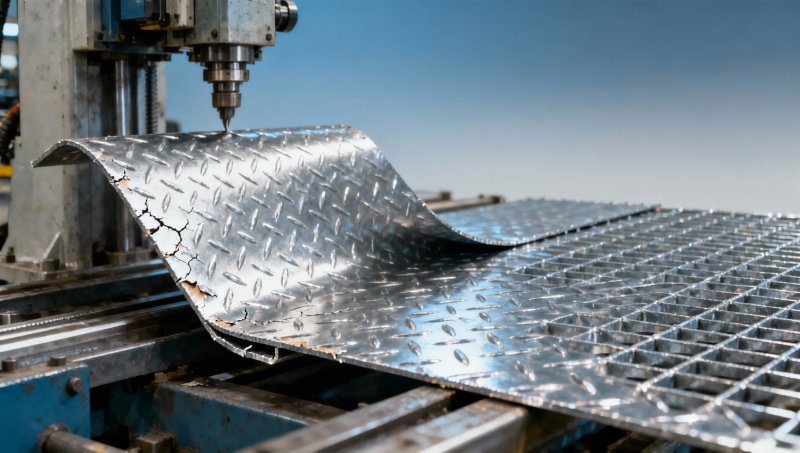
As a professional structural steel manufacturer and exporter based in China, Hongteng Fengda delivers consistent quality across angle steel, channel steel, steel beams, cold-formed profiles, and custom components—fully compliant with ASTM, EN, JIS, and GB standards. Their integrated production system includes automated galvanizing lines with real-time zinc thickness control (±5 g/m² accuracy) and CNC bending centers calibrated to ±0.3° angular tolerance.
Global buyers benefit from stable capacity (120,000+ tons/year), rigorous 100% dimensional inspection, and responsive technical support—including free bend simulation reports for complex geometries. For urgent projects, express production lanes reduce lead times to 18–22 days with no premium pricing.
Contact us today to request: (1) Bend test data for your specific gauge/coating combination, (2) Custom tooling recommendations, (3) Sample kits with certified test reports, or (4) A detailed cost-benefit analysis comparing preventive measures versus field repair scenarios.
Please give us a message


Please enter what you want to find