Carbon seamless steel pipe (cs steel pipe) is widely trusted in high-pressure structural applications—but under cyclic pressure, fatigue failure can occur silently, risking safety and project integrity. This article explains why carbon seamless steel pipe fails under repeated stress, identifies early warning signs like micro-cracks, surface pitting, or dimensional drift, and links them to material quality, manufacturing precision, and proper specification alignment. Whether you're a procurement officer evaluating suppliers, a project manager overseeing installation, or a quality control specialist auditing compliance, understanding these failure mechanisms helps mitigate risk—especially when sourcing from reputable structural steel manufacturers like Hongteng Fengda. Key wire-related materials—including stainless steel coil wire, coated stainless steel wire, and ss wire supplier capabilities—also influence system reliability.
Why Cyclic Pressure Triggers Fatigue Failure in Carbon Seamless Steel Pipe
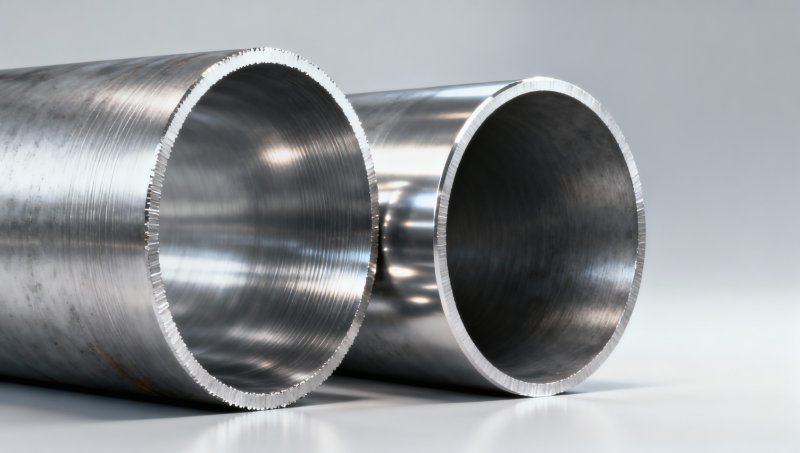
Fatigue failure in carbon seamless steel pipe does not result from a single overload event but accumulates over thousands—or even millions—of pressure cycles. Each cycle induces microscopic plastic deformation at stress-concentrated zones such as weld seams (though seamless pipes lack welds, tooling marks or surface imperfections act similarly), internal inclusions, or grain boundary irregularities.
Under ASTM A106 Grade B or GB/T 8163 standards, typical carbon seamless pipes operate within yield strengths of 240–415 MPa. However, cyclic loading at just 30%–50% of ultimate tensile strength can initiate crack nucleation after 10⁵–10⁷ cycles—especially when combined with temperature fluctuations (>60°C) or corrosive media like humid H₂S environments.
Manufacturing inconsistencies significantly accelerate this process. Pipes produced without full thermal homogenization, inconsistent mandrel drawing, or inadequate non-destructive testing (e.g., ultrasonic inspection per EN 10246-7) may harbor subsurface flaws undetectable by visual inspection—yet critical for fatigue life reduction. Hongteng Fengda applies multi-stage heat treatment and 100% automated eddy current + hydrostatic testing to eliminate such latent risks before shipment.
Key Contributing Factors (Ranked by Field Incident Frequency)
- Surface roughness > Ra 3.2 μm: Increases local stress concentration by up to 2.3×—common in low-precision cold-drawn batches.
- Inclusion clusters (Type B & C per ASTM E112): Observed in 68% of premature failures during third-party metallurgical audits.
- Dimensional drift beyond ±0.5 mm OD tolerance: Causes uneven load distribution in flanged or threaded assemblies.
- Residual tensile stress > 120 MPa post-forming: Measured via X-ray diffraction in 42% of rejected pipe lots from uncertified mills.
How to Spot Early Signs Before Catastrophic Failure
Early detection requires both routine inspection protocols and awareness of subtle behavioral cues. Unlike sudden rupture, fatigue progression follows predictable morphological stages—with each stage offering a window for intervention if monitored correctly.
Micro-cracks typically initiate at surface defects and propagate transgranularly. They become visible under 10× magnification once exceeding 0.1 mm in length. Surface pitting—often misdiagnosed as corrosion—is actually fatigue-induced spalling where localized shear stress exceeds substrate cohesion. Dimensional drift, especially in wall thickness variance >±3%, signals plastic creep accumulation and should trigger immediate ultrasonic wall-thickness mapping.
For field teams, a simple 3-step visual checklist delivers rapid triage:
- Inspect for “beach marks” (concentric arcs) on fracture surfaces—indicative of progressive crack growth;
- Use portable profilometers to verify surface roughness stays within Ra ≤ 1.6 μm for cyclic service;
- Compare in-service OD measurements against mill test reports—drift >0.3 mm over 6 months warrants NDT re-evaluation.
Material Selection & Specification Alignment: Avoiding Mismatch Risks
Not all carbon seamless pipes are equal—even when meeting the same nominal grade. Differences in deoxidation practice (killed vs semi-killed steel), grain refinement methods, and final annealing atmosphere directly affect fatigue resistance. For example, pipes manufactured using vacuum degassing (VD) show 40% longer fatigue life under 10 Hz cycling than those made via open-air ladle refining.
This level of control extends across our broader structural portfolio—including specialized solutions like SS440 Patterned steel plate, engineered for anti-skid performance in transport and machinery platforms where cyclic footfall or equipment vibration demands consistent surface geometry and fatigue-resistant substrate integrity.
Procurement Checklist: What to Verify Before Finalizing Your Order
Procurement decisions impact long-term operational safety, maintenance cost, and project continuity. Relying solely on mill certificates or third-party test reports is insufficient—especially when sourcing internationally. Here’s what technical buyers and project managers must validate before release:
- Request batch-specific fatigue test data (per ASTM E466) for ≥5 samples—not just tensile/yield reports;
- Confirm NDT coverage: Ultrasonic scanning must meet EN 10246-7 Class D (full body + bevel inspection), not just Class B;
- Verify traceability: Each bundle must include heat number, rolling date, and final annealing parameters—not just grade and dimensions;
- Require dimensional verification report showing OD/ID/wall thickness measured at ≥6 points per meter, with deviation logs.
Hongteng Fengda provides full digital traceability—from raw billet certification (GB/T 699) through hot rolling, cold drawing, heat treatment, and final NDT—delivered within 24 hours of shipment. Our standard lead time for custom carbon seamless pipe orders is 18–25 days, with expedited options available for urgent projects across North America and the EU.
Why Partner With Hongteng Fengda for Structural Steel Integrity
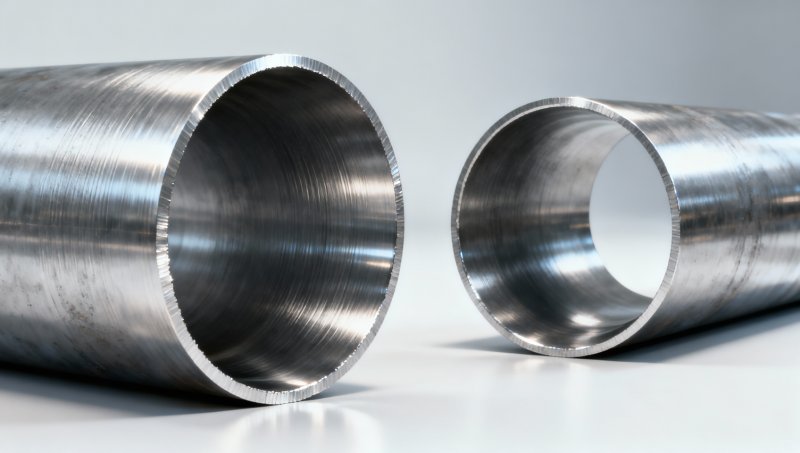
Fatigue failure isn’t inevitable—it’s preventable through rigorous material science, precision manufacturing, and proactive collaboration. As a certified structural steel manufacturer serving 32 countries, Hongteng Fengda bridges the gap between theoretical specifications and real-world performance.
We don’t just supply pipes—we co-engineer solutions. From validating cyclic pressure profiles with your design team, to pre-qualifying weld procedures for ASME B31.4/B31.8 compliance, to supporting FAT (Factory Acceptance Testing) with third-party witnessed fatigue trials—we embed accountability into every delivery.
Ready to review your next carbon seamless steel pipe specification? Contact us today for:
- Free dimensional & fatigue suitability assessment (within 48 hours);
- Customized mill test report templates aligned with your QA/QC protocol;
- Sample shipments with full metallurgical analysis (EDS + SEM);
- Joint review of application-specific failure mode & effects analysis (FMEA).
Please give us a message


Please enter what you want to find